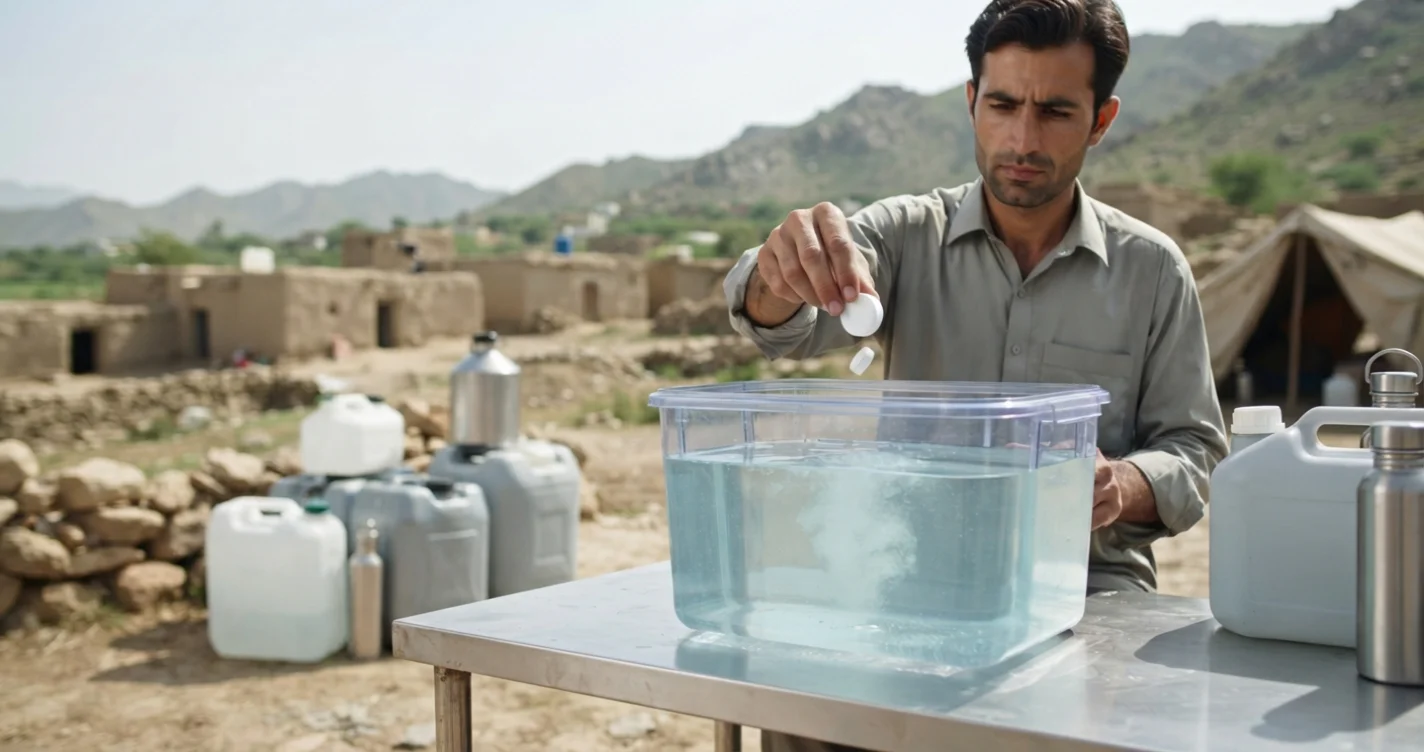
When municipal water supplies are disrupted due to flooding, contamination events, or a lack of reliable access to treated water, chlorine Dioxide tablets offer one of the most practical disinfection solutions available in Pakistan. This is because they can be used effectively without electricity, complex equipment, or specialized technical training.
This guide explains how chlorine dioxide tablets actually work at a chemical level, how they differ from conventional chlorine disinfection, when they’re the right tool versus when a different disinfection method makes more sense, and what typically drives water disinfection tablets price in the Pakistani market.
Chlorine Dioxide vs Conventional Chlorine: An Important Distinction
It’s worth clarifying upfront: chlorine dioxide (ClO2) is chemically distinct from the chlorine gas or sodium hypochlorite typically used in conventional municipal water chlorination. While both are effective disinfectants, chlorine dioxide has some meaningfully different properties:
- It doesn’t react with organic matter in water to form the same class of disinfection byproducts (like trihalomethanes) that conventional chlorination can produce.
- It remains effective across a broader pH range than standard chlorine.
- It’s generally more effective against certain resistant pathogens, including some protozoan cysts, at practical dose levels.
- It doesn’t impart the same strong taste and odor commonly associated with heavily chlorinated water.
This distinction matters because chlorine dioxide-based disinfection and broader chemical-free approaches like UV or ozone treatment — covered in our earlier guide on chemical-free disinfection technologies — aren’t necessarily competing philosophies. Chlorine dioxide tablets fill a specific niche: portable, equipment-free disinfection for situations where UV or ozone systems simply aren’t practical to deploy.
How Chlorine Dioxide Tablets Actually Work
Chlorine dioxide tablets are typically formulated as a two-part or activated system — either a stabilized tablet that releases chlorine dioxide gas when dissolved in water, or a two-component system where an acid activator triggers the reaction with a chlorite-based tablet. Once activated, the chlorine dioxide disrupts the cell membrane and metabolic processes of bacteria, viruses, and many protozoan pathogens, rendering them inactive.
The practical appeal is simplicity: drop the tablet (or activated combination) into a measured volume of water, wait the specified contact time — typically ranging from a few minutes for bacteria to longer periods for more resistant organisms like Giardia or Cryptosporidium cysts — and the water is disinfected without needing any powered equipment.
When Chlorine Dioxide Tablets Are the Right Choice
Chlorine dioxide tablets aren’t meant to replace a properly designed municipal or industrial disinfection system under normal operating conditions. They’re most valuable in specific scenarios:
- Emergency and disaster response — particularly relevant after flooding events, when municipal treatment infrastructure may be compromised or inaccessible, and our guide on emergency water purification during flooding in Pakistan covers the broader context of what works in these situations.
- Remote or off-grid locations — sites without reliable electricity for UV or ozone systems, where a chemical tablet requires no power source at all.
- Backup and contingency stock — facilities that want a reliable fallback disinfection method in case primary treatment systems experience downtime.
- Small-scale or individual use — households, field teams, or small operations needing to disinfect limited water volumes without installing dedicated equipment.
For continuous, large-volume municipal or industrial disinfection under normal operating conditions, fixed systems like UV disinfection or ozone generation generally offer better cost efficiency and don’t require repeated manual dosing — our guides on UV water disinfection and ozone generators for water treatment cover those options in more depth.
Chlorine Dioxide Tablets Compared to Other Portable Disinfection Options
Method | Power Required | Effective Against Cysts | Taste/Odor Impact | Best For
|
|---|---|---|---|---|
Chlorine dioxide tablets | No | Yes, with adequate contact time | Minimal | Emergency, remote, backup use |
Standard chlorine tablets | No | Limited without extended contact time | Noticeable | Basic emergency disinfection |
UV sterilization | Yes | Yes, effectively | None | Fixed installations with reliable power |
Boiling | Fuel/heat source | Yes | None | Emergency use, no chemicals available |
The tablet format’s core advantage over boiling or fixed systems is portability combined with no power requirement — a genuinely important factor when the reason you need disinfection in the first place is that normal infrastructure has failed.
What Drives Water Disinfection Tablets Price
The price of Water disinfection tablets in Pakistan varies depending on several factors that are important to consider before purchasing them in bulk for an organization, facility, or emergency preparedness stock.
- Formulation type — stabilized single-tablet products versus two-part activated systems can differ in cost and shelf life.
- Concentration and tablet size, which determines how much water volume a single tablet can treat.
- Brand and certification — products with verified third-party testing and clear dosing instructions are generally worth a modest premium over unverified or unbranded alternatives.
- Purchase volume — bulk procurement for institutional, NGO, or emergency-preparedness stockpiling typically brings down the per-tablet cost meaningfully compared to small retail purchases.
- Shelf life and storage requirements — some formulations require specific storage conditions to maintain effectiveness, which affects total cost of maintaining a reliable stockpile over time.
Proper Usage and Safety Considerations
A few practical points matter for safe, effective use:
- Follow the manufacturer’s stated contact time exactly — using treated water before the full disinfection period has elapsed undermines the entire purpose, particularly for resistant organisms like protozoan cysts.
- Match dose to water volume accurately — under-dosing reduces effectiveness, while significant over-dosing isn’t necessary and adds unneeded cost.
- Pre-filter visibly turbid water where possible before tableting, since high turbidity can reduce disinfectant effectiveness by shielding pathogens within particulate matter.
- Store tablets according to manufacturer instructions, since heat, humidity, and expired shelf life can all reduce a tablet’s actual disinfection capability when you need it most.
Conclusion
Chlorine dioxide tablets fill a genuinely useful and specific role in water disinfection — portable, power-free protection for emergencies, remote locations, and backup situations where fixed disinfection systems aren’t practical or available. They’re not a replacement for properly designed UV, ozone, or conventional treatment systems under normal operating conditions, but as part of an emergency preparedness or remote-access water strategy, they’re a genuinely valuable tool. Water Care Services Pakistan (WCSP) has supported water treatment and disinfection solutions across Pakistan since 2007, and can help organizations plan the right mix of fixed and portable disinfection methods for their specific needs.
Frequently Asked Questions
Lorem ipsum dolor sit amet, consectetur adipiscing elit. Ut elit tellus, luctus nec ullamcorper mattis, pulvinar dapibus leo.Yes, when used according to manufacturer dosing instructions and contact time. Chlorine dioxide is widely used as a water disinfectant precisely because it’s effective at low concentrations and doesn’t leave the same strong taste and odor as conventional chlorine, though correct dosing and adequate contact time remain essential for safety.
Contact time varies by the specific pathogens present and product formulation, but generally ranges from a few minutes for bacteria and viruses to longer periods for more resistant protozoan cysts. Always follow the manufacturer’s specific stated contact time rather than assuming a general figure applies to your situation.
Chlorine dioxide is a chemically distinct compound from the chlorine gas or sodium hypochlorite typically used in municipal water chlorination. It generally produces fewer disinfection byproducts, works effectively across a wider pH range, and doesn’t impart the same strong taste and odor associated with conventional chlorination.
No — they’re best suited for emergency, remote, or backup use rather than continuous municipal or industrial disinfection. For ongoing, large-volume needs, fixed systems like UV or ozone generation are generally more cost-effective and don’t require repeated manual dosing.
Check for clear, verified dosing instructions, stated shelf life and storage requirements, and ideally third-party testing or certification of the product’s effectiveness. Bulk purchasing for institutional or emergency-preparedness use typically reduces per-tablet cost, but shouldn’t come at the expense of verified product quality.