Filling Machines
What Is a Filling Machine?
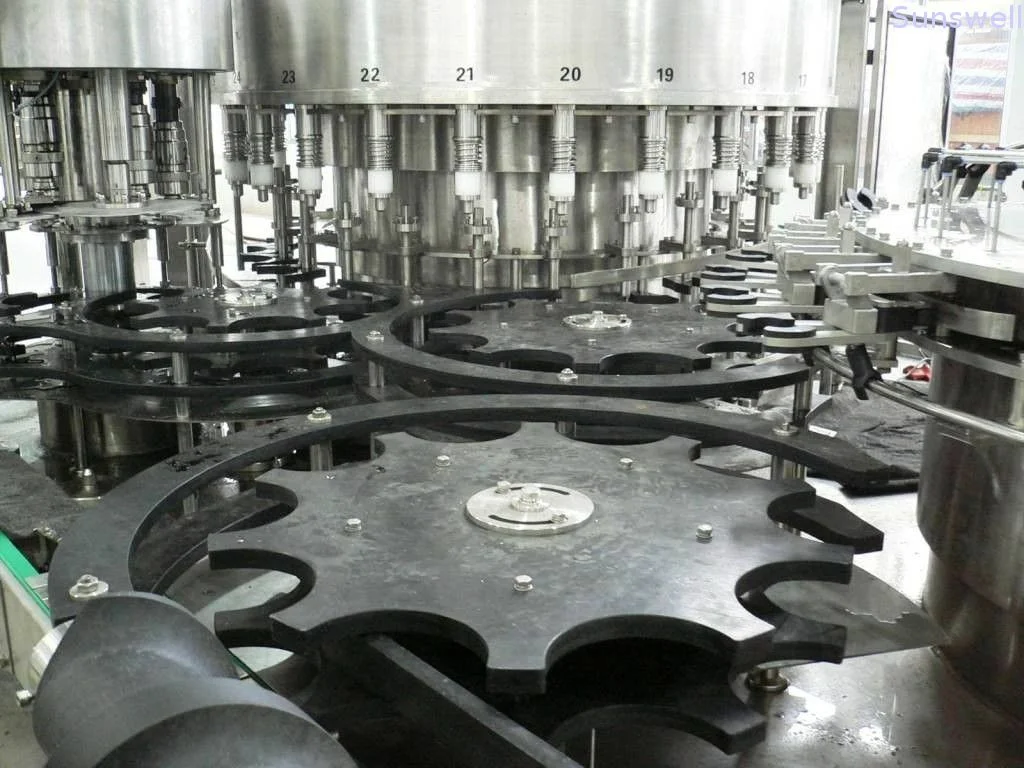
A filling machine is an industrial packaging device that dispenses a precise, controlled volume or weight of liquid, semi-liquid, powder, or granular product into containers such as bottles, jars, cans, pouches, or sachets. Also known as a liquid filler or bottle filler, these machines are central to modern packaging lines in industries ranging from drinking water and carbonated beverages to pharmaceuticals, cosmetics, and chemicals.
The primary goal of any filling machine is threefold: accuracy (ensuring each container receives the correct amount), speed (maximising containers filled per hour), and hygiene (preventing contamination of the product during the filling process).
In Pakistan, the demand for automated filling solutions has grown rapidly as manufacturers scale up to meet both domestic consumption and export requirements. WCSP has been at the forefront of supplying and commissioning these systems since 2007, with installations across Lahore, Faisalabad, Karachi, and beyond.
Upgrade Your Filtration System—Get Professional Guidance Now
How Does a Filling Machine Work?
Despite variations in design, all filling machines follow a core operating cycle:
- Container Infeed: Empty bottles or containers are fed into the filling station via a conveyor belt or rotary turntable. Sensors detect each container’s presence and position.
- Fill Initiation: The machine opens a nozzle or valve above the container. The fill method depends on the machine type — gravity, piston, pump, vacuum, or weight-based.
- Volume/Weight Measurement: A metering device (flow meter, timer, load cell, or piston stroke) ensures exactly the right amount of product is dispensed.
- Nozzle Closure: Once the set volume or weight is reached, the nozzle closes automatically, stopping product flow with minimal drip.
- Container Outfeed: The filled container moves to the next station — typically capping, sealing, labelling, and secondary packaging.
Fully automatic filling machines control this entire cycle without manual intervention, with PLC (Programmable Logic Controller) and HMI (Human Machine Interface) systems allowing operators to set parameters, monitor output, and diagnose faults in real time. Semi-automatic machines require an operator to place and/or remove containers, making them suitable for lower-volume or small-batch operations.
Types of Filling Machines — Which One Is Right for You?
Choosing the correct filling technology depends on your product’s viscosity, the required fill accuracy, container type, and production speed. Below is a complete overview of the main filling machine types available through WCSP.
1. Gravity Filling Machines
Gravity fillers use the natural force of gravity to move low-viscosity liquids from an elevated tank into containers below. A timer controls how long the valve stays open, determining the fill volume. These machines are ideal for thin, free-flowing liquids such as water, juice, and vinegar, and are commonly used in water bottling plants across Pakistan. They are economical, easy to maintain, and capable of high-speed operation.
2. Piston Filling Machines
Piston fillers draw product into a cylinder on the upstroke and dispense it into the container on the downstroke. They are exceptionally versatile, handling everything from water to thick sauces, creams, and pastes. The fill volume is adjusted by changing the stroke length of the piston. Piston filling machines are popular in food processing, cosmetics, and pharmaceutical production in Pakistan.
3. Overflow Filling Machines
Overflow fillers fill containers to a consistent visual level regardless of minor variations in container capacity. Excess product is returned to the holding tank via a recirculation system. They are ideal for clear-bottle applications where a uniform fill level is important for shelf appeal — common in carbonated soft drinks, water, and cleaning products.
4. Volumetric Filling Machines
Volumetric fillers dose a fixed, pre-measured volume of product into each container — regardless of the container’s shape. Using electromagnetic or mass flow meters, these machines deliver high precision and are highly flexible across product types, from still beverages to viscous sauces. They are the preferred choice when filling to an exact volume (not level) is required.
5. Net Weight (Load Cell) Filling Machines
Weight-based filling machines use high-precision electronic load cells to monitor the mass of product dispensed into each container. Filling stops automatically when the target weight is reached. These are ideal for high-value liquids, oils, syrups, and any product where exact weight compliance is required for regulatory reasons or profit margin protection.
6. Vacuum Filling Machines
Vacuum fillers draw product into the container using negative pressure, making them ideal for fragile liquids, foamy products, or applications requiring an airtight fill environment. They are commonly used in pharmaceutical and cosmetic production lines where contamination prevention is critical.
7. Isobaric (Counter-Pressure) Filling Machines
Isobaric filling machines are specifically engineered for carbonated beverages. By equalising the pressure between the product tank and the container before filling, they prevent CO2 loss and foaming, preserving the carbonation level of the final product. These are essential for soft drink and sparkling water production lines.
Semi-Automatic vs Automatic vs Manual Filling Machines
Feature | Manual | Semi-Automatic | Fully Automatic |
Production Speed | Low (< 500/hr) | Medium (500–2,000/hr) | High (2,000–20,000+/hr) |
Labour Required | High | Medium | Minimal |
Fill Accuracy | Variable | Good | Excellent (±0.5%) |
PLC/HMI Control | None | Partial | Full |
Best For | Lab/small batch | Growing businesses | Industrial scale |
Capital Cost | Low | Medium | High |
ROI Timeline | Immediate | 6–18 months | 12–36 months |
Industries Served by Filling Machines in Pakistan
WCSP’s filling machines are deployed across a wide range of industries in Pakistan. Each sector has specific requirements for product viscosity, fill accuracy, hygiene standards, and regulatory compliance.
Drinking Water & Beverage Industry
Pakistan’s water bottling and beverage sector is one of the fastest-growing in the region. From 250ml mineral water bottles to 19-litre gallon containers, filling machines in this sector need to handle high throughput — often 3,000 to 10,000 bottles per hour — while maintaining hygienic food-grade standards. WCSP integrates filling machines directly with our water treatment and purification systems, creating end-to-end bottled water production lines.
Pharmaceutical & Healthcare
Pharmaceutical filling demands the highest levels of accuracy and sterility. From syrup bottles and eye drops to sanitiser dispensers, these machines must comply with GMP (Good Manufacturing Practice) standards. Piston fillers and vacuum fillers are most common in this sector.
Food Processing & Condiments
Oil, sauces, jams, ketchup, and cooking condiments require machines capable of handling high-viscosity products with particulates. Piston and rotary fillers with heated hoppers are the standard choice for Pakistani food manufacturers.
Cosmetics & Personal Care
Shampoos, lotions, creams, and gels vary widely in viscosity and require flexible machines with quick-changeover capability. WCSP supplies servo pump and piston fillers for this sector.
Chemicals & Industrial Fluids
Acids, solvents, lubricants, and industrial cleaners require chemically resistant construction materials (HDPE, PVDF, stainless steel 316L). Specialised corrosive liquid filling machines with enclosed-nozzle designs protect operators and the environment.
The Complete Filling Line: Beyond the Filler
A standalone filling machine is only one part of a complete packaging operation. WCSP can design and install end-to-end filling lines that integrate seamlessly:
- Bottle Rinsing/Washing — Clean containers before filling to eliminate contamination
- Filling Machine — Precise, automated liquid or product dispensing
- Capping & Sealing — Automatic screw capping, snap capping, or induction sealing
- Sleeve Labelling — Shrink sleeve or pressure-sensitive label application
- Batch Coding & Date Printing — Inkjet or laser coding for traceability
- Conveyor Systems — Connect each stage for uninterrupted flow
- Secondary Packaging — Carton erecting, case packing, and palletising
Integrating your filling machine into a complete production line eliminates bottlenecks, reduces manual handling, and dramatically improves overall equipment effectiveness (OEE). Contact WCSP to discuss a full line layout tailored to your production needs.
Technical Specifications — WCSP Automatic Filling Machines
Specification | Range / Detail |
Fill Volume Range | 50ml – 30,000ml (customisable) |
Filling Speed | 500 – 20,000 containers/hour (model-dependent) |
Fill Accuracy | ±0.5% or better |
Configuration | Single-line, rotary, and monoblock available |
Control System | PLC + HMI touchscreen (Siemens/Allen-Bradley) |
Container Compatibility | Bottles, jars, pouches, cans, sachets |
Container Material | Glass, PET, HDPE, aluminium, flexible |
Product Compatibility | Water, juice, pharma, cosmetics, chemicals, food |
Power Supply | 220V/380V, 50Hz (Pakistan standard) |
Frame Material | SS 304 or SS 316L (food/pharma grade) |
CIP Ready | Yes — Clean-In-Place compatible |
Operating Mode | Continuous 24/7 operation |
After-Sales Support | On-site installation, training, and AMC available |
Why Choose WCSP for Filling Machines in Pakistan?
With dozens of filling machine suppliers in Pakistan, selecting the right partner matters as much as selecting the right machine. Here is why manufacturers across Pakistan trust WCSP:
- Operating since 2007 — Over 18 years of water treatment and packaging equipment experience in Pakistan
- Local engineering team in Lahore — Fast on-site support without waiting for overseas technicians
- Turnkey solutions — We don’t just supply a machine; we design your entire production line
- Integration expertise — Our filling machines integrate directly with our water treatment plants, ozone generators, and bottled water systems
- PLC programming and training — Your operators are fully trained before handover
- Annual Maintenance Contracts (AMC) — Scheduled servicing keeps your production running year-round
- Genuine spare parts availability — Critical components stocked in Lahore for rapid replacement
- Financing assistance — We work with clients to find cost-effective procurement solutions
Maintenance Best Practices for Filling Machines
A well-maintained filling machine operates efficiently for 10–15+ years. WCSP recommends the following maintenance schedule:
Daily Maintenance
- Rinse all product-contact surfaces with clean water at the end of each shift
- Inspect nozzles and seals for wear, leakage, or product buildup
- Check conveyor belt alignment and tension
- Verify fill accuracy on 5–10 sample containers at production start
Weekly Maintenance
- Perform a full CIP (Clean-In-Place) cycle with approved sanitising solution
- Lubricate moving parts per manufacturer specifications
- Inspect all O-rings and gaskets; replace if any sign of wear
- Check and calibrate the fill accuracy against a certified measuring device
Annual Maintenance
- Full mechanical inspection and replacement of high-wear parts
- PLC software backup and review of operational parameters
- Electrical panel inspection and thermal imaging for hotspots
- WCSP AMC service visit — our engineers inspect and certify your equipment
Sustainable Packaging with Modern Filling Machines
Sustainability is increasingly important to Pakistani manufacturers targeting export markets and environmentally conscious consumers. Modern filling machines contribute directly to sustainable manufacturing:
- Precision filling eliminates product overfill and wastage, reducing raw material costs
- CIP-compatible designs minimise water and chemical usage during cleaning
- Compatibility with recyclable PET, glass, and biodegradable packaging materials
- Energy-efficient servo-driven systems reduce power consumption vs older pneumatic designs
- Reduced product spillage means less effluent to treat — directly complementing WCSP’s wastewater treatment solutions
Frequently Asked Question's
A filling machine is an industrial device that automatically dispenses a precise quantity of liquid, semi-liquid, powder, or granular product into containers. Its primary purpose is to automate the packaging process — ensuring consistent fill volumes, reducing wastage, eliminating manual error, and maximising production speed.
Filling machines handle an enormous range of products: drinking water, juices, carbonated beverages, milk, cooking oils, sauces, syrups, pharmaceutical liquids, cosmetic creams and lotions, hand sanitisers, industrial chemicals, and more. Different machine types are optimised for different product viscosities and characteristics.
Gravity fillers use gravitational flow for thin, low-viscosity liquids like water and juice — they are simple, fast, and cost-effective. Piston fillers use a mechanical piston to draw and push product, making them ideal for thicker liquids, pastes, and products with particulates, such as sauces, creams, and pharmaceutical syrups.
This depends on the machine model, number of filling heads, and container size. Entry-level automatic machines typically fill 1,000–3,000 bottles per hour, mid-range models handle 3,000–8,000 BPH, and high-speed industrial systems can exceed 20,000 BPH. WCSP will assess your production targets and recommend the right capacity.
Yes. Modern automatic filling machines are designed with adjustable guides, changeable nozzles, and programmable PLC settings that allow operators to switch between container sizes and shapes relatively quickly. Multi-format flexibility is a key feature of WCSP’s supplied machines.
Yes. We supply GMP-compliant filling machines constructed from food/pharma-grade stainless steel (SS 316L) with CIP-compatible design, laminar flow compatibility, and precise volumetric control suitable for pharmaceutical syrups, solutions, and topical preparations.
Absolutely. WCSP’s engineering team handles full on-site installation, commissioning, and operator training across Pakistan. We are based in Johar Town, Lahore, and provide fast on-site support throughout Punjab and across all provinces.
WCSP’s filling machines include emergency stop buttons, overfill prevention systems, no-container no-fill sensors, safety guards on all moving parts, and full compliance with applicable industrial safety standards. PLC-based fault detection alerts operators instantly to any operational anomaly.
Regular CIP (Clean-In-Place) cycles are the cornerstone of hygiene maintenance. Our machines are designed for tool-free disassembly of product-contact parts, smooth internal surfaces that resist biofilm formation, and compatibility with food-grade sanitising agents. Daily rinsing and weekly full CIP cycles are the minimum recommended protocol for food and beverage applications.
Filling machine prices in Pakistan vary widely based on type, capacity, number of heads, and automation level. Semi-automatic entry-level machines start from approximately PKR 400,000–800,000, while fully automatic multi-head systems range from PKR 2,000,000 to PKR 15,000,000+. Contact WCSP for a detailed quotation based on your exact requirements.
Yes — this is one of our core offerings. WCSP designs and installs complete bottled water plants that integrate water treatment (RO, UV, ozone), bottle rinsing, filling, capping, labelling, and batch coding into a single turnkey solution. We have delivered complete lines for water shops, mineral water brands, and industrial water bottlers across Pakistan.
Yes. WCSP offers Annual Maintenance Contracts (AMC) that include scheduled preventive maintenance visits, priority response for breakdowns, supply of genuine spare parts, and PLC software updates. Our Lahore-based team ensures minimal downtime for our customers across Pakistan.