Cooling Tower Water Treatment
Cooling Tower Water Treatment in Pakistan: Complete Guide & WCSP Solutions
Industrial and commercial facilities across Pakistan depend on cooling towers to regulate process temperatures and protect valuable equipment. But without a properly managed cooling tower water treatment program, that same water quietly works against you — depositing scale on heat exchange surfaces, corroding pipes and components, and providing the ideal environment for dangerous bacteria to multiply.
Water Care Services Pakistan (WCSP), operating since 2007 from Lahore, delivers comprehensive cooling tower water treatment solutions tailored specifically to Pakistan’s industrial water quality challenges. Whether you operate a textile plant in Faisalabad, a pharmaceutical facility in Karachi, or a power generation unit in Lahore’s industrial zones, our certified engineers design and implement treatment programs that protect your systems, reduce energy waste, and keep your operations running without interruption.
If cooling tower water is left untreated, organic growth, fouling, scaling, and corrosion can reduce plant productivity, cause plant downtime, and require costly equipment replacements.
You can use Ultra-filtration Water Plant and Water Disinfection System for treatment of water.
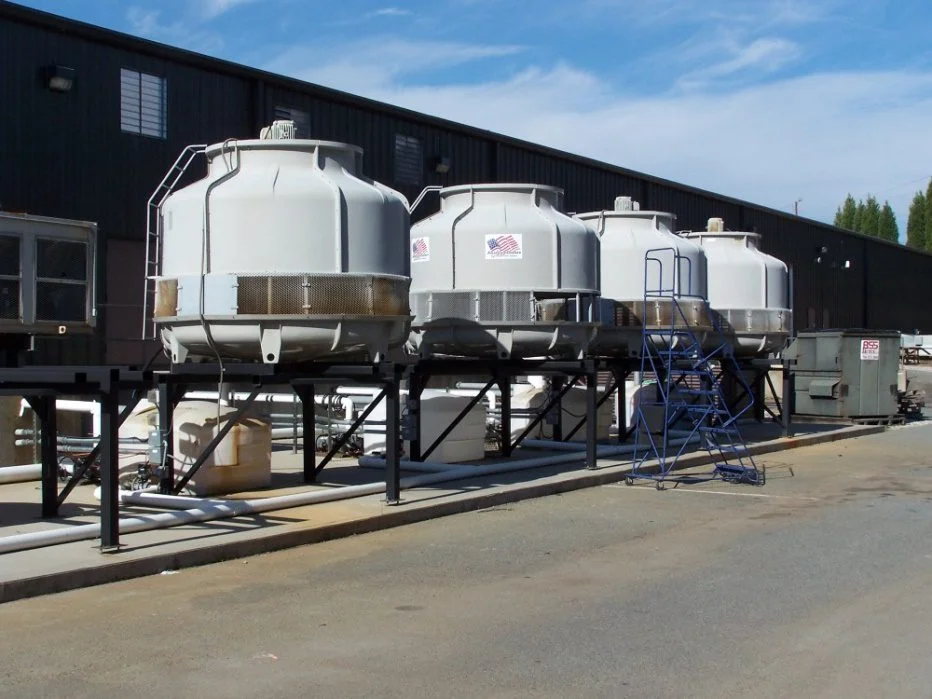
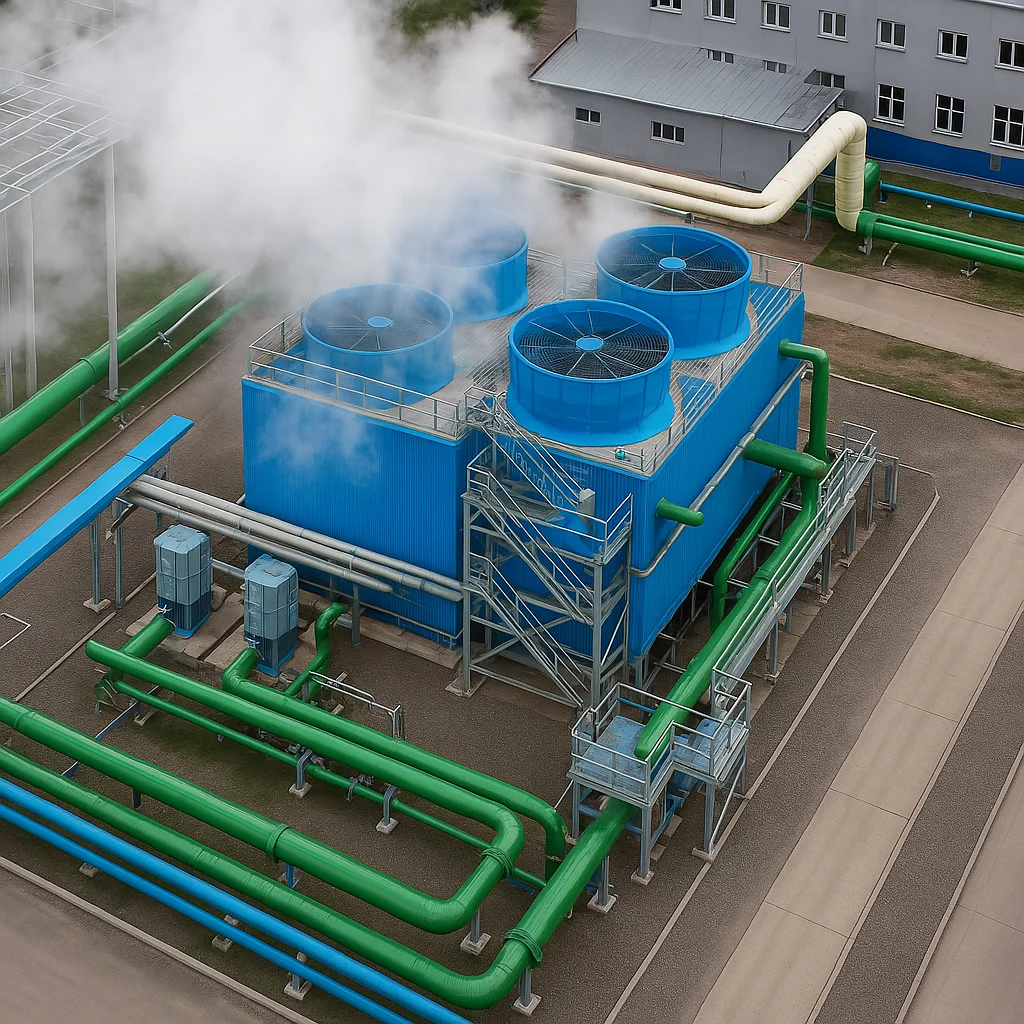
What Is Cooling Tower Water Treatment?
A cooling tower works by evaporating a small portion of the circulating water to remove heat. This evaporation concentrates dissolved minerals in the remaining water over time. Without treatment, these minerals precipitate and form hard scale deposits, dramatically reducing the efficiency of heat exchange surfaces. At the same time, dissolved oxygen and fluctuating pH levels accelerate corrosion of metal components, while the warm, nutrient-rich water environment encourages rapid microbial growth including Legionella bacteria, which poses serious public health risks.
Types of Cooling Tower Systems
Not all cooling towers operate the same way, and treatment requirements vary depending on system type:
Open Recirculating (Evaporative) Cooling Towers
The most common type in Pakistani industry. Water circulates continuously, and heat is removed through evaporation. These systems are most susceptible to scaling and biological growth because minerals concentrate with each cycle of evaporation. They require the most comprehensive treatment programs.
Closed-Loop Cooling Towers
In closed systems, the process fluid never contacts the atmosphere. Heat is transferred through a heat exchanger. These systems have lower contamination risk but still require corrosion inhibition and periodic biological treatment.
Once-Through Cooling Systems
Water passes through the system once and is discharged. These systems are less common due to water consumption concerns and regulatory pressure. Treatment focuses on corrosion control and meeting discharge standards.
Optimize Your Wastewater Management—Contact Our Specialists Today
The Three Core Problems in Untreated Cooling Water
Scale Deposition
As water evaporates in an open cooling tower, minerals such as calcium carbonate, calcium sulfate, magnesium silicate, and silica become increasingly concentrated. When concentrations exceed saturation limits, these minerals crystallize and deposit on pipe walls, heat exchanger surfaces, and fill media — forming hard, insulating scale.
Even a 1 mm layer of calcium carbonate scale increases energy consumption by approximately 10–15%. In Pakistan, where groundwater and municipal supplies in cities like Lahore, Multan, and Karachi carry high levels of hardness (total hardness often exceeding 300–500 mg/L as CaCO₃), scale formation is a particularly serious and rapid problem.
2. Corrosion
Corrosion in cooling systems is driven by dissolved oxygen, chloride ions, pH imbalance, and galvanic action between dissimilar metals. It manifests as pitting, general metal loss, and under-deposit corrosion — all of which compromise structural integrity and contaminate the circulating water with metal particles that act as nucleation sites for further scaling.
Left uncontrolled, corrosion leads to pipe failures, heat exchanger leaks, pump damage, and costly emergency shutdowns. Ferrous oxide deposits (rust) further reduce heat transfer efficiency and accelerate biological fouling.
3. Biological Fouling and Legionella Risk
Cooling towers are warm, nutrient-rich, and oxygen-saturated — ideal conditions for the rapid proliferation of bacteria, algae, and fungi. Biofilms form on surfaces, dramatically increasing corrosion rates and reducing heat transfer efficiency.
Most critically, Legionella pneumophila — the bacterium responsible for Legionnaires’ disease — thrives in cooling tower water between 25°C and 45°C, precisely the operating range of most industrial systems. Aerosol drift from the cooling tower can spread contaminated water droplets, posing a serious health risk to personnel and neighbouring communities. Regular biological monitoring and effective biocide treatment programs are not optional — they are an operational and legal necessity.
Why Choose WCSP for Cooling Tower Water Treatment?
- 18+ years of industrial water treatment experience in Pakistan (since 2007)
- WQA (Water Quality Association) membership — internationally recognized quality standard
- Pakistan-based team offering on-site assessments, rapid response, and local supply of treatment chemicals
- Tailored chemical programs — not generic off-the-shelf solutions — designed around your specific water chemistry and system type
- Comprehensive service including water analysis, chemical supply, dosing system installation, automated monitoring, and ongoing technical support
- Proven track record across textile, pharmaceutical, food & beverage, power, and chemical industries across Punjab, Sindh, and KPK
- Service Level Agreements (SLAs) available for long-term treatment program management and compliance documentation
The Business Case: ROI of Proper Cooling Tower Treatment
Many facility managers view water treatment as a cost. In reality, it is one of the highest-return investments a plant can make. Consider these industry benchmarks:
- Scale removal: A 1mm calcium carbonate scale deposit reduces heat transfer efficiency by approximately 10–15%, directly increasing energy consumption.
- Equipment life: Properly treated cooling systems last 20–30 years. Untreated systems commonly require major component replacement within 5–8 years.
- Water savings: Optimizing cycles of concentration from 2 to 4 COC can reduce makeup water consumption by up to 50%, a significant saving where water costs are rising.
- Downtime prevention: A single unplanned shutdown due to blocked heat exchangers or a failed pump can cost a Pakistani industrial facility Rs. 500,000 to several million rupees in lost production.
- Legionella liability: Failure to control Legionella exposes businesses to significant legal, reputational, and humanitarian risk.
WCSP’s treatment programs are designed to deliver measurable, documented improvements in system efficiency, water consumption, and equipment longevity.
Frequently Asked Question's
Common signs include visible white or rust-coloured scale deposits on tower surfaces or heat exchangers, reduced cooling efficiency or rising system temperatures under the same load, slippery surfaces in the tower basin (indicating algae or biofilm), visible corrosion or red-brown staining on metalwork, and unusual odours from the tower. However, many water chemistry problems develop invisibly — which is why WCSP recommends periodic water testing even when no visible symptoms are present. Contact us for a free water analysis to benchmark your current system performance.
Yes, and it is significantly underreported in Pakistan. Legionella pneumophila grows rapidly in cooling tower water at temperatures between 25°C and 45°C — conditions that are standard across Pakistan’s industrial cooling systems, particularly during the hot summer months. Aerosol drift from cooling towers can carry Legionella beyond the facility perimeter, creating public health risks. WCSP strongly recommends regular Legionella risk assessments, biological monitoring, and effective oxidising biocide programs as part of any responsible cooling tower management plan.
At minimum, continuous automated monitoring of pH and conductivity should be in place, with manual water testing performed weekly for key parameters including hardness, alkalinity, inhibitor residuals, and free biocide levels. Full comprehensive water analysis — including iron, silica, and biological counts — should be conducted monthly. Legionella sampling is recommended quarterly as a minimum, or more frequently for high-risk systems. Chemical dosing should be adjusted whenever water quality or system operating conditions change significantly — including seasonal changes, which are particularly pronounced in Pakistan.
Absolutely. One of the primary benefits of a properly managed treatment program is the ability to safely operate at higher cycles of concentration (COC). By doubling your COC from 2 to 4, you can reduce makeup water consumption by approximately 50% and cut blowdown volume by a similar margin. For large industrial cooling systems in Pakistan — where water costs and availability are growing concerns — this water saving often alone justifies the cost of the treatment program within the first year of operation.
A water softener physically removes calcium and magnesium ions from makeup water via ion exchange before it enters the cooling system, replacing them with sodium ions. This prevents scale formation at the source. A scale inhibitor, by contrast, is a chemical dosed directly into the circulating water that does not remove hardness but instead prevents hardness minerals from crystallizing and depositing on surfaces — through threshold inhibition and crystal modification mechanisms. Both approaches are valid; most comprehensive cooling tower treatment programs use softening of makeup water combined with residual scale inhibitor dosing in the circulating water for maximum protection.
WCSP provides a fully integrated service: we conduct initial water analysis and system assessment, design the treatment program, supply all required chemicals (scale inhibitors, corrosion inhibitors, biocides, pH adjusters), install and commission chemical dosing systems, provide ongoing monitoring and testing, and issue documentation for compliance records. We also offer Service Level Agreements (SLAs) for facilities that need a long-term managed treatment partnership with guaranteed response times and regular reporting.
Yes. WCSP offers environmentally responsible treatment options including biodegradable inhibitor formulations, ozone-based biological control systems, and UV disinfection — which can reduce or eliminate the need for halogen biocides in some applications. Non-chemical physical water conditioners (magnetic and electronic) are also available, though their efficacy varies significantly by water chemistry and application. Our engineers will assess whether a non-chemical or reduced-chemical approach is suitable for your specific system and water source.