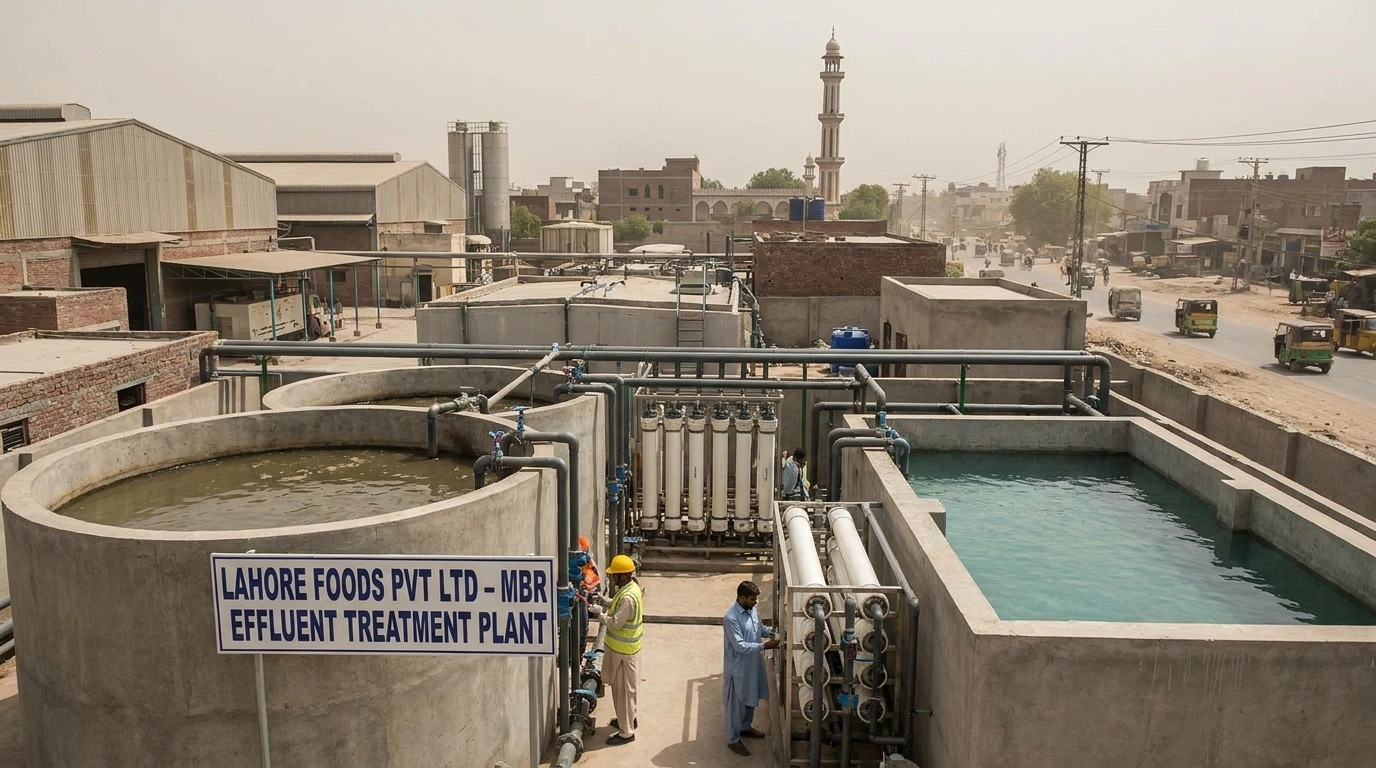
Pakistan loses an estimated 40 million working days annually to waterborne diseases — and a significant share of those cases trace back to inadequately disinfected drinking water in industrial and municipal supply chains. If your facility is still relying on chlorine as the primary disinfection barrier, you may be meeting the minimum compliance threshold while leaving your process, your product, and your people at real risk.
Chlorination has served water treatment well for over a century. But the science has moved on. UV water disinfection systems now deliver demonstrably superior pathogen elimination — without the chemical hazards, the DBP liability, or the taste and odour complaints that chlorine brings to food-grade and pharmaceutical applications.
This article breaks down exactly why ultraviolet water treatment is replacing chlorine across Pakistan’s industrial, commercial, and municipal sectors — covering the science, the economics, the compliance picture, and what a proper UV system specification actually requires.
UV Water Disinfection: Why UV Is Now Preferred Over Chlorination for Safe Drinking WaterWhy Chlorination Is No Longer Enough for Modern Water Safety Standards
Chlorine disinfection works through oxidation — it attacks cell membranes and disrupts enzyme activity in pathogens. For decades, that was sufficient. But two problems have grown impossible to ignore.
First, chlorine is ineffective against chlorine-resistant protozoa. Cryptosporidium parvum, responsible for major waterborne disease outbreaks across South Asia, requires chlorine contact times that are simply not practical in continuous-flow industrial systems. The WHO estimates that Cryptosporidium causes up to 30% of acute diarrhoeal illness in developing countries where surface water is part of the supply chain — a category that describes most of Pakistan’s canal-fed industrial districts, including Faisalabad, Sheikhupura, and Gujranwala.
Second, chlorine reacts with naturally occurring organic matter to form disinfection by-products (DBPs) — trihalomethanes (THMs) and haloacetic acids (HAAs) — several of which are classified as probable human carcinogens. For beverage manufacturers, dairy processors, and pharmaceutical plants operating under ISO 22000, GMP, or WHO-GMP frameworks, DBP formation is not a theoretical risk. It is a product liability and audit failure point.
Pakistan’s National Environmental Quality Standards (NEQS) set residual chlorine limits for drinking water supply, but they were not written to address DBP formation in industrial process water. Your downstream customers’ standards likely are. A UV water disinfection system eliminates both problems simultaneously.
How a UV Water Disinfection System Actually Works
UV disinfection operates on a straightforward physical principle: ultraviolet light at a wavelength of 254 nanometres penetrates microbial cell walls and directly damages DNA and RNA, preventing reproduction. A pathogen that cannot replicate cannot cause infection — regardless of whether it is technically “alive” in the water.
The key performance metric is UV dose, measured in millijoules per square centimetre (mJ/cm²). Different target organisms require different minimum doses:
- Bacteria (E. coli, Salmonella): 6–10 mJ/cm²
- Viruses (Hepatitis A, Rotavirus): 30–40 mJ/cm²
- Cryptosporidium parvum: 3–10 mJ/cm²
- Giardia lamblia: 5–10 mJ/cm²
A properly designed system delivers the required dose at your facility’s maximum design flow rate — accounting for the actual UV transmittance (UVT) of your water, not just manufacturer ratings under ideal lab conditions. This distinction matters enormously in practice. Water from Lahore’s distribution network, for example, typically carries turbidity, iron, and organic load profiles that reduce UVT significantly from the 95% figure used in textbook calculations.
The Role of UV Lamp Technology
Modern UV systems use one of two lamp technologies: low-pressure mercury lamps, which emit near-monochromatic light at 254 nm, or medium-pressure polychromatic lamps, which emit across a broader UV spectrum. For most industrial drinking water and process water applications in Pakistan, low-pressure amalgam lamps offer the best energy efficiency and longest service life — typically 12,000 to 16,000 hours before output drops below the 70% threshold that triggers replacement.
WCSP’s ultraviolet water treatment installations use NSF/ANSI 55 Class A validated systems rated for a minimum delivered dose of 40 mJ/cm² — sufficient for virus inactivation without any chemical dosing.
Demineralization Water System
UV vs Chlorination for Drinking Water: A Direct Comparison
The debate between UV and chlorination is not academic for a factory manager in Sialkot or a municipal engineer in Karachi. It comes down to operational cost, risk exposure, product quality, and compliance posture.
| Parameter | UV Disinfection | Chlorination |
|---|---|---|
| Pathogen Coverage | Bacteria, viruses, protozoa incl. Cryptosporidium | Bacteria and most viruses; poor vs Cryptosporidium |
| Disinfection By-Products | None | THMs, HAAs (potential carcinogens) |
| Residual Disinfection | None (requires chlorine booster for distribution) | Yes — provides residual in pipework |
| Taste and Odour Impact | None | Chlorine taste and odour at elevated doses |
| Chemical Storage & Handling | Not required | Chlorine gas or liquid — COSHH hazard |
| Operating Cost (Rs./m³) | Lower over system life | Ongoing chemical procurement |
| Capital Cost | Moderate–High (varies by flow) | Low (dosing pumps, storage) |
| Maintenance | Annual lamp replacement, UV sensor calibration | Continuous chemical monitoring, dosing adjustment |
| NEQS Compliance Support | Yes, for treatment; add-on chlorine needed for distribution | Yes |
| Food/Pharma Grade Suitability | Excellent — no chemical residuals | Requires dechlorination step for most applications |
| Effectiveness at High Turbidity | Reduced — pre-filtration required | Less sensitive to turbidity |
The takeaway: UV disinfection wins decisively on product quality, chemical risk elimination, and long-term operating cost for point-of-use and point-of-treatment applications. Chlorination retains an advantage in distribution networks where residual disinfectant is needed to suppress regrowth across long pipe runs — which is why WCSP typically recommends a combined UV primary disinfection plus low-dose chlorine residual approach for municipal distribution systems in cities like Rawalpindi and Multan.
What UV Intensity Testing Tells You That Flow Meters Cannot
A UV intensity testing programme is not optional equipment — it is the only way to know whether your system is actually delivering the dose it was designed for. This point gets missed more often than it should.
UV lamp output degrades progressively over its service life. Fouling on the quartz sleeve — from calcium carbonate scaling, iron precipitation, or biofilm formation — attenuates UV transmission independent of lamp condition. A system with a perfectly functioning lamp running inside a fouled sleeve may be delivering 40% less dose than its rated output. Your flow meter will not tell you this. Your turbidity sensor will not tell you this. Only a calibrated UV intensity monitor, measuring actual irradiance at the point of water treatment, will.
What a Proper UV Intensity Testing Protocol Covers
A rigorous UV intensity testing programme for industrial water systems includes:
- Continuous online UV intensity monitoring via a calibrated sensor inserted through the reactor wall
- Periodic biodosimetry validation — testing actual microbial reduction against a challenge organism (typically MS2 bacteriophage) at worst-case flow and UVT conditions
- Sleeve cleaning verification — measuring intensity before and after chemical cleaning (typically citric acid or proprietary descaling agents) to confirm that fouling, not lamp degradation, was the primary cause of intensity loss
- Lamp replacement tracking against cumulative operating hours, not calendar schedules
WCSP’s service engineers carry calibrated radiometers and conduct UV intensity testing as part of every scheduled maintenance visit on installed systems — because a UV system that has not been validated at site conditions is a disinfection system on paper only.
Which Industries in Pakistan Benefit Most from UV Water Disinfection Systems
Ultraviolet water treatment is not one-size-fits-all, but it is sector-transforming in applications where chemical contamination of the product stream is unacceptable or where regulatory frameworks explicitly limit chemical disinfectant residuals.
Beverage and food processing — Factories in Lahore, Karachi, and Faisalabad producing carbonated drinks, juices, dairy products, and packaged water operate under ISO 22000 and FSSC 22000 frameworks that demand zero disinfectant carry-over into the product stream. UV is the primary disinfection method of choice. WCSP has installed UV systems as part of integrated Reverse Osmosis and ultrafiltration treatment trains for multiple beverage clients in Punjab, where source water from tube wells carries elevated microbial load during monsoon periods.
Pharmaceutical manufacturing — WHO-GMP and PIC/S guidelines for water for injection (WFI) and purified water systems explicitly exclude chemical disinfectants from the final treatment stage. UV disinfection, typically at the polishing stage after RO and electrodeionisation (EDI), is a regulatory requirement for GMP-grade water production — not an optional upgrade. Pharmaceutical clusters in Lahore’s SITE and Korangi industrial areas increasingly specify UV as standard.
Textile processing — Textile mills in Faisalabad and Sheikhupura use large volumes of process water for dyeing, printing, and finishing. Residual chlorine in process water causes colour distortion and fibre degradation in sensitive fabric grades. UV disinfection eliminates this contamination risk without the capital expenditure of a full dechlorination system.
Municipal water supply — Water utilities in secondary cities — Gujranwala, Sahiwal, Dera Ghazi Khan — are under growing pressure from the Pakistan EPA and provincial environmental protection departments to reduce DBP formation in drinking water supply. UV primary disinfection reduces the chlorine dose required for residual protection, proportionally reducing THM and HAA formation.
Pro Tip — Expert Insight from WCSP’s Field Engineers
After 17 years of installing and commissioning UV systems across Pakistan’s industrial sector, the most common — and most expensive — mistake we see is undersizing the UV reactor for actual peak flow conditions rather than average design flow. A textile finishing plant in Faisalabad had installed a UV system rated at 80 m³/hour. Their actual peak demand during shift changeovers was 140 m³/hour. At that flow rate, water residence time in the reactor dropped below the minimum required for the rated dose. The system was running, the indicator light was green, and the water was leaving undertreated. The fix was a second parallel reactor — a cost that proper front-end sizing would have avoided entirely. Always size your UV system for maximum instantaneous flow, not average daily volume.
How to Integrate UV Disinfection Into Your Existing Water Treatment Train
UV disinfection is rarely installed as a standalone unit. Its performance depends critically on the water quality delivered to it by upstream treatment. Getting that integration right determines whether you achieve validated disinfection or run an expensive lamp that delivers false confidence.
The fundamental prerequisite is UV transmittance. Water entering the UV reactor must achieve a UVT of at least 75% at 254 nm for most standard reactor designs — and 85% or higher for systems targeting virus-level doses. Meeting that threshold typically requires:
- Coagulation and flocculation to remove suspended solids and colloidal organic matter
- Multimedia or ultrafiltration to bring turbidity below 1 NTU
- Iron and manganese removal where groundwater sources are used (iron above 0.3 mg/L causes severe quartz sleeve fouling)
- Activated carbon filtration to reduce dissolved organics that reduce UVT
For plants currently operating Reverse Osmosis systems, the RO permeate typically achieves UVT above 95% — making it the ideal feed stream for UV polishing. WCSP’s RO systems are routinely designed with UV disinfection as the final barrier, eliminating the need for any post-RO chemical dosing.
For greenfield projects, WCSP’s engineering team models the full treatment train — from raw water characterisation through to final UV dose delivery — using validated hydraulic and photochemical modelling tools before any equipment is specified. This is the difference between a system that works on commissioning day and one that holds performance across seasonal variation in source water quality.
The Cost Case for UV: What the Numbers Actually Show
The capital cost argument against UV — that chlorination infrastructure is cheaper to install — is technically accurate but analytically incomplete. When you account for total cost of ownership over a 10-year operating horizon, UV disinfection systems deliver lower overall cost in most industrial applications above 5 m³/hour.
According to WaterNSW’s treatment cost benchmarking data, chemical disinfection costs for chlorine-based systems in medium-scale industrial applications typically run 15–25% higher over a 10-year period than equivalent UV systems, once chemical procurement, storage compliance, dosing equipment maintenance, and DBP monitoring costs are included.
In Pakistan’s context, add the cost of chlorine supply chain disruption — particularly acute in interior Punjab and Sindh, where liquid chlorine supply reliability is inconsistent — and the UV economic case strengthens further. A UV system’s “chemical” is electricity. With stable grid power or a dedicated UPS, you have no supply chain exposure.
Lamp replacement — the primary ongoing cost of UV operation — runs approximately Rs. 25,000–45,000 per lamp annually depending on system size and operating hours. For a medium industrial system treating 50 m³/hour, that typically represents an annual operating cost well below the chlorine procurement cost for equivalent throughput.
WCSP provides full lifecycle cost modelling as part of the feasibility assessment for any UV system project — covering capital, energy, consumables, and scheduled maintenance across a 10-year window, indexed to current Pakistani market prices for all inputs.
CONCLUSION
The evidence is settled: for industrial, commercial, and pharmaceutical water applications in Pakistan, a UV water disinfection system outperforms chlorination on pathogen coverage, product quality protection, chemical risk elimination, and long-term operating economy. Chlorination remains valuable as a residual protection tool in distribution networks — but as a primary disinfection barrier, UV is the technically superior choice.
Four things to take from this article:
First, size your system for peak flow, not average flow — undersizing is the most common and most costly installation mistake in Pakistan’s industrial sector.
Second, UV intensity testing is not optional. A UV system without an inline intensity monitor and a periodic biodosimetry validation programme is not a validated disinfection barrier.
Third, upstream water quality determines UV system performance. Pre-treatment to achieve UVT above 85% is not gold-plating — it is the prerequisite for the dose delivery your system is rated for.
Fourth, the economics favour UV at industrial scale. Run the 10-year total cost of ownership comparison before defaulting to chlorine on capital cost grounds.
Ready to upgrade your water treatment system? Contact WCSP’s expert team today at watercareservices.org/contact-us/ — and get a site-specific UV system assessment backed by 17 years of treatment experience across Pakistan’s most demanding industrial sectors.
Explore next: How Reverse Osmosis and UV Disinfection Work Together in Food-Grade Water Systems — and Zero Liquid Discharge: Is Your Plant Ready for Pakistan’s Tightening Discharge Standards?
FAQ
1. What is a UV water disinfection system and how does it work?
A UV water disinfection system exposes water to ultraviolet light at 254 nanometres, which penetrates microbial cell walls and damages DNA so that bacteria, viruses, and protozoa cannot reproduce. It requires no chemicals, adds nothing to the water, and delivers disinfection in seconds as water flows through the reactor chamber.
2. Is UV disinfection better than chlorination for drinking water?
For point-of-use and industrial process water applications, UV water disinfection outperforms chlorination on pathogen coverage — including chlorine-resistant Cryptosporidium — and produces no disinfection by-products. Chlorine retains an advantage in distribution systems where residual protection against regrowth in pipework is needed.
3. What industries in Pakistan use UV water treatment systems?
Ultraviolet water treatment is standard in beverage and packaged water production, pharmaceutical manufacturing under WHO-GMP, food processing under ISO 22000, and textile finishing where residual chlorine would damage product quality. Municipal water utilities in Pakistani cities are also increasingly adopting UV to reduce DBP formation.
4. How often do UV lamps need to be replaced in an industrial system?
Low-pressure amalgam UV lamps typically deliver 12,000 to 16,000 operating hours before output drops below the 70% threshold that requires replacement. In continuous industrial operation — running 20 hours per day — that typically means annual or 18-monthly replacement cycles depending on system configuration and water quality.
5. What does UV intensity testing involve and why is it required?
UV intensity testing measures the actual irradiance delivered inside the reactor using a calibrated sensor, verifying that the system is delivering its rated disinfection dose at operating flow and water quality conditions. It is required because lamp degradation and quartz sleeve fouling both reduce delivered dose without triggering any flow or pressure alarm — the system appears to operate normally while under-treating water.
6. How much does a UV water disinfection system cost in Pakistan?
System cost varies significantly by flow rate, target pathogens, and pre-treatment requirements. Entry-level systems for small commercial applications start below Rs. 200,000, while validated industrial systems for 50–500 m³/hour applications range from Rs. 800,000 to several million rupees. WCSP provides free lifecycle cost assessments comparing UV against chlorination over a 10-year operating horizon for Pakistan-specific conditions.