If your facility has been classified as Category A under Punjab’s industrial pollution framework, you already know the compliance bar sits higher than it does for lower-category units — but many plant managers are still unclear on exactly what water testing frequency this classification actually requires in practice. Getting it wrong in either direction creates a real problem: under-testing risks EPA violations, while over-testing wastes budget on lab costs that add no compliance value.
This article explains how NEQS monitoring category Punjab classifications work, what Category A status generally means for water testing frequency and scope, and how to build a monitoring schedule that keeps your facility genuinely compliant without unnecessary cost. If you manage compliance for a Category A facility, this should give you a clear working framework.
How Industrial Categorization Works Under NEQS
The National Environmental Quality Standards framework, as applied by provincial EPAs including Punjab EPA, classifies industries into categories based primarily on pollution load, effluent volume, and the environmental risk associated with the sector. Category A generally represents facilities with higher pollution potential — commonly including larger textile processing, chemical manufacturing, tanneries, sugar mills, and certain pharmaceutical operations — while lower categories apply to industries with comparatively lower pollution load or volume.
This categorization directly affects two things: how closely a facility is scrutinized during EPA inspections, and how frequently self-monitoring and reporting is expected. Category A facilities are generally expected to demonstrate more rigorous, more frequent water testing and reporting than lower-category units, reflecting their higher potential environmental impact.
It’s worth noting that exact frequency requirements and reporting formats can be updated by provincial EPA notifications, so facilities should always confirm current requirements directly with Punjab EPA or a qualified compliance consultant rather than relying solely on general industry practice — the specifics matter for legal compliance in a way that general guidance can’t fully substitute for.
Why Category A Facilities Face Stricter Water Testing Expectations
Category A classification isn’t arbitrary — it reflects effluent characteristics that carry genuine environmental risk if not properly monitored:
- Higher pollutant concentrations, meaning small process changes can push discharge outside compliant limits more easily than in lower-load industries
- Larger effluent volumes, meaning any non-compliance event has a proportionally larger environmental impact
- Greater variability risk, particularly in batch-process or seasonal industries where a single missed testing cycle can hide a significant excursion
- Regulatory precedent, since Category A sectors have historically been associated with more frequent compliance issues, leading to closer ongoing scrutiny
This is why Category A status typically comes with an expectation of consistent, well-documented self-monitoring, not just a stronger performance during scheduled inspections.
What a Water Testing Program Should Cover
Regardless of the exact frequency your facility is required to follow, a genuinely effective water testing program for a Category A facility should cover:
Parameter Group | Examples |
Organic load | BOD, COD |
Physical parameters | pH, temperature, total suspended solids (TSS) |
Specific pollutants relevant to your sector | Heavy metals, oil & grease, specific chemicals used in production |
Biological parameters | Where applicable, based on discharge point and receiving water body |
The exact parameter list should be based on your facility’s actual process chemistry and discharge point — a textile unit, a sugar mill, and a pharmaceutical facility, even if all classified Category A, will have meaningfully different critical parameters to track closely.
Building a Practical Self-Monitoring Schedule
Since exact mandated frequencies can vary by sector, sub-category, and any facility-specific conditions attached to your EPA approval, the most reliable approach is to treat your official NEQS monitoring category Punjab requirements as the regulatory floor, and build your internal testing schedule to give you enough advance warning to correct problems before they become violations. A practical structure many Category A facilities use looks like this:
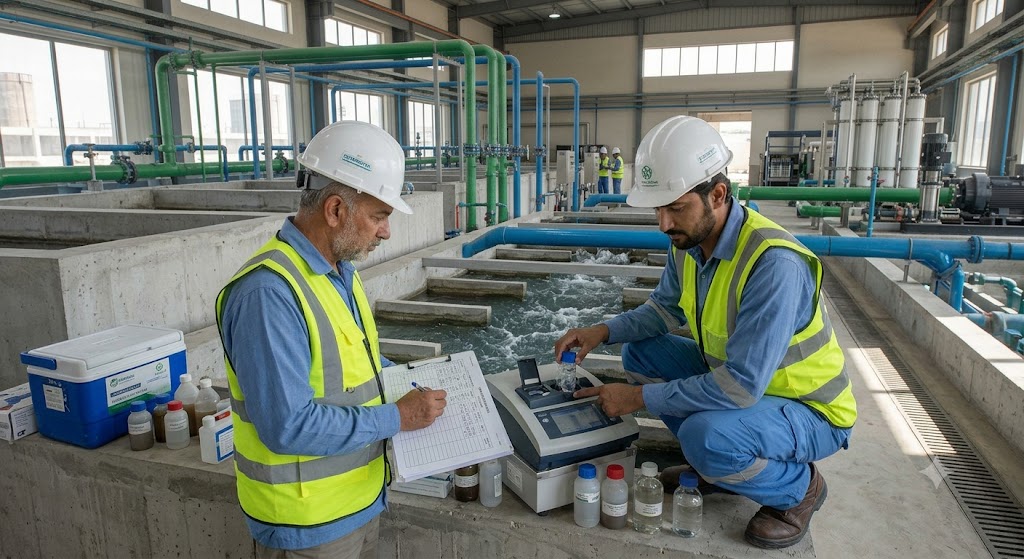
- High-frequency internal checks (daily to weekly) on key operational parameters like pH and flow, using water testing kits for immediate, on-site indicators.
- Regular comprehensive lab testing covering the full parameter set required for regulatory reporting, at a frequency that meets or exceeds your specific EPA requirement.
- Event-triggered testing following any process change, upset condition, or unusual discharge appearance, regardless of where it falls in the regular schedule.
- Pre-inspection verification testing, not as a substitute for regular monitoring, but as a final check to confirm consistent performance.
Facilities that rely solely on the minimum mandated frequency, with no internal checks in between, are the ones most likely to be caught off guard by an excursion between official testing dates.
The Cost of Under-Testing vs Over-Testing
Approach | Risk |
Testing only at the legal minimum frequency | Excursions between test dates go undetected until the next scheduled test or an EPA inspection |
Testing far more frequently than needed, without a clear purpose | Unnecessary lab costs that don’t meaningfully improve compliance outcomes |
Risk-based testing (higher frequency on critical/variable parameters, standard frequency elsewhere) | Balances cost and compliance risk most effectively |
The most cost-effective approach usually isn’t uniform high-frequency testing across every parameter — it’s identifying which parameters are most likely to drift or spike based on your specific process, and monitoring those more closely, while maintaining standard frequency on more stable parameters.
Documentation: As Important as the Testing Itself
For Category A facilities, testing without proper documentation provides limited compliance protection. A defensible water testing program should maintain:
- Consistent, dated testing records showing both results and testing methodology
- Clear records of any corrective action taken when a parameter approached or exceeded limits
- Evidence that testing frequency and scope align with your facility’s actual EPA-assigned requirements
- Real-time monitoring data where instrumentation is in place, supplementing periodic lab testing with continuous operational visibility
EPA inspectors reviewing a Category A facility’s compliance history generally respond more favorably to consistent records showing proactive management than to a facility that only produces testing data reactively when asked.
Practical Steps to Build Compliance Confidence
- Confirm your exact category and any facility-specific conditions directly with Punjab EPA or through a qualified compliance consultant, since requirements can vary and update over time.
- Map your critical parameters based on actual process chemistry, not a generic industry template.
- Layer internal checks on top of mandated testing, rather than treating the minimum requirement as sufficient on its own.
- Maintain consistent documentation, treating it as an ongoing operational practice rather than a pre-inspection task.
- Reassess your testing program whenever production processes, volumes, or discharge points change.
FAQ
Q1. What determines whether a facility is classified as Category A under Punjab’s NEQS framework?
Categorization is generally based on pollution load, effluent volume, and the environmental risk profile of the specific industrial sector, as assessed by Punjab EPA. Facilities should confirm their exact classification and any associated conditions directly with the relevant provincial authority.
Q2. Does Category A status mean my facility needs daily water testing?
Not necessarily for every parameter — official reporting frequency depends on your specific EPA requirements, which can vary by sector and facility conditions. However, many Category A facilities benefit from more frequent internal checks on key operational parameters even beyond the mandated reporting schedule.
Q3. Can I reduce water testing costs without risking compliance?
Yes, through a risk-based approach — testing critical or variable parameters more frequently while maintaining standard frequency on stable ones, rather than applying uniform high-frequency testing across every parameter regardless of actual risk.
Q4. What happens if a Category A facility fails to meet its required water testing frequency?
This can result in EPA enforcement action, ranging from formal notices to more serious penalties, particularly if non-compliance is discovered without a documented history of proactive monitoring. Consistent records of self-monitoring generally support faster, less disruptive resolution when issues do arise.
Conclusion
Water testing frequency for Category A industries in Punjab isn’t a one-size-fits-all number — it depends on your specific sector, effluent characteristics, and EPA-assigned conditions, and should be confirmed directly with regulatory authorities. Building a monitoring program that layers internal checks on top of mandated requirements, backed by consistent documentation, is what genuinely protects a facility from compliance risk. WCSP has supported Category A and other industrial clients across Punjab with monitoring program design and treatment system compliance since 2007, helping facilities build testing schedules matched to their actual regulatory and operational needs.