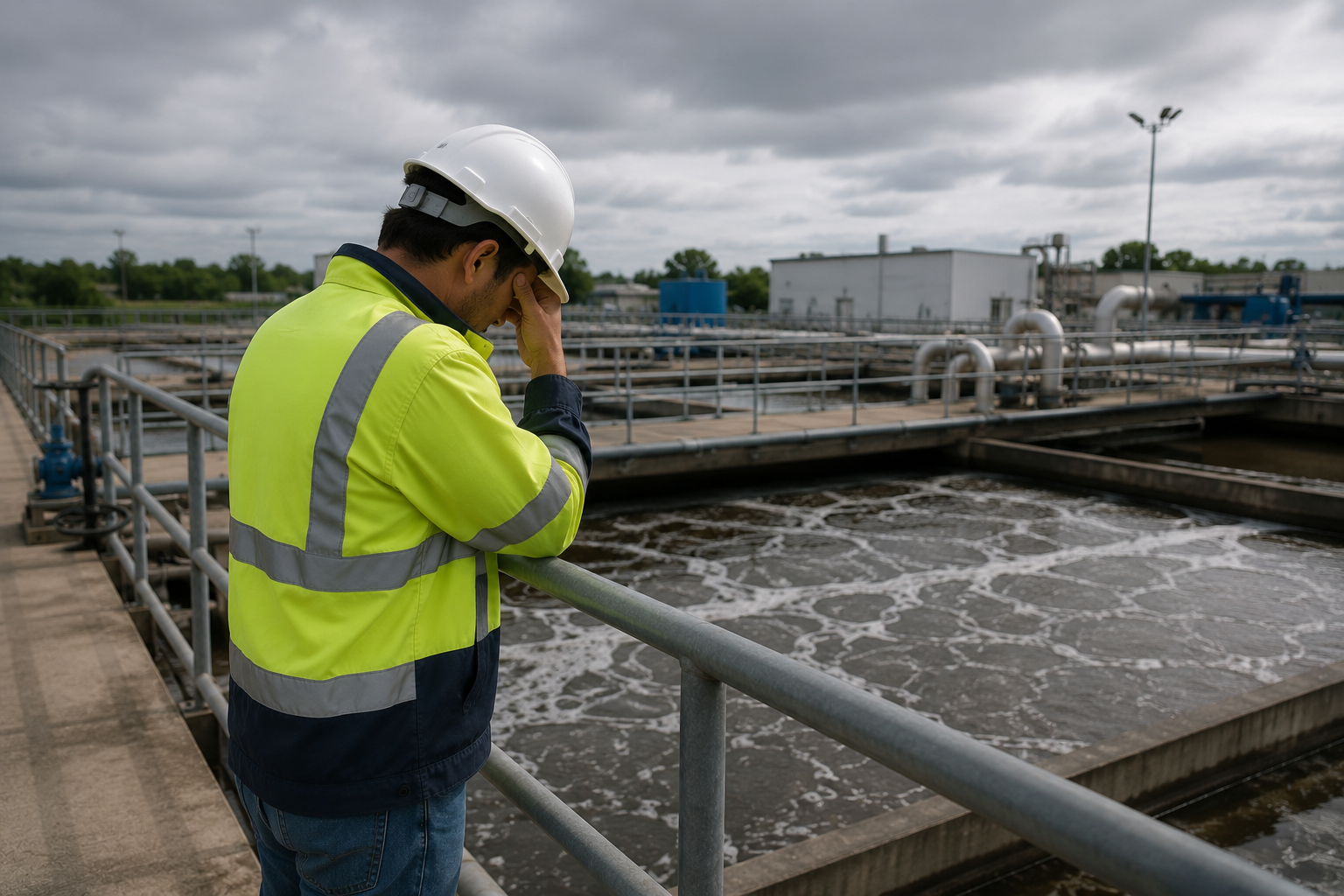
An unplanned shutdown at a water treatment plant rarely happens for a single, dramatic reason. It’s usually the accumulation of small, ignored warning signs — a pump running slightly hotter than usual, a membrane that hasn’t been cleaned on schedule, an alarm that got dismissed instead of investigated. By the time a Water Treatment system actually goes down, the root cause has often been building for weeks.
This article walks through the most common causes of water treatment plant downtime, and gives you a practical plant downtime prevention checklist you can use to catch problems before they force an unplanned shutdown. If reliability has been a growing concern at your facility, this should help you identify where the real risk is hiding.
Why Downtime Costs More Than It Looks Like
Plant managers often calculate downtime cost narrowly — lost production time, emergency repair fees — but the real cost is usually broader. A water treatment plant going offline can mean:
- Production halts if the facility depends on treated water for its core process
- Compliance violations if wastewater treatment stops and untreated or under-treated effluent is discharged, even briefly
- Emergency repair premiums, since urgent fixes typically cost more than planned maintenance
- Water quality inconsistency once the system restarts, since biological treatment stages in particular can take time to stabilize after an unplanned interruption
For facilities with continuous production schedules, even a few hours of unplanned downtime can cascade into a much larger disruption than the repair itself.
Common Causes of Water Treatment Plant Downtime
Based on patterns seen across industrial and municipal water treatment operations in Pakistan, downtime tends to trace back to a relatively small set of recurring causes:
1. Deferred or Inconsistent Maintenance
Skipped or delayed maintenance is the single most preventable cause of downtime. Membrane cleaning pushed back “just one more cycle,” pump inspections skipped during busy production periods, and filter replacements delayed to save cost all quietly increase failure risk until something finally gives out, usually at the worst possible time.
2. Power Supply Instability
Pakistan’s variable power supply, particularly outside major industrial zones, creates real operational risk for continuously running treatment processes. Frequent power interruptions can disrupt biological treatment stability, cause pump and motor stress from repeated restart cycles, and in some cases damage sensitive instrumentation without proper surge protection.
3. Feed Water or Effluent Variability
Sudden changes in feed water quality or effluent characteristics — a spike in turbidity, an unexpected chemical load, or a shock discharge from an upstream process — can overwhelm a system that wasn’t designed with adequate buffering capacity, leading to performance failure or automatic shutdown if safety interlocks are triggered.
4. Membrane Fouling and Scaling
Progressive fouling, if not caught early through consistent monitoring, eventually forces a system offline for emergency cleaning or membrane replacement rather than a planned maintenance cycle.
5. Inadequate Operator Training
Systems that are technically sound still experience preventable downtime when operators aren’t properly trained to recognize early warning signs, respond correctly to alarms, or follow correct startup/shutdown procedures.
6. Spare Parts Availability
A failed component that could be replaced within hours, if spares were on hand, instead causes days of downtime while a replacement is sourced — a particularly common issue for facilities relying on imported components without a local spares strategy.
Water Treatment Plant Downtime Prevention Checklist
Use this checklist to evaluate where your facility’s plant downtime prevention approach may have gaps:
# | Checklist Item |
1 | Preventive maintenance schedule is followed consistently, not deferred during busy periods |
2 | Power backup and surge protection are in place for critical treatment equipment |
3 | Equalization capacity is adequate for actual feed water or effluent variability |
4 | Membrane performance (pressure, flow, salt passage) is tracked against baseline, not just visually inspected |
5 | Operators are trained on early warning signs and correct emergency response procedures |
6 | Critical spare parts are stocked on-site or available through a fast local supply channel |
7 | Alarms and safety interlocks are tested regularly, not just installed and forgotten |
8 | Startup and shutdown procedures are documented and consistently followed |
Running through this list honestly, rather than assuming each item is already covered, usually reveals at least one or two gaps that are quietly increasing downtime risk.
The Role of Real-Time Monitoring in Downtime Prevention
Most downtime causes share a common thread: they develop gradually before they cause a failure. Consistent real-time monitoring of pressure, flow, and key water quality parameters gives operators visibility into that gradual development — a slowly rising differential pressure across a membrane, a pump drawing more current than its baseline, or a gradual shift in effluent characteristics — long before any of these trigger an actual shutdown. Facilities relying only on periodic manual checks are, by definition, only seeing a fraction of what’s happening between those checks.
Preventive Maintenance vs Reactive Repair: The Real Cost Difference
Factor | Preventive Maintenance | Reactive Repair (After Failure) |
Cost | Planned, generally lower per intervention | Higher, due to urgency premiums and potential collateral damage |
Downtime | Scheduled, minimal disruption | Unplanned, often extended while diagnosing and sourcing parts |
Compliance risk | Low, treatment continues without interruption | Higher, particularly for wastewater systems where discharge may be affected |
Equipment lifespan | Generally extended | Often shortened due to repeated stress before failure |
The cost difference isn’t marginal — a properly maintained Cleaning In Place (CIP) schedule for membranes, for example, typically costs far less over a year than the combined cost of emergency cleaning, lost production, and potential compliance exposure from a fouling-related shutdown.
Building Redundancy Where It Matters Most
Not every component needs a backup, but critical single points of failure deserve real attention:
- Critical pumps serving processes with no tolerance for interruption often justify a standby unit, even if it adds capital cost.
- Power backup systems (generators, UPS for instrumentation) protect against the region’s variable grid reliability, particularly for biological treatment stages that are sensitive to sudden interruption.
- Dual filtration or membrane trains, where feasible, allow one train to be taken offline for maintenance without halting the entire process.
Redundancy decisions should be based on the actual cost of downtime for that specific process, not applied uniformly across every component regardless of criticality.
FAQ
Q1. What is the most common cause of water treatment plant downtime?
Deferred or inconsistent maintenance is generally the leading cause, since small issues that would have been caught during routine servicing instead accumulate until they force an unplanned shutdown. This is why consistent adherence to a maintenance schedule matters more than the schedule’s specific details.
Q2. How does power instability affect water treatment plant downtime in Pakistan?
Frequent power interruptions can disrupt biological treatment stability, stress pumps and motors through repeated restart cycles, and risk damaging sensitive instrumentation without adequate surge protection. Facilities in areas with unreliable grid supply generally benefit significantly from backup power for critical treatment equipment.
Q3. Can real-time monitoring actually prevent downtime, or just detect problems faster?
It does both — early detection of developing issues, like gradual membrane fouling or a pump drifting outside its normal operating range, allows corrective action before the problem escalates into an actual failure. This shifts response from reactive to genuinely preventive.
Q4. How much spare parts inventory should a facility keep on-site?
This depends on your specific equipment and how quickly replacements can be sourced locally, but critical components with long lead times or limited local availability generally justify on-site stocking, since the cost of extended downtime usually exceeds the cost of holding spares.
Conclusion
Water treatment plant downtime is rarely unavoidable — most causes trace back to deferred maintenance, inadequate monitoring, or preventable gaps in preparation rather than sudden, unforeseeable equipment failure. A disciplined plant downtime prevention approach, built around consistent maintenance, real-time visibility, and sensible redundancy, protects both production continuity and compliance standing. WCSP has supported industrial and municipal clients across Pakistan with reliable water treatment plant design, commissioning, and ongoing service since 2007, with a focus on preventing downtime rather than just responding to it.