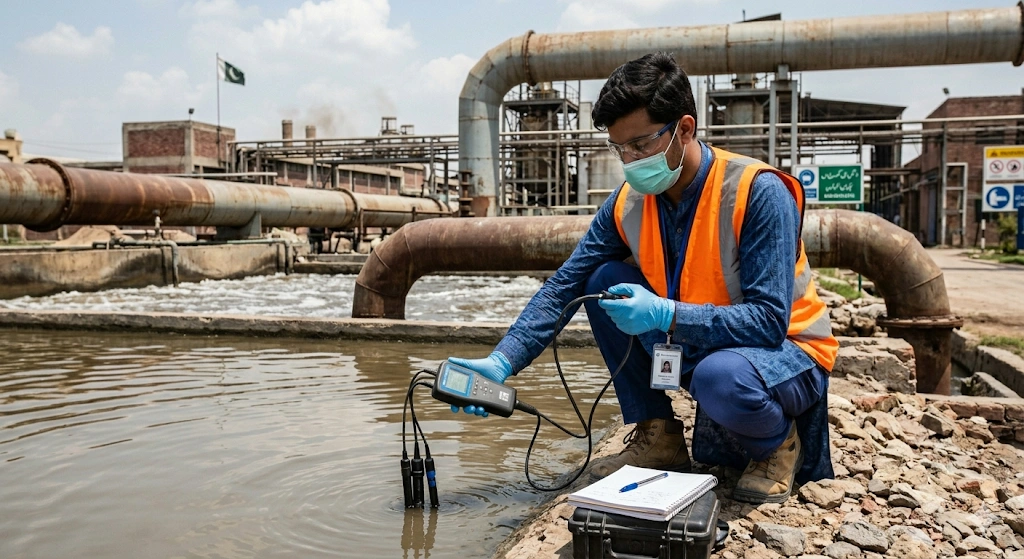
Roughly 80% of diseases in Pakistan are linked to contaminated or unsafe water, according to the Pakistan Council of Research in Water Resources. Yet the majority of industrial and commercial facilities in the country have no systematic water quality testing programme — they treat water, assume it is safe, and discover otherwise when a product fails an audit, a process breaks down, or a regulatory inspection flags a violation.
Water quality testing in Pakistan is not a bureaucratic formality. It is the diagnostic foundation of every water treatment decision you make. Without accurate, timely testing data, you are running treatment systems blind — dosing chemicals into water you have not characterised, operating membranes against an unknown fouling load, and reporting compliance on the basis of assumptions rather than measurements.
This article covers the parameters that matter, the standards you are measured against, the difference between on-site and laboratory testing, and how to select the right portable water testing kit for your specific application — whether you are managing a textile mill in Faisalabad, a beverage plant in Lahore, or a municipal supply scheme in Gujranwala.
What Water Quality Testing in Pakistan Actually Measures
Water quality testing in Pakistan covers three categories of parameters: physical, chemical, and biological. Each category serves a different diagnostic purpose, and each maps to specific treatment interventions.
Physical parameters — colour, turbidity, odour, total dissolved solids, and temperature — tell you about the water’s visible and tactile character. Turbidity above 4 NTU in drinking water, for example, indicates suspended particulate that will foul UV disinfection systems and membrane filters, and may shield pathogens from disinfection. Pakistan’s NEQS limit for drinking water turbidity is 5 NTU; WHO guidelines recommend below 1 NTU for UV disinfection effectiveness.
Chemical parameters cover a wide range: pH, hardness, alkalinity, iron, manganese, nitrates, fluoride, arsenic, chloride, sulphate, residual chlorine, and a range of heavy metals. Pakistan’s groundwater — particularly in the Punjab, Sindh, and Balochistan — is characterised by elevated arsenic, fluoride, and iron across wide geographic areas. The Pakistan Council of Research in Water Resources has documented arsenic contamination above the WHO guideline of 10 µg/L in tube well water across more than 36 districts. For an industrial facility drawing on a tube well for process water, running without an arsenic test is a product safety and liability exposure.
Biological parameters — total coliform, fecal coliform (E. coli), and heterotrophic plate count — determine microbial safety. These are the parameters that drive the most urgent treatment decisions. A single positive E. coli result in a food or beverage processing plant is an immediate production halt under ISO 22000 and FSSC 22000 audit protocols.
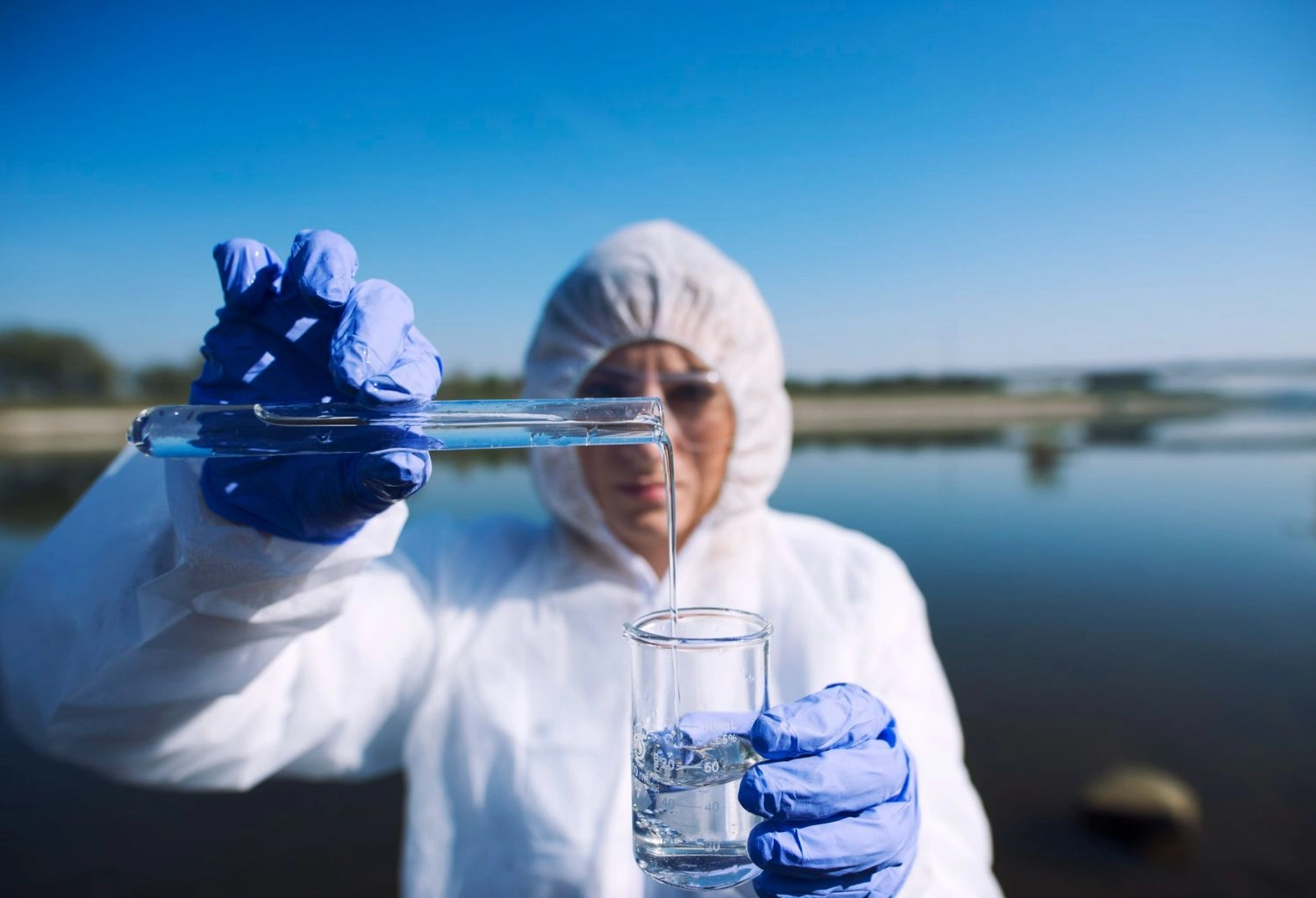
WCSP’s water quality monitoring programmes cover all three categories, with testing frequency and parameter scope matched to your source water variability and downstream process requirements.
Pakistan’s Water Quality Standards: NEQS vs WHO — What You Are Actually Required to Meet
Most facility managers in Pakistan are familiar with the name NEQS but uncertain about which standard applies to which water use. This ambiguity creates compliance gaps that regulatory inspections routinely exploit.
Pakistan’s National Environmental Quality Standards for drinking water set limits for 26 parameters including pH (6.5–8.5), TDS (1,000 mg/L maximum), total hardness (500 mg/L), nitrate (50 mg/L), arsenic (0.05 mg/L), and fecal coliforms (must be absent in 100 mL). These are the minimum enforceable standards under the Pakistan Environmental Protection Act 1997 for municipal drinking water supply.
The WHO Guidelines for Drinking-Water Quality, now in their fourth edition, set tighter limits for several critical parameters: arsenic at 10 µg/L versus NEQS’s 50 µg/L, fluoride at 1.5 mg/L, and turbidity below 1 NTU for disinfection efficacy. For export-facing food and beverage manufacturers, pharmaceutical producers operating under WHO-GMP, and bottled water plants seeking international certification, WHO standards are effectively mandatory even where NEQS technically permits higher limits.
Which Standard Applies to Your Operation
For industrial process water — cooling towers, boiler feed, textile dyeing — NEQS provides minimum guidance but your equipment manufacturer’s specifications and downstream product quality requirements typically impose tighter limits. A boiler operating above 10 bar pressure, for example, requires feed water TDS well below 500 mg/L to prevent scaling and carry-over. WCSP’s demineralisation and water softening systems are designed to meet equipment-specific water quality targets, not just regulatory minimums.
For wastewater discharge, NEQS Effluent Standards apply — COD, BOD, TSS, pH, and a list of priority pollutants. Pakistan EPA provincial enforcement in Lahore, Karachi, and Faisalabad has intensified significantly since 2020, with textile and tannery clusters facing increased inspection frequency and penalty notices.
Water Quality Monitoring
The 12 Water Testing Parameters Every Pakistani Industrial Facility Should Monitor
You do not need to test for 200 parameters on every sample. But there is a core set that every industrial facility in Pakistan should track on a regular schedule — because these are the parameters most likely to affect treatment system performance, product quality, and compliance status simultaneously.
| Parameter | Unit | NEQS Limit | WHO Guideline | Why It Matters for Industry |
|---|---|---|---|---|
| pH | pH units | 6.5–8.5 | 6.5–8.5 | Corrosion, scaling, RO membrane performance |
| TDS | mg/L | 1,000 | 600 recommended | RO sizing, boiler feed quality, product taste |
| Turbidity | NTU | 5 | 1 (for UV systems) | Membrane fouling, UV disinfection efficacy |
| Total Hardness | mg/L CaCO₃ | 500 | 200–500 | Scaling in heat exchangers, boilers, cooling systems |
| Iron | mg/L | 0.3 | 0.3 | Membrane fouling, staining in textile, UV sleeve fouling |
| Manganese | mg/L | 0.1 | 0.1 | Staining, taste, UV sleeve fouling |
| Arsenic | µg/L | 50 | 10 | Carcinogenic — critical for drinking and food process water |
| Nitrate | mg/L | 50 | 50 | Infant safety, indicator of agricultural contamination |
| Residual Chlorine | mg/L | 0.2–0.5 | 0.2–0.5 | Disinfection adequacy, DBP formation risk |
| Fecal Coliform | per 100 mL | Absent | Absent | Primary microbial safety indicator |
| COD | mg/L | 150 | — | Effluent compliance, treatment system loading |
| Fluoride | mg/L | 1.5 | 1.5 | Dental/skeletal health — elevated in Balochistan, Thar |
WCSP’s real-time monitoring systems track most of these parameters continuously at critical points in your treatment train — with automated alarms triggering when any parameter breaches its set point.
Pro Tip — Expert Insight from WCSP’s Testing Team
In 17 years of conducting water quality audits across Pakistan, the single most common error we see is facilities testing only their treated water output — and never testing their raw source water. Your source water is not static. Tube well quality in Faisalabad’s industrial estates shifts significantly between pre-monsoon and post-monsoon periods, with TDS, iron, and coliform counts all varying by factors of two to five. A treatment system designed on February source water data may be completely overwhelmed by August source water conditions. Test your source water at minimum quarterly — and always after any change in pump depth, flow rate, or nearby land use.
How to Choose the Right Portable Water Testing Kit for Field Use
A portable water testing kit is your first line of diagnostic intelligence — whether you are conducting a site survey before system design, checking daily treatment performance, or responding to a complaint about water quality at a remote facility.
The right kit depends entirely on what you need to measure and how quickly you need results.
Multiparameter Digital Meters
For physical and basic chemical parameters — pH, TDS, conductivity, dissolved oxygen, temperature, and ORP — a multiparameter digital meter is the most practical field tool. Instruments from Hanna Instruments, YSI, and Hach cover this category. A quality handheld meter gives you results in under 60 seconds per parameter, with accuracy adequate for operational monitoring and initial site assessment. For routine monitoring at a beverage plant or municipal water intake, this class of instrument delivers what you need.
Colorimetric Test Kits
For parameters like iron, manganese, nitrate, chlorine, arsenic, and fluoride, colorimetric test kits — where a reagent reacts with the water sample to produce a colour change read against a reference scale — are the standard field method. Hach’s DR series and LaMotte’s SMART colorimeters digitise the colour reading to eliminate observer error. Manual comparator kits are lower cost but introduce subjectivity, particularly under field lighting conditions.
For arsenic specifically — a critical parameter across Pakistan’s Punjab and Sindh tube well water supplies — field test kits based on the Gutzeit method provide indicative results down to 10 µg/L. These are adequate for screening but not for regulatory reporting, which requires laboratory ICP-MS analysis.
Portable Microbiology Test Kits
Rapid coliform detection in the field uses membrane filtration with Compact Dry EC plates or Colilert presence-absence tests. Results are available in 18–24 hours — acceptable for next-day decisions, though not as fast as the electrochemical methods used for chemical parameters. For any facility where microbial contamination is a production risk — food and beverage, pharmaceuticals, packaged water — WCSP recommends a formal sampling protocol with chain-of-custody documentation, even for field tests, so that results are defensible in the event of an audit.
Laboratory Testing vs On-Site Testing: When Each Method Is the Right Choice
The question is not which method is better — they serve different purposes and the strongest water quality programmes use both.
On-site portable testing with a portable water testing kit gives you speed and frequency. You can test a sample within minutes of collection, catch a sudden quality excursion before it reaches downstream processes, and monitor treatment performance in real time. The limitations are accuracy at trace concentrations (arsenic below 10 µg/L, for example), matrix interferences that affect colorimetric readings in high-turbidity or highly coloured water samples, and the inability to test for complex organic compounds, pesticides, or full heavy metals panels.
Laboratory analysis by an accredited laboratory — PCSIR, SGS Pakistan, Bureau Veritas, or a Pakistan EPA-accredited environmental laboratory — provides regulatory-grade documentation, validated methods (typically APHA Standard Methods or equivalent), detection limits in the ppb to ppt range, and legally defensible reporting. For NEQS compliance reporting, trade effluent discharge consents, ISO certification audits, and any dispute with a regulatory authority, laboratory analysis is mandatory.
The practical approach for most Pakistani industrial facilities: conduct daily or weekly on-site testing for operational parameters (pH, TDS, turbidity, residual chlorine, conductivity) using calibrated field instruments, and schedule quarterly or semi-annual laboratory analysis for the full regulatory parameter set. This combination gives you operational visibility and compliance documentation without the cost and delay of sending every sample to a laboratory.
WCSP’s environmental monitoring division supports both levels — providing calibrated on-site testing services during system commissioning and periodic laboratory-standard sampling for regulatory reporting across industrial clients in Lahore, Karachi, Faisalabad, and Sialkot.
Setting Up a Water Quality Testing Programme That Actually Works
Most Pakistani facilities that have a water testing programme fail to get useful intelligence from it — not because the testing equipment is inadequate, but because the programme architecture is wrong. Here is what a functional testing programme requires.
First, define your testing points strategically. Raw source water, post-coagulation, post-filtration, post-disinfection, and final distribution point are the minimum critical control points. Each point in your treatment train tells you something specific about what that process step is — or is not — achieving.
Second, establish alert limits and action limits separately for each parameter. An alert limit triggers increased monitoring frequency; an action limit triggers an immediate process intervention. Running a system with only a single “pass/fail” threshold means you are always in reactive mode — you find out about a problem after the treated water has already left the system.
Third, log every result with timestamp, sample location, operator ID, instrument serial number, and calibration status. A testing programme with no documentation trail has no compliance value. For facilities operating under ISO 22000, GMP, or ISO 9001, documented water quality records are an audit requirement, not optional.
Fourth, review trends monthly — not just individual results. A TDS reading of 450 mg/L is acceptable in isolation. A TDS reading that has risen from 250 to 450 mg/L over three months tells you that your RO membrane is declining in rejection performance and needs attention before it fails.
WCSP’s automation and real-time monitoring systems can automate data capture, trend analysis, and alert notification — eliminating the manual logging burden while creating an auditable digital record.
Water Quality Testing for Specific Sectors in Pakistan
The parameters that matter most to you depend on your sector. A one-size-fits-all testing programme misses the specific risks and regulatory requirements that define water quality in your industry.
For textile mills in Faisalabad and Gujranwala — the largest water-consuming industrial sector in Pakistan — the critical parameters are hardness (scaling in steam systems), iron and manganese (fabric staining), pH (dye chemistry), and COD in discharge (NEQS effluent compliance). Residual chlorine in process water must be tested and controlled, as chlorine causes irreversible colour damage in reactive-dyed fabrics.
For beverage and packaged water plants in Lahore and Karachi — operating under PSQCA’s Pakistan Standard for Packaged Drinking Water (PS 4178) as well as ISO 22000 — the complete WHO drinking water parameters apply, plus specific testing for nitrosamines, pesticide residues, and bottling line microbiology. The Pakistan Standards and Quality Control Authority conducts surprise inspections on packaged water facilities and has suspended multiple brands in recent years for parameter violations.
For pharmaceutical manufacturers in Lahore’s SITE area and Karachi’s Korangi industrial estate — operating under Drug Regulatory Authority of Pakistan (DRAP) and WHO-GMP requirements — water for injection and purified water testing follows USP and Ph.Eur. monographs, with conductivity, TOC, endotoxin, and microbial limits as the defining parameters.
For municipal water utilities — from large urban utilities in Lahore and Rawalpindi to smaller schemes in secondary cities — the operational priority is disinfection adequacy (residual chlorine at the distribution endpoint) and microbial safety (coliform absence), with periodic comprehensive testing for the full NEQS drinking water parameter set.
CONCLUSION
Knowing your water is the non-negotiable first step in treating it effectively. Without a systematic water quality testing programme matched to your source water variability, treatment train design, and regulatory obligations, you are making treatment decisions on assumptions — and assumptions become audit failures, product recalls, and regulatory notices.
Four things to act on now: establish testing points at every critical control point in your treatment train, not just the final output; separate operational monitoring (daily, on-site) from regulatory testing (quarterly, laboratory-grade); set alert and action limits for each parameter rather than single pass-fail thresholds; and build a documented digital record that survives a regulatory inspection.
Water quality testing in Pakistan has never been more accessible — portable testing technology is affordable, laboratory turnaround times have shortened, and real-time online monitoring is now practical at industrial scale. The barrier is not technology or cost. It is prioritisation.
Ready to upgrade your water treatment system? Contact WCSP’s expert team today at watercareservices.org/contact-us/ — and get a structured water quality testing audit for your facility, backed by 17 years of experience across Pakistan’s most demanding industrial and municipal water applications.
Explore next: How Reverse Osmosis Removes TDS and Heavy Metals from Industrial Water in Pakistan — and UV Water Disinfection vs Chlorination: Which Is Right for Your Facility?
FAQ — Schema Ready
1. What are the most important water testing parameters for drinking water in Pakistan?
Answer: The most critical parameters for drinking water quality testing in Pakistan are pH, TDS, turbidity, fecal coliform, arsenic, nitrate, fluoride, and residual chlorine. These cover the primary health risks from Pakistan’s groundwater and surface water sources and map directly to both NEQS standards and WHO drinking water guidelines that regulatory bodies and auditors reference.
2. What is the difference between NEQS and WHO drinking water standards in Pakistan?
Answer: NEQS sets the minimum legally enforceable limits for drinking water under Pakistan’s Environmental Protection Act. WHO guidelines are generally stricter on parameters like arsenic (10 µg/L vs NEQS’s 50 µg/L) and turbidity. For food, beverage, and pharmaceutical manufacturers, WHO standards are effectively mandatory even where NEQS permits higher levels, because export customers and certification auditors apply WHO benchmarks.
3. Which portable water testing kit is best for industrial use in Pakistan?
Answer: For industrial field testing in Pakistan, a combination approach works best: a multiparameter digital meter for pH, TDS, conductivity, and turbidity, paired with a colorimetric analyser for iron, chlorine, nitrate, and arsenic. Hach, YSI, and Hanna Instruments all offer calibrated handheld units suited to field conditions. Choose based on the specific parameters your process and compliance programme require.
4. How often should a factory in Pakistan test its water quality?
Answer: Operational parameters like pH, TDS, turbidity, and residual chlorine should be tested daily or at every shift using on-site instruments. A full parameter set for NEQS compliance reporting should be tested quarterly by an accredited laboratory. Source water should be tested separately from treated water, and additional testing should be triggered by any change in source water supply, treatment system performance, or regulatory notification.
5. How much does water quality testing cost in Pakistan?
Answer: On-site water quality testing in Pakistan using portable instruments costs primarily in equipment (Rs. 20,000–150,000 for quality multiparameter meters) with minimal per-test consumable costs. Laboratory analysis through accredited facilities like PCSIR or SGS Pakistan typically runs Rs. 5,000–25,000 per sample depending on the parameter panel. A comprehensive NEQS compliance test panel for industrial effluent ranges from Rs. 15,000 to 40,000 per sample at most commercial laboratories.
6. Is arsenic a problem in Pakistani industrial water supplies?
Answer: Yes. The Pakistan Council of Research in Water Resources has documented arsenic above WHO’s 10 µg/L guideline in tube well water across more than 36 districts, concentrated in southern Punjab and Sindh. Industrial facilities drawing on groundwater in these regions must test specifically for arsenic using ICP-MS laboratory analysis — field colorimetric kits can screen but are not sufficiently sensitive for regulatory documentation at concentrations near the WHO threshold.