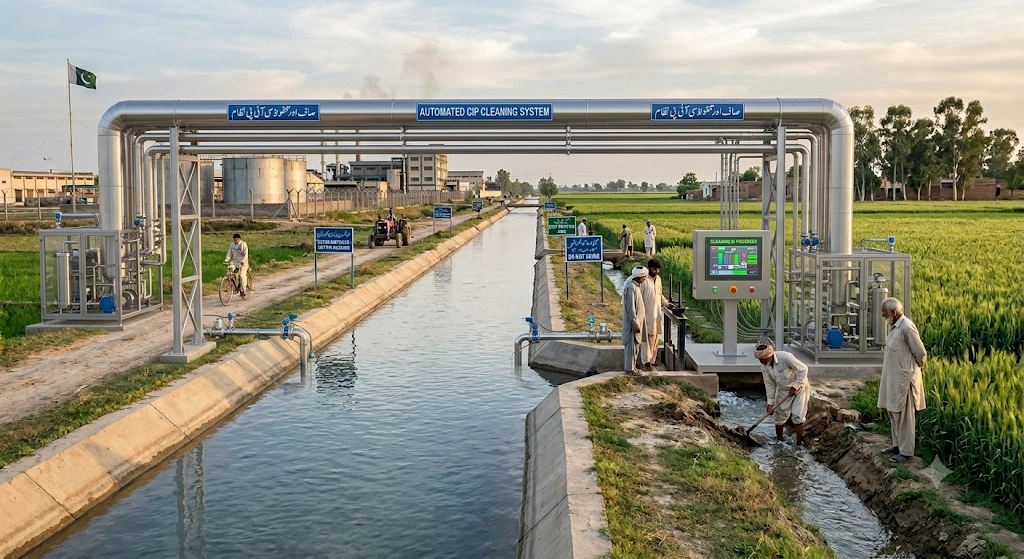
Your production line just failed a microbial audit. The inspector has flagged residue in your filler tank, and your next batch is on hold. Sound familiar? For beverage and food manufacturers across Lahore, Faisalabad, and Karachi, contamination incidents like this are not freak accidents. They are the predictable result of inadequate sanitation systems.
According to the FDA’s Food Safety Modernization Act compliance data, over 60 percent of food recalls globally trace back to sanitation failures. In Pakistan’s food and beverage sector, where the Pakistan Environmental Protection Agency (Pak-EPA) and NEQS are tightening inspection standards each year, the stakes are higher than ever.
A properly designed cleaning in place CIP system is your frontline defense. It is not just a piece of equipment. It is a process discipline that determines your product quality, your regulatory standing, and ultimately your brand reputation. This article breaks down how CIP works, what separates high-performance systems from poorly designed ones, how automated CIP water treatment is transforming plant operations, and what Pakistan’s food and beverage industry specifically needs to get right.
What Is a Cleaning-in-Place CIP System and Why Does Your Plant Need One?
A cleaning in place CIP system cleans the interior surfaces of tanks, pipelines, heat exchangers, fillers, and processing vessels without requiring disassembly. It works by circulating precisely controlled sequences of cleaning chemicals, hot water, and sanitizers through the equipment at defined velocities, temperatures, and contact times.
Before CIP became standard, cleaning required plant shutdowns, manual dismantling, and hand-scrubbing. That process introduced human error, extended downtime by four to eight hours per cycle, and created inconsistent results. Modern CIP eliminates all three problems.
The Core Value Proposition for Pakistan’s Food Sector
For a beverage plant in Gujranwala producing carbonated drinks or a dairy processor in Sahiwal handling pasteurized milk, contamination is a production-stopper. A single positive Listeria or Salmonella test can shut down export contracts and attract Pak-EPA intervention. CIP provides documented, repeatable sanitation that holds up to audit scrutiny.
WCSP’s industrial water treatment expertise, developed over 17 years serving clients from Lahore to Karachi, shows that plants without automated CIP typically spend 30 to 40 percent more on labor, water, and chemical costs annually compared to those with dedicated CIP infrastructure.
How a Cleaning-in-Place CIP System Works: The Six-Stage Cycle
Every effective CIP cycle follows a defined sequence. Skipping or shortening any stage creates gaps that allow biofilm formation. Biofilm is particularly dangerous because it is 1,000 times more resistant to disinfectants than planktonic bacteria, according to research published in the Journal of Food Protection.
Here is the standard six-stage CIP cycle used in food and beverage plants:
CIP Six-Stage Cycle
| CIP Stage | Chemical Used | Temp (C) | Duration (min) | Purpose | Order |
| Pre-Rinse | Water only | Ambient | 5-10 | Remove loose soil and product residue | 1 |
| Caustic Wash | NaOH (1-2%) | 70-80 | 15-20 | Remove fats, proteins, organic matter | 2 |
| Intermediate Rinse | Water only | Ambient | 5-10 | Flush caustic residues | 3 |
| Acid Wash | HNO3 / PA (0.5-1.5%) | 65-70 | 10-15 | Remove mineral deposits, scale | 4 |
| Final Rinse | Water / Hot water | Ambient-85 | 5-10 | Remove all chemical traces | 5 |
| Sanitization | Chlorine / Steam / PAA | Variable | 5-10 | Eliminate microbial contamination | 6 |
Table: Standard CIP cycle stages for food and beverage processing plants.
Temperature and chemical concentration are the two variables that most commonly fail in under-designed systems. Your caustic wash must hold 70 to 80 degrees Celsius for the full contact time. If your heating system cannot sustain that temperature across the full tank volume, you are not cleaning. You are smearing contamination in warm water.
Wastewater Treatment System
Single-Use vs Recirculating CIP: Which Design Fits Your Plant?
Not all CIP systems are built the same way. The two primary designs are single-use systems and multi-use recirculating systems. Choosing the wrong one for your operation is one of the most expensive mistakes a plant manager can make.
Single-Use CIP Systems
In a single-use system, cleaning solutions are prepared fresh for each cycle and discharged after one pass. This approach is common in plants handling highly sensitive products such as baby food, infant formula, or pharmaceutical grade beverages where any cross-contamination risk from recovered chemicals is unacceptable. Single-use systems use more water and chemical per cycle but offer absolute certainty of solution freshness.
Recirculating CIP Systems
Recirculating systems recover and reuse cleaning chemicals across multiple cycles, monitoring concentration and temperature in real time. They are the standard for high-throughput beverage plants, breweries, and dairy processors. According to industry data from the European Hygienic Engineering and Design Group, recirculating CIP systems reduce chemical consumption by up to 70 percent and water usage by 60 percent compared to single-use designs.
For Pakistan’s food sector, where water scarcity is a real operational concern and chemical procurement costs are rising, recirculating CIP is the more practical and financially sound choice for most facilities. WCSP’s automated CIP water treatment systems incorporate conductivity sensors and inline analysis to maintain precise chemical concentrations throughout the recovery cycle.
| Expert Insight from WCSP’s 17+ Years in the Field
The most common mistake we see in Pakistan’s food and beverage plants is not a wrong chemical choice. It is flow velocity. CIP requires a minimum turbulent flow of 1.5 meters per second to mechanically displace soil from pipe walls. Plants that size their CIP pumps based on tank volume alone rather than pipeline diameter and length end up with laminar flow that pushes contamination around rather than removing it. If your CIP cycles are getting longer but results are not improving, audit your flow rates before changing your chemicals. |
Automated CIP Water Treatment: Why Manual Dosing Is No Longer Acceptable
Manually dosing chemicals into a CIP system is like guessing your way through a pharmaceutical formulation. You get different results each time, you waste chemicals when you overdose, and you risk incomplete cleaning when you underdose. Automated CIP water treatment removes human variability from the equation.
Modern automated systems use conductivity sensors to measure cleaning solution strength in real time. When caustic concentration drops below the set point due to dilution by soil load, the dosing pump automatically compensates. The same applies to acid concentration and sanitizer levels. Every parameter is logged, creating a continuous digital audit trail that your quality team, your customers, and your EPA compliance officers can review.
Integration with PLC and SCADA Systems
WCSP installs CIP automation using PLC controls connected to SCADA platforms, allowing plant managers to monitor and control CIP cycles remotely. This is particularly valuable for multi-line facilities in Faisalabad or large integrated food parks in Karachi where a single operator cannot physically monitor all CIP circuits simultaneously. Real-time alarms flag temperature deviations, conductivity drops, or flow anomalies before they result in a failed clean.
The data from automated systems also enables genuine continuous improvement. You can track chemical consumption per cycle, compare cycle durations week over week, and correlate cleaning performance data with product quality outcomes. No manual log book gives you that level of insight.
CIP Chemical Selection: Getting the Chemistry Right for Food and Beverage Applications
CIP chemistry is not a one-size-fits-all equation. The soils you are cleaning determine the chemicals you need, and the materials your equipment is made of determine what concentrations are safe.
Caustic (Sodium Hydroxide) for Organic Soils
Sodium hydroxide at one to two percent concentration is the standard for removing proteins, fats, and sugars. It is the primary cleaning agent in dairy CIP, beverage filling lines, and any process that handles organic matter. The saponification reaction breaks down fatty acids, while its high pH disrupts protein structures. For plants in Pakistan using local milk or fruit-based products, caustic wash is non-negotiable as the primary cleaning stage.
Acid Wash for Mineral Scale
Nitric acid or phosphoric acid at 0.5 to 1.5 percent removes mineral deposits, particularly calcium and magnesium scale that builds up in heat exchangers and evaporator tubes. In Pakistan, where feed water often has high hardness due to groundwater sources, scale formation is aggressive. WCSP’s food plant sanitation system designs always include a dedicated acid wash stage for clients in cities like Sialkot and Gujranwala where water hardness regularly exceeds 300 mg/L as CaCO3.
Sanitizers: Matching the Risk Level
After cleaning removes soil, sanitization destroys residual microorganisms. Options include sodium hypochlorite solutions for general sanitation, peracetic acid for high-sensitivity applications where chlorine residues are unacceptable, and steam for pipe circuits that can tolerate thermal treatment. The choice depends on your product, your downstream processing steps, and your regulatory requirements under Pak-EPA and PSQCA food safety frameworks.
Water Quality in CIP: Why Your Feed Water Determines Your Cleaning Performance
Here is something most equipment vendors will not tell you: the single biggest variable in CIP performance is not your chemical program or your cycle design. It is your water quality.
Hard water containing high calcium and magnesium concentrations immediately reacts with caustic cleaners to form calcium hydroxide and magnesium hydroxide precipitates. These precipitates deposit on equipment surfaces, negating the cleaning action of your caustic wash and leaving a mineral film that bacteria can colonize. According to the World Health Organization’s Guidelines for Drinking Water Quality, water hardness above 200 mg/L significantly impairs detergent performance.
For Pakistan’s food and beverage sector, where most plants draw from groundwater sources with hardness values between 250 and 600 mg/L, untreated water in a CIP system is self-defeating. WCSP’s CIP beverage plant installations always include a dedicated water softening or reverse osmosis pre-treatment stage upstream of the CIP supply tank. Softened water at less than 5 mg/L hardness allows your caustic and acid stages to work on the soils in your equipment rather than fighting the minerals in your water.
This is where WCSP’s integrated approach adds measurable value. Rather than supplying CIP equipment in isolation, WCSP designs the complete water treatment and CIP system as an integrated unit, ensuring water quality, chemical performance, and equipment design are aligned from day one.
CIP System Design for Pakistan’s Beverage and Food Processing Plants
A CIP system designed for a soft drink bottling plant in Lahore has different requirements from one serving a fruit juice processor in Karachi or an export-grade frozen food facility in Sialkot. Getting the design right from the outset saves significant capital and operating costs over the system’s lifetime.
Key design parameters that WCSP evaluates for every CIP beverage plant project include:
- Tank volumes and product contact surface areas to be cleaned per cycle
- Pipeline diameters, lengths, and dead-leg locations that affect flow velocity and drainage
- Product type and associated soil composition, including fat content, protein load, and sugar concentration
- Cleaning frequency based on production schedules and product changeover requirements
- Water source quality, including hardness, pH, turbidity, and microbiological baseline
- Regulatory requirements under PSQCA, Pak-EPA, and any export market food safety standards such as BRC or SQF
A poorly designed CIP system that uses oversized tanks wastes chemicals and energy on every cycle. An undersized system that cannot achieve target flow velocities or maintain temperature uniformity will produce inconsistent results that eventually show up in your product quality data or your audit findings.
WCSP’s food plant sanitation system designs incorporate a full hydraulic analysis before any equipment is specified, ensuring every section of your CIP circuit receives adequate mechanical action regardless of the complexity of your piping layout.
Compliance, Certification, and NEQS: What CIP Means for Your Regulatory Standing
Pakistan’s National Environmental Quality Standards and the Pakistan Standards and Quality Control Authority’s food safety frameworks both require documented sanitation procedures for food processing facilities. But compliance is increasingly becoming a minimum bar rather than a competitive differentiator.
Export-oriented food and beverage manufacturers in Pakistan face an additional layer of requirements. The British Retail Consortium Global Standard for Food Safety, the Safe Quality Food program, and Hazard Analysis and Critical Control Points certification all require validated CIP procedures with documented evidence that cleaning achieves target microbiological outcomes.
Validation means running microbiological swab tests and ATP bioluminescence measurements after CIP cycles to confirm that cleaning achieved the required log reduction in microbial load. An automated CIP system with PLC data logging makes this validation straightforward. A manual system with paper logs makes it a regulatory liability.
WCSP has supported food and beverage clients through BRC, HACCP, and Pak-EPA compliance processes across Lahore, Karachi, and Faisalabad. The consistent lesson from those engagements is that plants with well-documented, automated CIP systems pass audits faster, with fewer corrective action requirements, and at significantly lower consultant cost than those relying on manual procedures.
Final Thoughts: Build Your CIP System to Audit-Ready Standards From Day One
Contamination is not a one-time crisis. It is a symptom of a system gap. A well-designed cleaning in place CIP system does not just clean your equipment. It builds the process discipline, the data trail, and the regulatory confidence that separates compliant operations from those constantly reacting to the next audit finding or product recall.
Four things every food and beverage plant manager in Pakistan should take from this:
- Pre-treat your CIP water. Untreated hard groundwater destroys chemical efficiency and accelerates scale buildup on your most critical surfaces.
- Automate your dosing and monitoring. Manual CIP is inconsistent by nature. Conductivity-controlled automation delivers repeatable results and a compliance-ready audit trail.
- Validate your cycle. Chemical dosing and temperature are not enough. Run ATP swab tests and microbiological verification to confirm your cycle actually achieves the required log reduction.
- Integrate your CIP design with your water treatment system. A CIP system that receives inconsistent-quality feed water will never perform consistently, regardless of how good your chemicals are.
FAQ
1. What is a cleaning in place CIP system and how does it work?
A cleaning in place CIP system cleans processing equipment such as tanks, pipelines, and fillers without disassembly. It circulates sequences of caustic wash, acid wash, and sanitizer through a closed circuit at controlled temperatures and flow velocities. Automated sensors monitor chemical concentration and temperature throughout each stage to ensure consistent, validated results every cycle.
2. How much does a CIP system cost for a food or beverage plant in Pakistan?
CIP system costs in Pakistan typically range from PKR 25 lakh for a basic single-circuit skid to PKR 2 crore or more for a fully automated multi-circuit system with PLC controls, data logging, and integrated water treatment. The investment is offset by reduced labor costs, lower chemical consumption in recirculating designs, and significantly reduced risk of contamination-related production losses and regulatory penalties.
3. What is the difference between CIP and COP cleaning in food processing?
CIP, or cleaning in place, cleans equipment in situ without dismantling it by circulating cleaning solutions through the installed circuit. COP, or cleaning out of place, involves removing parts and immersing them in cleaning tanks. CIP is faster, more repeatable, and suitable for pipelines and large fixed vessels, while COP is used for small removable parts that cannot be reached by CIP flow.
4. How often should a cleaning in place CIP system be run in a beverage plant?
CIP frequency depends on your product type, production schedule, and regulatory requirements. Most beverage plants run CIP after every production run or every 8 to 24 hours. Dairy plants often require CIP every 4 to 6 hours due to the high protein and fat load. HACCP-based risk assessments should define your specific CIP frequency based on microbiological risk rather than arbitrary schedules.
5. Does automated CIP water treatment help with NEQS and Pak-EPA compliance?
Yes. Automated CIP water treatment systems generate continuous digital records of cycle parameters including chemical concentrations, temperatures, flow rates, and cycle durations. These records form the documented evidence required by NEQS and Pak-EPA for sanitation compliance. Automated systems also reduce chemical discharge volumes and wastewater load compared to manual CIP, which helps plants meet effluent quality standards.
6. Can an existing food plant retrofit a CIP system without a major shutdown?
Most plants can retrofit a cleaning in place CIP system with minimal production disruption. WCSP’s approach involves detailed 3D piping surveys, prefabrication of the CIP skid off-site, and phased installation during scheduled maintenance windows. Complete installation typically takes three to seven days of plant downtime depending on circuit complexity, which is significantly less than the cumulative downtime caused by manual cleaning over a year.