If you operate a dyeing, printing, or finishing unit in Faisalabad, you’ve probably already had this discussion with your environmental compliance officer: EPA Punjab is increasing enforcement, your effluent is becoming more difficult to discharge legally, and someone in a meeting has likely mentioned Zero Liquid Discharge as the obvious next step. It may be, but before approving a ZLD plant, it’s important to understand the actual cost involved rather than relying only on the initial figure quoted by a vendor.
This article breaks down the real capital and operating cost components of a Zero Liquid Discharge system for a textile unit, explains what factors can increase or reduce the overall price, and shows how to compare vendor quotes without facing unexpected costs later.
What Zero Liquid Discharge Actually Involves
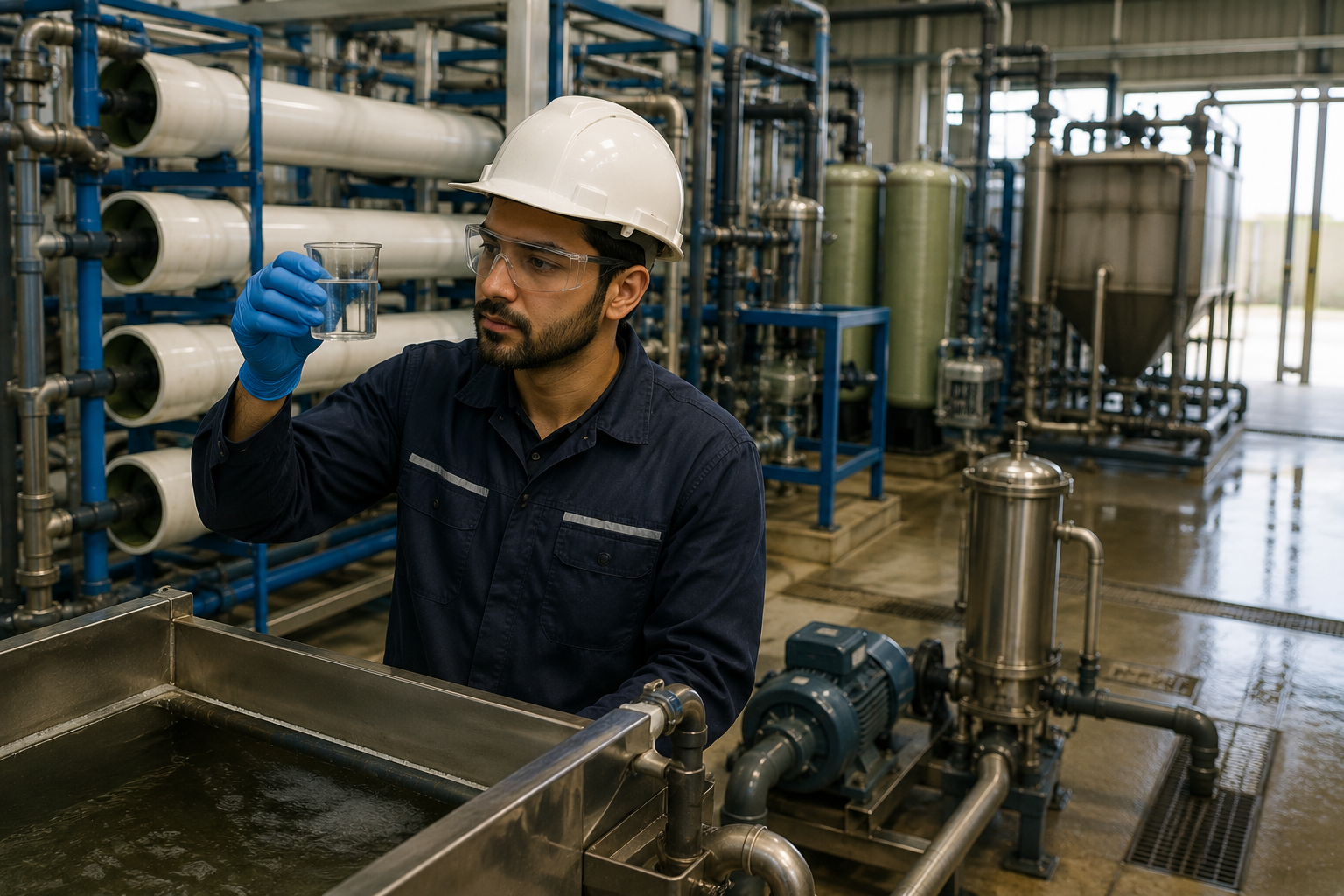
Zero Liquid Discharge means treating 100% of a facility’s wastewater and recovering the treated water for reuse, with no liquid effluent released for discharge. The only remaining waste is typically a solid or semi-solid residue that requires proper disposal. In a textile unit, this process generally involves multiple treatment stages, including primary treatment to remove solids and balance pH, biological or chemical treatment to reduce COD, BOD, and color, membrane-based concentration using technologies such as reverse osmosis or nanofiltration, followed by evaporation and crystallization to manage the concentrated reject stream.
Textile effluent is particularly demanding because of high color load, salts (from dyeing and washing), and variable COD depending on the fabric and dye chemistry used. This is exactly why a generic effluent treatment plant (ETP) quote won’t translate directly into a ZLD cost — the pretreatment and membrane protection stages matter more here than in most other industries.
Capital Cost (CAPEX) Breakdown
The single biggest driver of ZLD capital cost is the evaporation and crystallization stage, not the biological or membrane treatment ahead of it. As a rough guide, expect the cost distribution across a typical textile ZLD project to look something like this:
Component | Approx. Share of CAPEX |
Pretreatment (screening, equalization, pH correction) | 8–12% |
Biological/chemical treatment (COD, color removal) | 15–20% |
Membrane system (RO/NF for concentration) | 20–25% |
Evaporator and crystallizer | 35–45% |
Instrumentation, automation, civil works | 10–15% |
Two things push the total cost up sharply for textile units specifically: high salt concentration in the reject stream, which demands more robust evaporator metallurgy, and color/COD variability, which often requires an additional pretreatment step such as electrocoagulation or advanced oxidation before the biological stage to protect downstream membranes from fouling.
Capacity is the other major variable. A ZLD system sized for a small dyeing unit (under 200 m³/day) will have a very different per-cubic-meter cost than one built for a large composite textile mill (1000+ m³/day), because evaporators and crystallizers have strong economies of scale — the cost per unit volume drops significantly as capacity increases.
Operating Cost (OPEX): Where the Real Money Goes
Many factory owners budget carefully for CAPEX and then get an unpleasant surprise on the monthly operating bill. For ZLD, OPEX is dominated by one factor: energy.
- Thermal energy for evaporation is typically the largest recurring cost, since converting concentrated brine into solid crystals requires significant heat input — either steam or electrically driven vapor compression.
- Membrane replacement and cleaning chemicals are a recurring but smaller cost, driven by fouling from residual dyes and organics if pretreatment isn’t optimized.
- Sludge and crystallized solids disposal adds a steady operating cost, though far lower in volume than the liquid effluent you’d otherwise be tankering off-site.
- Manpower and monitoring, including compliance sampling and reporting to EPA Punjab, is a smaller but non-negotiable line item.
A well-designed system with efficient pretreatment reduces the thermal load reaching the evaporator, which is where the real long-term savings happen.
ZLD vs Conventional ETP: A Cost Comparison
Factor | Conventional ETP | Zero Liquid Discharge |
Capital cost | Lower | 2–4x higher, depending on scale |
Operating cost | Lower (chemicals, aeration power) | Higher (energy-intensive evaporation) |
Water recovery | None to partial | Near 100% |
Regulatory risk | Ongoing discharge compliance exposure | Minimal — no liquid discharge |
Footprint | Moderate | Larger, due to evaporation/crystallization units |
Best suited for | Reliable NEQS-compliant discharge points | Water-stressed areas or discharge restrictions |
For many textile units in Faisalabad, a hybrid approach makes more financial sense than jumping straight to full ZLD: install a strong biological and membrane treatment system now using a Moving Bed Biofilm Reactor for reliable COD reduction, recover and reuse a large percentage of water, and add the evaporation/crystallization stage later as a phased investment once volumes and budgets are confirmed.
Space and Footprint Requirements
Faisalabad’s industrial zones often have tight plot sizes, and this affects ZLD economics too. Evaporators and crystallizers require more vertical and horizontal space than a standard biological treatment train, plus safe access for maintenance and solids handling. Units retrofitting ZLD into an existing site should budget for civil works and possible relocation of existing utilities.
How to Budget for ZLD Without Getting a Bad Quote
- Get effluent characterization done first. COD, BOD, TDS, and color load numbers directly determine equipment sizing.
- Ask for CAPEX and 5-year OPEX together. A lower upfront price with high energy consumption can cost more over time.
- Confirm evaporator technology and metallurgy. This drives both cost and long-term reliability with textile brine.
- Check for phased/hybrid options. Not every unit needs full ZLD on day one.
- Verify NEQS and EPA Punjab compliance documentation is part of the vendor’s deliverable, not an afterthought.
FAQ
Q1. What is the typical cost range for a Zero Liquid Discharge plant for a textile unit in Pakistan?
Costs vary widely based on capacity, effluent characteristics, and evaporator technology, so there’s no single reliable figure without effluent testing. Small units pay less in absolute terms than large composite mills, but cost per cubic meter is usually higher due to reduced economies of scale.
Q2. Is Zero Liquid Discharge mandatory for textile units in Faisalabad?
It isn’t universally mandatory, but EPA Punjab has increasingly restricted or penalized non-compliant liquid discharge, especially near water-stressed zones. Many units now adopt ZLD proactively to avoid closure notices and secure long-term operating certainty.
Q3. Can an existing ETP be upgraded to ZLD instead of building a new plant?
Yes, in many cases. If your existing biological and membrane treatment stages perform well, you can often add a concentration and evaporation stage rather than rebuilding from scratch, significantly reducing total investment versus a greenfield ZLD project.
Q4. What’s the biggest hidden cost in ZLD projects vendors don’t mention upfront?
Energy consumption for evaporation is the most commonly underestimated cost. Ask any vendor for expected thermal or electrical energy consumption per cubic meter treated, not just equipment price.
Q5. How long does it take to install a ZLD system for a textile unit?
Timelines range from several months for a smaller, modular system to over a year for a large, fully integrated plant including civil works, commissioning, and performance testing.
Conclusion
Zero Liquid Discharge requires a significant investment, but for textile units in Faisalabad dealing with stricter discharge regulations and increasing water stress, it can provide a more predictable long-term approach than facing ongoing compliance risks with a conventional ETP. Since 2007, WCSP has been designing and commissioning water and wastewater treatment systems for Pakistan’s industrial sector and can help you assess whether a full ZLD system or a phased approach is better suited to your effluent profile.