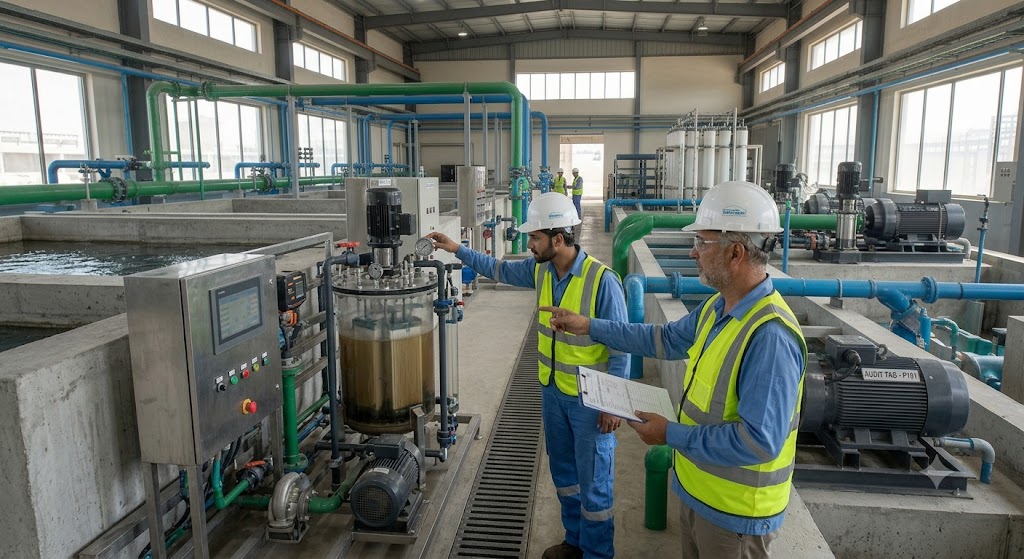
Small and mid-size factory owners often assume Membrane Bioreactor systems are only viable for large industrial plants, given their reputation as a premium wastewater treatment technology. That assumption isn’t quite right — MBR has become genuinely accessible for smaller operations too, but the setup cost structure looks different at this scale, and understanding it properly is what prevents either overspending or choosing an undersized system that fails to perform.
This article breaks down realistic Membrane Bioreactor setup costs specifically for small and mid-size factories, what drives that cost up or down, and how MBR cost Pakistan facilities should budget for compares against conventional treatment options. If you’re evaluating MBR for a smaller operation, this should help you set a realistic budget from the start.
What Makes Membrane Bioreactor Different
A Membrane Bioreactor combines biological treatment with membrane filtration in a single integrated process, replacing the secondary clarifier used in conventional activated sludge systems with an ultrafiltration or microfiltration membrane. This produces consistently high-quality effluent — clear of suspended solids and most pathogens — directly suitable for reuse in many industrial applications, without requiring a separate polishing stage.
For smaller factories, the appeal isn’t just water quality; it’s footprint. Because membranes allow the biological process to operate at a higher biomass concentration than conventional systems, an MBR unit typically requires significantly less space than an equivalent-capacity activated sludge plant — a meaningful advantage for factories operating on tight urban or semi-urban industrial plots common in Lahore, Karachi, and Faisalabad.
Membrane Bioreactor Setup Cost: What Drives It
For small and mid-size factories, MBR setup cost breaks down across several components, each of which behaves differently at smaller scale than at large industrial scale:
Component | Approx. Share of CAPEX (Small-Mid Scale) | Notes |
Pretreatment (screening, equalization) | 10–15% | Proportionally similar regardless of scale |
Biological treatment tank and aeration system | 20–25% | Sized to actual organic load, not just flow |
Membrane modules | 30–40% | Largest single cost driver; less economy of scale at small volumes |
Instrumentation, automation, controls | 15–20% | Automation is proportionally more significant at smaller scale |
Civil works and installation | 10–15% | Lower absolute cost, but higher percentage share for compact systems |
The membrane modules themselves are the dominant cost factor, and this is where small factories face a real economics challenge: membrane cost per cubic meter of capacity doesn’t scale down as favorably as it scales up, meaning a small MBR system often costs more per unit of treatment capacity than a larger one.
MBR Cost Pakistan Factories Should Realistically Expect
Because effluent characteristics, capacity, and site conditions vary so much between factories, there’s no single reliable cost figure that applies universally. What’s more useful is understanding the cost relationship: MBR setup cost for a small-to-mid factory is generally higher upfront per cubic meter of capacity than a conventional activated sludge or Moving Bed Biofilm Reactor system of the same size, but this gap narrows considerably when you account for MBR’s smaller footprint, higher effluent quality (often eliminating the need for separate polishing/tertiary treatment), and water reuse value.
Factories evaluating MBR cost Pakistan-wide should request quotes based on their actual effluent characterization — organic load, flow variability, and any specific contaminants — rather than comparing generic per-cubic-meter figures across vendors, since membrane sizing and configuration change significantly based on these inputs.
Membrane Bioreactor vs Conventional Activated Sludge: Small Factory Comparison
Factor | Conventional Activated Sludge | Membrane Bioreactor |
Capital cost | Lower | Higher, primarily due to membrane cost |
Footprint | Larger, requires secondary clarifier | Significantly smaller |
Effluent quality | Good, may need polishing for reuse | Excellent, often reuse-ready directly |
Operating cost | Lower energy, standard aeration | Higher, due to membrane aeration/scouring and periodic cleaning |
Membrane replacement | Not applicable | Recurring cost every several years |
Sludge production | Moderate | Generally lower due to higher biomass retention |
Best suited for | Sites with adequate space, standard discharge requirements | Space-constrained sites, or where water reuse is a priority |
For a small factory with a tight plot and a genuine need for water reuse — common in textile finishing units or food & beverage facilities with limited space — the footprint and reuse advantages of MBR often justify the higher setup cost, even at smaller scale.
Operating Cost Considerations for Smaller MBR Systems
Setup cost is only part of the budgeting picture. Smaller MBR systems face a few specific operating cost realities:
- Membrane aeration (scouring) required to keep membranes from fouling adds an energy cost beyond standard biological aeration, and this doesn’t scale down proportionally at smaller capacities.
- Periodic chemical cleaning of membranes is a recurring cost that should be budgeted from year one, not treated as an occasional maintenance surprise.
- Membrane replacement, typically needed after several years of operation depending on feed characteristics and maintenance discipline, represents a predictable but significant future capital outlay.
- Automation and monitoring costs are proportionally higher for smaller systems, since the control systems needed for stable MBR operation don’t shrink much even as tank sizes decrease.
A factory that budgets only for the initial membrane cost, without planning for aeration energy and periodic cleaning, often finds its actual operating cost higher than expected in the first year.
When MBR Makes Sense for a Smaller Factory — and When It Doesn’t
MBR tends to be the right choice for smaller operations when:
- Plot space is genuinely constrained and a smaller treatment footprint is a real operational necessity
- Water reuse is a priority, either for cost savings or to reduce dependency on external water sources
- Effluent quality requirements are strict, such as discharge into sensitive areas or supply chain requirements from multinational buyers
It’s often not the right choice when:
- Space isn’t a significant constraint, and a conventional or MBBR-based system can meet discharge requirements at lower setup and operating cost
- Budget constraints make the higher membrane and operating cost difficult to sustain, particularly if reuse value isn’t being fully captured
- The factory lacks the operational discipline for consistent membrane maintenance, since neglected MBR systems degrade in performance faster than neglected conventional systems
Practical Steps Before Committing to an MBR System
- Characterize your effluent accurately — organic load, flow patterns, and any specific contaminants directly determine membrane sizing and cost.
- Request a combined CAPEX and 5-year OPEX estimate, not just the equipment price, to understand true setup and running cost together.
- Confirm membrane brand, warranty, and expected replacement interval, since this varies significantly between suppliers and affects long-term cost.
- Evaluate footprint savings against your actual site constraints, rather than assuming MBR’s space advantage is automatically worth the added cost.
- Ask whether a phased approach is possible, starting with biological treatment and adding membrane filtration later if budget is a genuine constraint.
FAQ
Q1. Is Membrane Bioreactor setup cost affordable for small factories in Pakistan?
It’s more accessible than commonly assumed, though setup cost per cubic meter is typically higher than conventional treatment at small scale due to membrane pricing. The footprint savings and water reuse value often offset this over time, particularly for space-constrained sites.
Q2. How does MBR cost Pakistan-wide compare to Moving Bed Biofilm Reactor systems?
MBR generally has a higher upfront setup cost than MBBR due to membrane modules, but delivers superior effluent quality that’s often directly reuse-ready. MBBR is typically more cost-effective when space isn’t constrained and reuse-grade effluent isn’t required.
Q3. What’s the biggest ongoing cost for a small MBR system besides membrane replacement?
Membrane aeration, also called scouring, is a significant recurring energy cost that keeps membranes from fouling. This cost doesn’t scale down proportionally at smaller capacities, which is worth factoring into operating budgets from the outset.
Q4. Can a small factory start with conventional treatment and upgrade to MBR later?
In many cases, yes, particularly if the biological treatment stage is designed with future membrane integration in mind. This phased approach can spread out capital investment, though it’s more cost-effective to plan for this upfront than to retrofit an incompatible system later.
Conclusion
Membrane Bioreactor setup cost for small and mid-size factories is genuinely higher per unit of capacity than conventional treatment, but the footprint reduction, effluent quality, and water reuse value it delivers often justify that investment for space-constrained or reuse-focused operations. Getting an accurate MBR cost Pakistan estimate starts with proper effluent characterization, not generic vendor quotes. WCSP has designed and commissioned Membrane Bioreactor systems for factories of varying scale across Pakistan since 2007, sizing each system to the specific effluent and space constraints of the site.