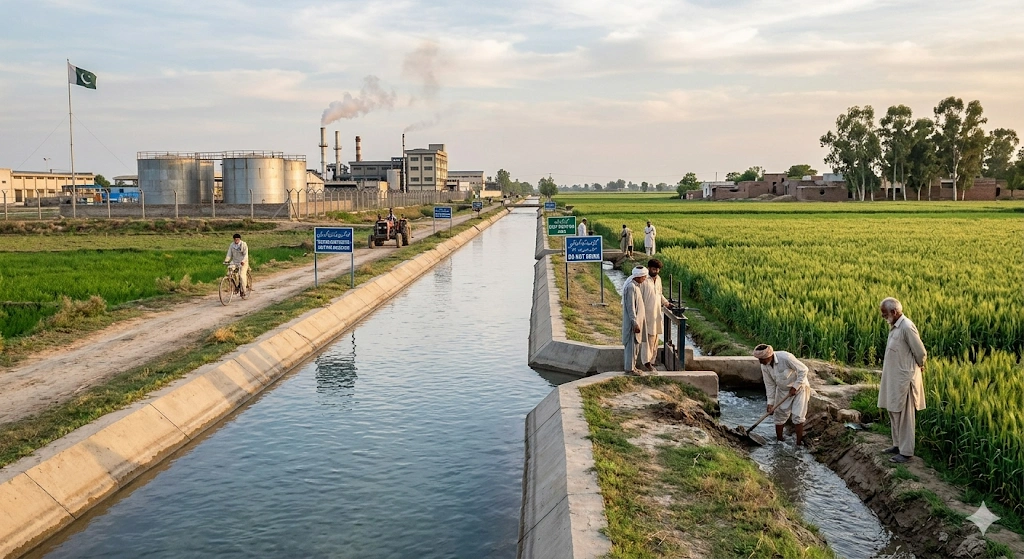
Pakistan is heading toward absolute water scarcity by 2025, according to the Pakistan Council of Research in Water Resources — defined as less than 500 cubic metres of freshwater available per person per year. Agriculture consumes roughly 93% of the country’s total water withdrawals, yet an estimated 32,000 hectares of farmland around Pakistan’s major cities are already being irrigated with untreated industrial and municipal wastewater, according to the International Water Management Institute. The crops are growing. The contamination is invisible. And the public health and soil quality consequences are accumulating with every season.
Agricultural wastewater treatment in Pakistan offers a way out of this trap that benefits multiple stakeholders simultaneously: industries reduce their discharge liability, municipalities reduce the pressure on freshwater canals and aquifers, and farmers gain a reliable, nutrient-rich water source that does not disappear during drought seasons.
This article explains what treatment is required, which technologies deliver it at viable cost, how the regulatory framework applies, and where the economic case for treated water irrigation is strongest across Pakistan’s agricultural and industrial landscape.
Why Untreated Wastewater Irrigation Is a Crisis Pakistan Cannot Afford to Ignore
Untreated wastewater irrigation is not simply an environmental issue. It is an active threat to food safety, soil productivity, and public health at national scale — and the economic cost is measurable.
The International Water Management Institute estimates that 10% of the world’s crops are irrigated with wastewater, and a disproportionate share of that burden falls on South Asian countries including Pakistan. In Pakistan’s peri-urban agricultural belts — the areas surrounding Lahore, Faisalabad, Gujranwala, and Hyderabad — industrial effluent containing heavy metals, chromium from tanneries, reactive dyes from textile mills, and pharmaceutical residues from drug manufacturing enters irrigation channels that farmers depend on as their only available water source.
The consequences compound over time. Chromium-contaminated soil in Sialkot’s tannery belt has rendered significant areas economically unproductive for food crops, according to research published in the Pakistan Journal of Agricultural Sciences. Cadmium and lead accumulation in wheat and rice grown on industrially contaminated irrigation water has been documented in multiple studies from Punjab University’s environmental science faculty. When these crops enter the food chain, the contamination travels with them.
For industrial facilities, the calculus is equally unfavourable. Discharging inadequately treated effluent exposes you to Pakistan EPA enforcement actions, trade permit suspensions, and the escalating penalties that Punjab Environmental Protection Department has been imposing on Faisalabad’s textile sector since the NEQS enforcement intensification that began in 2021. The cost of compliance is rising. The cost of non-compliance is rising faster.
What Treatment Standards Does Agricultural Reuse Water Need to Meet?
Treated water destined for agricultural irrigation must meet a different — and in some respects more nuanced — standard than drinking water. The applicable framework combines international guidelines with Pakistan’s own regulatory structure.
The WHO Guidelines for the Safe Use of Wastewater, Excreta and Greywater in Agriculture, and the FAO Water Quality Guidelines for Irrigated Agriculture, define two primary categories of reuse: unrestricted irrigation (for food crops consumed raw, where full treatment including pathogen removal to below 1 E. coli CFU per 100 mL is required) and restricted irrigation (for non-food crops, processed food crops, or crops not in direct human contact, where relaxed pathogen limits apply).
Pakistan’s NEQS Effluent Standards regulate what leaves your facility, not what enters an irrigation channel. The gap between these two regulatory instruments is where most agricultural reuse schemes currently operate — in a compliance grey zone that WCSP’s engineering team navigates carefully when designing reuse systems for industrial clients.
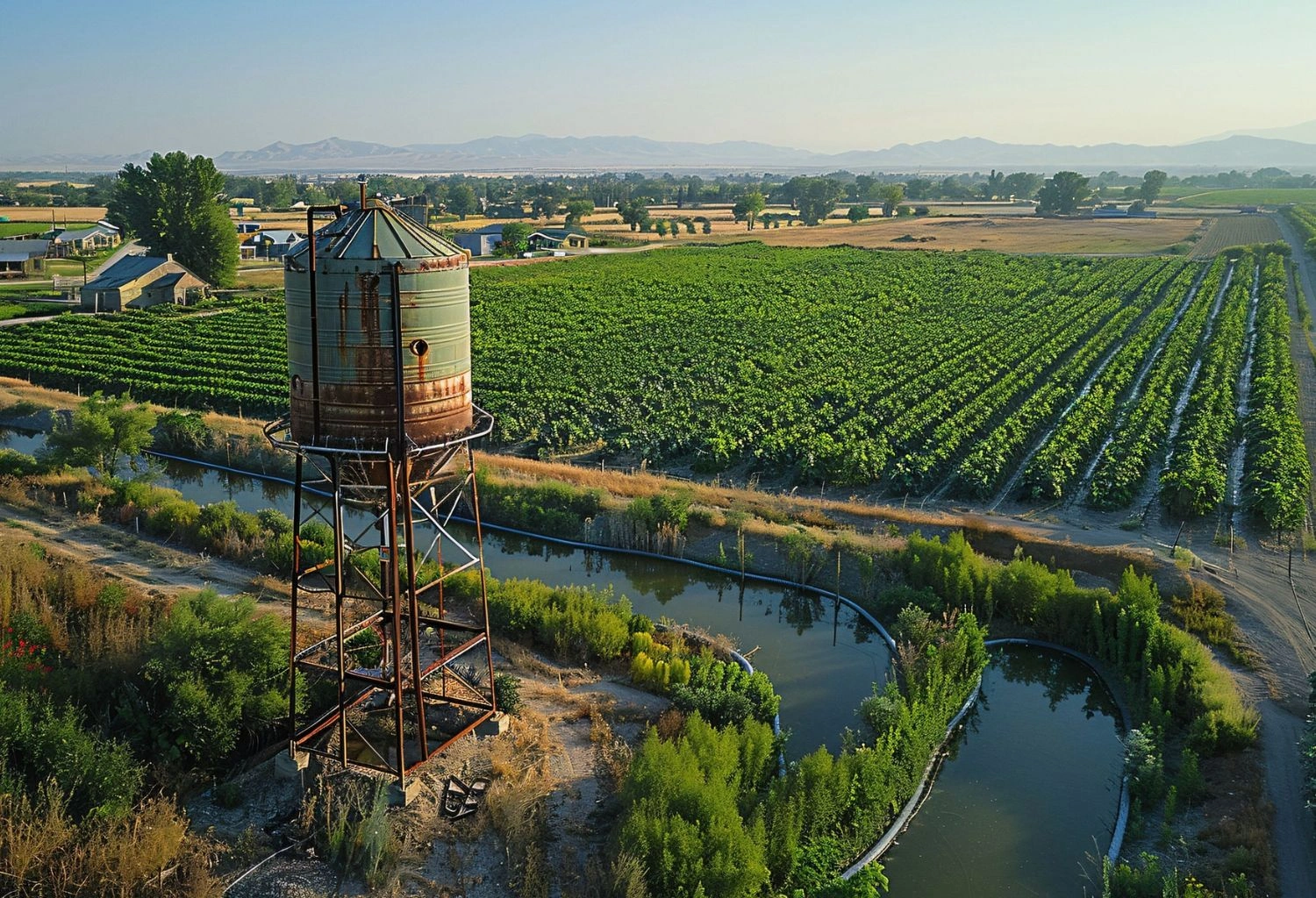
Wastewater Treatment for Agriculture
Key Parameters for Agricultural Reuse Water
The parameters that matter most for irrigation reuse differ from drinking water testing in important ways. Heavy metal limits — particularly for cadmium, chromium, lead, nickel, and boron — are critical because these accumulate in soil over years of irrigation and eventually in the crops themselves. FAO guidelines set cadmium limits at 0.01 mg/L and chromium at 0.1 mg/L for long-term irrigation use. Electrical conductivity, a proxy for total dissolved salts, must stay below 3 dS/m for most crops and ideally below 1 dS/m for salt-sensitive crops like cotton, which is Pakistan’s most economically significant irrigated crop. SAR (Sodium Adsorption Ratio) determines whether the water will progressively degrade soil structure. And biological oxygen demand must be low enough that the water does not create anaerobic conditions in the root zone.
WCSP’s wastewater treatment systems for agricultural reuse are designed against these parameters — not just NEQS minimum discharge thresholds.
Which Technologies Deliver Agricultural-Grade Treated Water From Industrial Effluent?
Not all wastewater treatment produces water suitable for agricultural reuse. Conventional activated sludge systems reduce BOD and TSS effectively but often leave residual pathogens, heavy metals, and dissolved salts at concentrations that exceed FAO irrigation guidelines. Delivering consistently agricultural-grade treated water requires a multi-barrier treatment train tailored to your effluent characteristics.
MBR — Membrane Bioreactor Technology
Membrane Bioreactor (MBR) systems combine biological treatment with membrane filtration in a single process, producing effluent with turbidity below 1 NTU and total suspended solids below 5 mg/L — quality that approaches secondary treated drinking water. For BOD and pathogen removal, MBR outperforms conventional activated sludge on both parameters in a smaller physical footprint. For industrial clients in urban-fringe industrial estates where land is expensive and discharge to agriculture is the only practical effluent disposal route, MBR delivers the treatment quality that restricted and unrestricted irrigation reuse requires.
MBBR — Moving Bed Biofilm Reactor
Where capital cost is the primary constraint, MBBR systems offer biological treatment performance that approaches MBR at lower equipment cost. MBBR is particularly suited to variable-flow industrial effluent — common in textile mills where production-linked discharge flow rates vary significantly across shifts. WCSP’s MBBR installations for Faisalabad textile clients have achieved COD reductions exceeding 85% on effluent loads typical of reactive dyeing operations.
Electrocoagulation and Fenton Process for Heavy Metal and Colour Removal
For effluent streams containing heavy metals, chromium, or recalcitrant colour compounds — typical of tanneries in Sialkot, textile print houses in Karachi, and electroplating units across Gujranwala — biological treatment alone is insufficient. Electrocoagulation uses electrical current to destabilise colloidal pollutants and precipitate heavy metals with no chemical addition beyond the electrode material. The Fenton Process uses hydrogen peroxide and iron catalysts to generate hydroxyl radicals that break down complex organic compounds and degrade colour. Used upstream of biological treatment, these processes bring the influent quality within the range that MBR or MBBR can treat effectively to agricultural reuse standards.
UV Disinfection as the Final Barrier
For unrestricted agricultural irrigation of food crops, pathogen elimination to WHO guideline levels requires a validated disinfection step after biological treatment and clarification. UV disinfection at a delivered dose of 40 mJ/cm² achieves the required log reduction of E. coli, Salmonella, and helminth eggs without adding chemical residuals that would affect soil microbiology or crop health. WCSP’s UV disinfection systems serve as the final treatment barrier in multiple industrial wastewater reuse schemes, completing a treatment train that covers the full spectrum of agricultural reuse risks.
Pro Tip — Expert Insight from WCSP’s Wastewater Engineering Team
The most commercially significant mistake we see in industrial wastewater reuse projects in Pakistan is designing the treatment system only to meet NEQS effluent discharge limits, then assuming that water is suitable for agricultural use. NEQS effluent standards were written for discharge to surface water bodies — not for sustained crop irrigation over multiple growing seasons. A textile mill effluent that meets NEQS limits for chromium at 1 mg/L would, over five irrigation seasons, accumulate chromium in topsoil to concentrations that make the land legally contaminated under FAO guidelines. Design your reuse system against FAO irrigation water quality criteria and WHO reuse guidelines from the outset — not as an afterthought.
The Economic Case for Treated Water Reuse in Pakistani Agriculture
Agricultural wastewater treatment in Pakistan is not a charitable investment. When you build the economic model correctly, it regularly delivers a positive return within five to eight years — and that is before accounting for the regulatory risk reduction value.
The cost of freshwater is rising in Pakistan. The World Bank estimates that Pakistan’s effective cost of agricultural water will increase significantly over the coming decade as groundwater depletion forces deeper pump installations and surface water allocations tighten. Industrial facilities currently paying groundwater extraction costs or surface water abstraction fees can offset a material portion of those costs by reusing treated effluent for on-site processes or transferring it to adjacent agricultural users under formalised reuse agreements.
The wastewater disposal cost savings are equally significant. Industrial facilities discharging to municipal sewers pay disposal tariffs. Those with direct surface water discharge need to maintain treatment plants to NEQS standards regardless. Converting that compliance cost into a productive asset — treated water that has value to a neighbouring farmer — changes the financial narrative from cost centre to partial revenue stream.
Comparing Treatment Options for Agricultural Reuse Value
| Treatment Train | Capital Cost Estimate | Reuse Quality Achieved | Suitable Crops | Approximate Payback Period |
|---|---|---|---|---|
| MBBR plus UV disinfection | Moderate | Restricted reuse — BOD and pathogen reduction | Non-food crops, fodder, cotton, cereals | 5–7 years |
| MBR plus UV disinfection | Moderate–High | Unrestricted reuse — near-drinking quality | All crops including raw vegetables | 6–9 years |
| Electrocoagulation plus MBBR plus UV | Higher | Restricted or unrestricted depending on metals | Metal-contaminated effluent streams | 7–10 years |
| Conventional activated sludge | Low | Restricted reuse only with significant margin | Fodder and non-food crops only | 4–6 years but higher ongoing compliance risk |
| No treatment (current practice) | Zero capital | Illegal discharge — NEQS violation | N/A — documented soil and food contamination | Negative — accumulating regulatory and liability exposure |
The payback estimates above use current Pakistan EPA penalty tariffs, groundwater cost indices for Punjab, and WCSP’s 2024 capital cost data for industrial wastewater treatment systems. Your specific numbers will vary by flow rate, effluent characteristics, and proximity to agricultural users.
Where in Pakistan Is Agricultural Wastewater Reuse Most Viable Right Now
Geography and industrial density together determine where treated wastewater reuse for agriculture creates the most immediate value. Not every location has the combination of industrial effluent volume, adjacent agricultural land, and water stress severity that makes a reuse scheme commercially attractive.
The highest-potential zones in Pakistan’s current industrial and agricultural landscape are the peri-urban belts of Faisalabad, Gujranwala, and Lahore — where textile, food processing, and engineering industries sit immediately adjacent to canal-irrigated agricultural land whose water allocations have been progressively declining as upstream withdrawals increase. An MBR plant serving a cluster of textile units in Faisalabad’s industrial estates can produce effluent quality suitable for cotton irrigation — the region’s dominant crop — at flow rates that materially supplement reduced canal allocations during the pre-monsoon dry season.
Sialkot’s tannery cluster represents a different but equally urgent opportunity. Heavy metal contamination from chromium-tanning effluent has already degraded significant areas of agricultural land around the city. A properly designed electrocoagulation plus biological treatment system for the tannery cluster’s combined effluent stream could produce water suitable for restricted irrigation of non-food crops while eliminating the primary contamination pathway that is progressively sterilising agricultural land in the district.
In Sindh, industrial zones around Hyderabad and Sukkur discharge to drainage channels that ultimately feed irrigation systems serving some of Pakistan’s most productive agricultural land. The Pakistan EPA’s Sindh chapter has been increasing enforcement intensity in these areas, and the combination of regulatory pressure and agricultural water scarcity creates a strong case for treatment-to-reuse investment in this region.
How to Set Up a Compliant Wastewater Reuse Scheme for Agriculture in Pakistan
Moving from the decision to reuse treated wastewater for agriculture to a compliant, operational scheme involves a structured process. Getting the sequence right avoids costly redesign and regulatory delays.
Step one is characterise your effluent fully. You cannot design a treatment system against unknown inputs. Commission a comprehensive effluent characterisation covering the full FAO irrigation water quality parameter set — not just NEQS discharge parameters — across multiple production cycles to capture seasonal and production-linked variability.
Step two is assess your agricultural reuse context. Identify the crop types, irrigation method, and soil characteristics of the land that will receive the treated water. Drip irrigation reduces direct human contact with treated water and relaxes some of the pathogen removal requirements. Spray irrigation of food crops consumed raw requires the most stringent treatment standard. Understanding this context before you specify treatment technology is essential.
Step three is select treatment technology matched to both effluent characteristics and reuse destination. WCSP’s engineering team conducts full treatment train modelling — including hydraulic loading, biological treatment sizing, membrane selection, and UV dose validation — before any equipment is specified or procured.
Step four is engage with the Pakistan EPA provincial office early. While formal reuse licensing frameworks are still developing in Pakistan, proactive engagement with the relevant provincial EPA — Punjab EPA in Lahore, Sindh EPA in Karachi — establishes a cooperative compliance posture that accelerates project approvals and reduces the risk of enforcement action during commissioning.
Step five is implement real-time monitoring of treated water quality at the reuse point. Online sensors for pH, conductivity, turbidity, and residual chlorine or UV intensity provide the continuous quality assurance that protects both you as the water producer and the farmer as the water user. WCSP’s real-time monitoring and automation systems are designed to integrate with reuse scheme operations, with automated shutdown of the distribution valve if any parameter exceeds its set point.
CONCLUSION
Pakistan cannot irrigate its way out of water scarcity with the same water management model that created the problem. Treated wastewater reuse is not a future technology or a pilot project aspiration — it is an operational reality across multiple Pakistani industrial sectors right now, where the economics, the technology, and the regulatory direction all point in the same direction.
Four things to act on: commission a full effluent characterisation against FAO irrigation quality parameters, not just NEQS discharge limits; design your treatment train for agricultural reuse from the outset rather than retrofitting compliance later; engage your provincial EPA proactively to establish a cooperative approval pathway; and implement real-time monitoring at the reuse delivery point so you can demonstrate continuous quality compliance to regulators and agricultural users alike.
Agricultural wastewater treatment in Pakistan has moved past the feasibility debate. The facilities that invest now will have lower compliance costs, better water security, and stronger relationships with the agricultural communities around them. Those that wait will face tighter regulations, higher penalty risk, and rising freshwater costs with no offset.
Ready to upgrade your water treatment system? Contact WCSP’s expert team today at watercareservices.org/contact-us/ — and get a site-specific assessment of your agricultural wastewater reuse potential, backed by 17 years of industrial treatment experience across Pakistan.
Explore next: Zero Liquid Discharge: Is Your Plant Ready for Pakistan’s Tightening Discharge Standards? — and MBR vs Conventional Activated Sludge: Which Biological Treatment Technology Is Right for Pakistani Industry?
FAQ
1. Can industrial wastewater be treated for agricultural irrigation use in Pakistan?
Answer: Yes. Industrial wastewater treated through a properly designed multi-barrier system — typically combining biological treatment such as MBR or MBBR with heavy metal removal and UV disinfection — can meet WHO and FAO guidelines for restricted or unrestricted agricultural irrigation. Agricultural wastewater treatment in Pakistan is now operational at multiple industrial sites, particularly in textile and food processing clusters in Punjab.
2. What treatment does wastewater need before it can be used for crop irrigation?
Answer: Wastewater for crop irrigation needs biological treatment to reduce BOD and pathogens, chemical or electrocoagulation treatment to remove heavy metals and colour, and UV or chlorine disinfection as a final pathogen barrier. The specific treatment train depends on the effluent source and the crop type. Raw vegetable irrigation requires near-drinking-water quality; fodder and cotton irrigation allows relaxed pathogen limits under FAO restricted reuse guidelines.
3. What are the NEQS and WHO standards for wastewater reuse in agriculture in Pakistan?
Answer: Pakistan’s NEQS Effluent Standards regulate what industrial facilities can discharge — they were not written specifically for agricultural reuse. WHO Guidelines for the Safe Use of Wastewater in Agriculture and FAO Water Quality Guidelines for Irrigated Agriculture set the applicable international standards for reuse, including E. coli limits, heavy metal thresholds, and electrical conductivity limits for different crop types. Compliance with NEQS alone is insufficient for safe agricultural reuse.
4. How much does an agricultural wastewater reuse treatment system cost in Pakistan?
Answer: Capital cost varies significantly by flow rate, effluent characteristics, and treatment standard required. An MBBR plus UV system for a medium-scale industrial facility treating 500 m³/day typically ranges from Rs. 8 million to Rs. 20 million installed. MBR systems for higher-quality reuse run 20–40% higher. WCSP provides lifecycle cost analysis comparing treatment investment against freshwater procurement costs and NEQS penalty risk reduction over a 10-year horizon.
5. What crops can safely be irrigated with treated industrial wastewater in Pakistan?
Answer: Under WHO restricted reuse guidelines, treated wastewater with residual pathogen levels meeting FAO thresholds can safely irrigate non-food crops (cotton, fodder, timber), cereals and pulses that are processed before consumption, and vegetables that are cooked. Unrestricted irrigation of raw-consumed food crops requires full treatment to below 1 E. coli CFU per 100 mL — achievable with MBR plus UV disinfection treatment trains.
6. What is the payback period for a wastewater treatment system designed for agricultural reuse in Pakistan?
Answer: Payback periods range from 5 to 10 years depending on treatment technology, flow volume, current freshwater and disposal costs, and proximity to agricultural users. Agricultural wastewater treatment projects in Pakistan that offset both wastewater disposal costs and freshwater procurement costs simultaneously achieve the shortest payback periods. WCSP’s feasibility assessments model site-specific payback timelines using current Pakistani market data for all cost inputs.