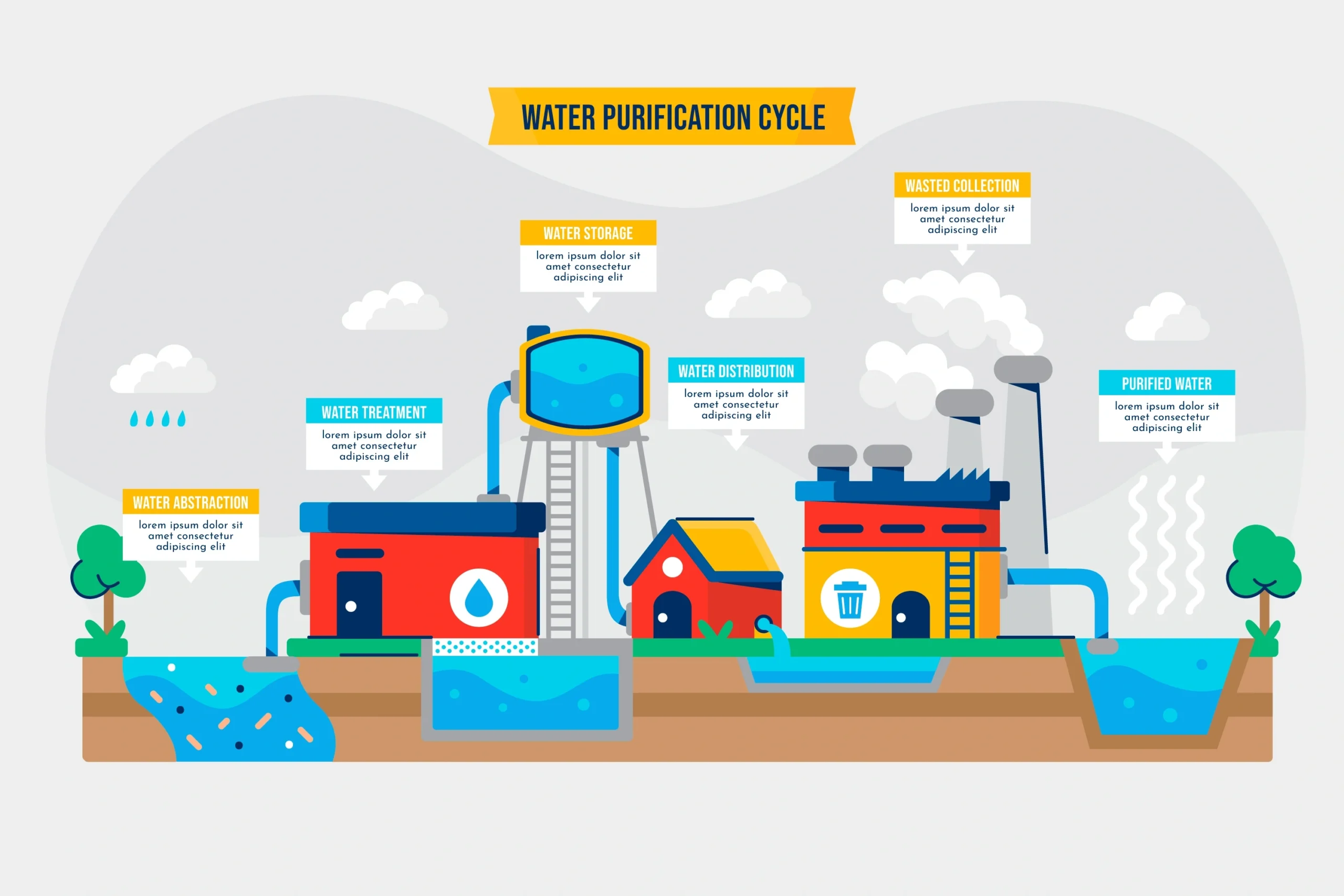
With Pakistan’s industrial growth surging in areas like Faisalabad, Lahore, and Karachi, wastewater management has become a pressing concern. As industries continue to scale up, the strain on traditional centralized effluent treatment plants (ETPs) grows, prompting a shift towards decentralized wastewater treatment solutions. But why is decentralized treatment gaining traction, and what benefits does it offer over the conventional centralized model? This blog explores why decentralized systems are now the preferred choice for industries in Pakistan’s industrial growth zones.
The Growing Challenge of Industrial Wastewater
Wastewater from industrial activities, especially textile manufacturing, chemical processing, and food production, has long been a serious environmental concern. Traditional centralized ETPs, although effective in certain contexts, are increasingly struggling to keep up with the growing volume and complexity of wastewater. In many cases, these plants are not only outdated but also inefficient, leading to poor treatment outcomes, high costs, and unsustainable operations. To tackle these challenges, industries in Pakistan are looking for more adaptable, cost-effective, and environmentally friendly solutions—enter decentralized wastewater treatment systems.
What is Decentralized Wastewater Treatment?
Decentralized wastewater treatment refers to smaller, localized treatment systems that treat wastewater at or near the point of generation, instead of transporting it to a central plant. This type of treatment is modular, flexible, and scalable, making it ideal for areas with limited infrastructure or for industries that require bespoke solutions.
Modular ETP vs Centralized ETP: A Quick Comparison
| Feature | Modular ETP | Centralized ETP |
| Location | Installed at or near the source | Centralized at one location |
| Cost | Lower initial investment, scalable | High capital expenditure, fixed capacity |
| Flexibility | Easily adaptable to changing needs | Limited scalability and adaptability |
| Energy Efficiency | More energy-efficient | Higher energy consumption |
| Maintenance | Easier maintenance with local oversight | Centralized maintenance can be complex |
| Waste Management | Better at managing diverse waste types | Less efficient in handling varying waste |
Why is Decentralized Wastewater Treatment Winning in Pakistan?
1. Cost-Effectiveness
In Pakistan’s rapidly growing industrial zones, businesses are constantly on the lookout for ways to optimize their spending. Decentralized wastewater treatment systems typically come with lower initial installation costs and more manageable operational expenses. Unlike centralized ETPs that require substantial investment in large-scale infrastructure and land, decentralized systems can be implemented in phases and customized according to the needs of each plant or facility.
Moreover, the maintenance costs are significantly reduced. With localized operations, businesses can handle maintenance issues faster and more efficiently, reducing downtime and preventing costly repairs.
2. Scalability and Flexibility
Industries in Pakistan, particularly in emerging sectors like textiles and food processing, need wastewater solutions that grow with them. Decentralized systems are modular and scalable, allowing them to be expanded or adjusted based on the volume and nature of the wastewater generated. This flexibility is crucial in industrial zones, where demand for water and wastewater treatment fluctuates seasonally or due to production cycles.
In contrast, centralized systems, while effective in some large-scale industrial parks, are not as adaptable. The upfront infrastructure investment and complex logistics involved in scaling them up make them less suited for industries that experience rapid growth or shifts in production capacity.
3. Improved Energy Efficiency
Decentralized wastewater treatment systems are often more energy-efficient. These systems treat wastewater on-site, eliminating the need to pump large volumes of water across long distances. The reduced transportation of wastewater translates into significant energy savings. In a country like Pakistan, where energy costs are rising, this energy-efficient approach helps businesses lower their operating expenses while reducing their carbon footprint.
4. Environmental Benefits
Environmental sustainability is a priority for many businesses today, especially with increasing pressure from regulators and the public. Decentralized ETPs offer a more environmentally friendly solution to wastewater treatment. By treating wastewater at the source, businesses can ensure better control over the discharge quality and reduce the risk of contamination. This localized treatment process also supports water reuse within industries, further contributing to the circular economy.
Moreover, decentralized systems reduce the chances of large-scale environmental incidents, such as chemical spills or untreated wastewater discharge into rivers, which are common risks associated with malfunctioning or underperforming centralized ETPs.
5. Localized Control and Monitoring
Decentralized wastewater treatment systems enable businesses to maintain tighter control over their operations. With real-time monitoring and localized management, industries can ensure that their wastewater treatment processes are continuously optimized. This control helps in meeting regulatory standards while also improving overall efficiency.
6. Faster Implementation Time
In industrial growth zones in Pakistan, time is often of the essence. Decentralized wastewater treatment systems can be implemented much faster than centralized ones. This allows businesses to quickly comply with environmental regulations, avoid penalties, and start benefiting from a sustainable wastewater treatment system.
Real-World Examples of Decentralized Systems in Pakistan
Case Study 1: Textile Industry in Faisalabad
Faisalabad, Pakistan’s textile hub, has seen a growing number of textile manufacturers adopting decentralized wastewater treatment solutions. These modular systems allow manufacturers to treat effluents locally, improving the quality of water used for processes like dyeing and washing. This has not only helped in reducing environmental impact but also in lowering water procurement costs by enabling water reuse within the facility.
Case Study 2: Food Processing Plant in Karachi
A food processing plant in Karachi installed a decentralized ETP to manage the large volumes of organic waste generated during production. The decentralized system allowed the plant to treat wastewater on-site, reducing the risk of cross-contamination with other industrial effluents. The plant also implemented a nutrient recovery system, improving the quality of the water discharged and making the system more sustainable.
Case Study 3: Pharmaceuticals in Lahore
In Lahore, a pharmaceutical company faced high costs associated with transporting wastewater to a centralized ETP located far from the facility. By switching to a decentralized system, the company reduced transportation costs and improved treatment efficiency, leading to significant savings on operational expenses.
Conclusion: Decentralized Wastewater Treatment – The Future of Pakistan’s Industrial Growth Zones
As Pakistan’s industrial sectors continue to expand, the need for effective, cost-efficient, and sustainable wastewater treatment solutions becomes more critical. Decentralized wastewater treatment systems are proving to be the ideal solution for businesses looking to meet regulatory standards, reduce costs, and improve their environmental impact.
By embracing modular, scalable, and energy-efficient decentralized ETPs, industries in Pakistan can stay ahead of the curve while contributing to the country’s sustainable development goals. Whether you’re a textile manufacturer in Faisalabad or a food processing plant in Karachi, decentralized wastewater treatment offers a flexible, future-proof solution for today’s industrial wastewater challenges.
FAQ Section
1. What is the difference between modular and centralized ETPs?
Modular ETPs are smaller, localized treatment systems that can be scaled according to the needs of the facility, while centralized ETPs are large, centralized systems designed to handle wastewater from multiple sources.
2. Why is decentralized wastewater treatment gaining popularity in Pakistan?
Decentralized systems offer cost-effectiveness, scalability, energy efficiency, and environmental benefits, making them a better fit for rapidly growing industrial sectors in Pakistan.
3. How does decentralized wastewater treatment save energy?
By treating wastewater locally, decentralized systems eliminate the need to pump large volumes of water across long distances, reducing energy consumption.
4. Can decentralized systems handle all types of industrial wastewater?
Yes, decentralized systems can be tailored to treat various types of industrial wastewater, including textile, food processing, and chemical waste, through advanced treatment methods like membrane filtration and biological treatment.
5. Are decentralized wastewater treatment systems expensive to install?
While decentralized systems generally have lower upfront costs compared to centralized systems, they are scalable, allowing businesses to start with a smaller investment and expand as needed.
6. How long does it take to implement a decentralized ETP?
The installation time for a decentralized system is generally shorter than that of a centralized ETP, allowing industries to implement solutions quickly and meet regulatory deadlines.
7. Are decentralized ETPs environmentally friendly?
Yes, decentralized ETPs help reduce environmental impacts by treating wastewater locally, improving water quality, and enabling water reuse within the facilit