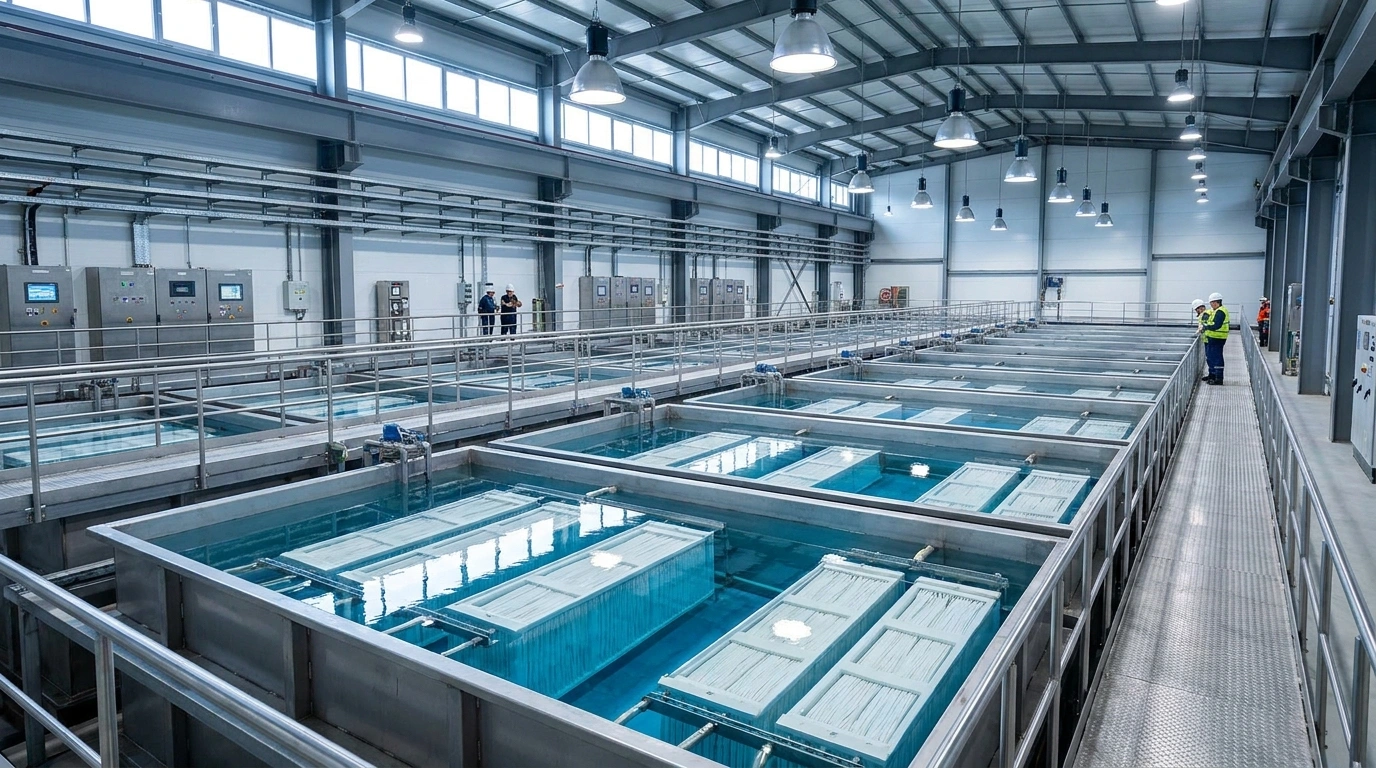
Your wastewater treatment plant is probably working against you. If it was designed more than 15 years ago — or built on the cheap — it’s likely oversized in footprint, under-performing on effluent quality, and increasingly out of step with what Pakistan’s environmental regulators now expect. That’s not an opinion; it’s the reality playing out for hundreds of factory owners and municipal bodies across Lahore, Faisalabad, Karachi, and Sialkot right now.
The global MBR market was valued at USD 4.7 billion in 2025 and is projected to reach USD 9.3 billion by 2034, growing at a CAGR of 7.7% (IMARC Group, 2025). That number reflects a technology transition that is already well underway. Membrane bioreactor technology is replacing conventional sewage plants not because it’s fashionable, but because it solves problems that older systems structurally cannot.
This article breaks down exactly how MBR systems work, where they outperform conventional treatment, which industries in Pakistan stand to gain the most, and what you need to know before committing to an MBR wastewater plant. By the time you finish reading, you’ll have a clear picture of whether MBR is the right sewage treatment upgrade for your operation.
What Is Membrane Bioreactor Technology and How Does It Actually Work?
Membrane bioreactor technology integrates two processes that conventional sewage plants keep separate — biological treatment and solid-liquid separation. Microorganisms break down pollutants inside a bioreactor, and instead of relying on gravity settling to separate treated water from sludge, ultrafiltration or microfiltration membranes act as a physical barrier, producing consistently high-quality effluent regardless of incoming load variations.
In a conventional activated sludge system, treated water and biomass separate inside a large secondary clarifier. This works — but it depends on sludge settling well, which doesn’t always happen. When the sludge settles poorly, effluent quality drops. You get compliance failures even when the biology is technically working.
An MBR system eliminates that weak point entirely. The membrane is either submerged directly inside the bioreactor (submerged configuration, by far the most common) or installed in a separate external loop (sidestream configuration, used for high-strength industrial effluents). Either way, water passes through the membrane under slight suction or pressure, and nothing larger than the membrane pore size — typically 0.04 to 0.4 microns — gets through.
What This Means in Practice
The effluent coming out of an MBR consistently achieves suspended solids below 5 mg/L and turbidity near zero (Journal of Environmental Engineering, 2025). Conventional activated sludge systems typically deliver suspended solids of 15 to 30 mg/L, which means they need an additional tertiary filtration stage before the water is clean enough to reuse. With MBR, that stage is already built in.
The pathogen removal performance is equally striking. Ultrafiltration membranes achieve 4 to 6 log reduction of bacteria and 2 to 4 log reduction of viruses — significantly more than conventional clarifier-based systems can manage. For pharmaceutical plants, food processors, and any operation where treated water will be recycled back into the process, this isn’t a minor advantage; it’s the deciding factor.
MBR vs Conventional Treatment: Where Does the Real Difference Show Up?
[PASSAGE ANSWER] The core difference in MBR vs conventional treatment isn’t just effluent quality — it’s the combination of smaller footprint, higher biomass concentration, lower sludge production, and built-in filtration working together in one system. Conventional plants can match MBR on biology but can’t replicate all four advantages simultaneously without significant additional investment in tertiary treatment infrastructure.
Here’s the comparison that matters when you’re making a capital decision:
| Parameter | MBR System | Conventional Activated Sludge |
|---|---|---|
| Effluent TSS | Below 5 mg/L | 15–30 mg/L (pre-tertiary) |
| Footprint | 30–50% smaller | Larger (requires clarifier + tertiary) |
| Sludge Production | Lower (longer SRT) | Higher |
| Pathogen Removal | 4–6 log (bacteria) | Limited without disinfection add-on |
| Compliance Risk | Low (membrane is a physical barrier) | Higher (settling variability) |
| Water Reuse Ready | Often yes, directly | Requires additional polishing |
| Capital Cost | Higher upfront | Lower upfront |
| Operating Cost | Higher energy (membrane aeration) | Lower energy |
| Space for Expansion | Modular scaling possible | Difficult without major civil works |
The key takeaway from that table: conventional plants win on upfront cost and energy, MBR wins on everything that touches compliance, water quality, and long-term operational predictability. For industries facing NEQS enforcement pressure in Punjab or Sindh, that operational predictability is worth paying for.
Expert Insight — From WCSP’s 17+ Years in the Field
One of the most common and costly mistakes we see Pakistani factory owners make is purchasing the cheapest available conventional ETP without accounting for the land it will occupy and the tertiary polishing it will eventually require. When NEQS enforcement tightens — and it does — those facilities end up spending more on upgrades than they would have spent on an MBR system from the start. The true cost comparison has to include the full lifecycle, not just the purchase order.
Which Pakistani Industries Are Making the Switch to MBR Wastewater Plants?
[PASSAGE ANSWER] Textile dyeing units, pharmaceutical manufacturers, food and beverage processors, hospitals, and municipal bodies handling dense urban sewage are the industries leading MBR adoption in Pakistan. These are operations with high wastewater volumes, complex contaminant profiles, space constraints, or export market requirements that make NEQS compliance non-negotiable.
Textile Industry: Faisalabad and Sialkot Under Pressure
Pakistan’s textile sector is the country’s largest export earner, and it generates some of the most chemically complex effluents in any industry anywhere. Dyeing and finishing units in Faisalabad and Sialkot face effluents loaded with reactive dyes, surfactants, salts, and high COD levels that can exceed 900 mg/L against the NEQS threshold of 150 mg/L (research published in Sustainability, 2025). Conventional biological systems struggle with dye-heavy wastewater because many synthetic dyes resist biodegradation.
MBR systems handle this better because the higher biomass concentrations in the bioreactor — achieved by retaining microorganisms for longer sludge retention times — improve degradation of recalcitrant compounds. Pair that with WCSP’s electrocoagulation service (link: /electrocoagulation/) as a pre-treatment step for color removal, and you have a treatment train that can genuinely reach NEQS discharge standards even from heavily loaded textile effluents.
Pharmaceutical Plants: Karachi and Lahore
Pharmaceutical effluents contain active pharmaceutical ingredients (APIs), solvents, and organic intermediates that are difficult for conventional biological systems to fully break down. MBR technology, when combined with upstream Fenton process treatment for persistent organics, delivers the effluent quality pharmaceutical plants need to meet both NEQS requirements and international good manufacturing practice (GMP) standards.
Food and Beverage Processing
Sugar mills, dairy processors, and beverage factories generate high-BOD wastewater that is actually very amenable to biological treatment — but they need compact systems that can fit within existing plant footprints without requiring large clarifier tanks. Submerged MBR configurations are well-suited here, occupying up to 50% less space than conventional equivalents while delivering fully reusable process water.
Municipal Bodies and Housing Schemes
Several housing schemes and small municipalities in Punjab are now evaluating MBR for their sewage treatment plants as the conventional systems they built in the 2000s approach end-of-life. The modular nature of MBR systems makes them attractive for phased capacity expansion as populations grow, without having to rebuild the entire plant.
What Are the Real Costs of Installing an MBR Wastewater Plant in Pakistan?
MBR wastewater plant costs in Pakistan depend on flow rate, wastewater characteristics, and system configuration. Small systems for 50–200 cubic meters per day typically start in the PKR 60–120 lakh range. Mid-sized industrial systems for 500–1,000 cubic meters per day run from PKR 4 to 10 crore. The higher upfront cost compared to conventional plants is offset by lower sludge handling costs, no tertiary treatment addition, and stronger long-term compliance assurance.
The energy cost is the main operating consideration. MBR membranes require continuous aeration for fouling control, which adds to electricity consumption compared to conventional activated sludge. However, this gap is narrowing as newer membrane designs reduce the air scouring intensity required, and solar integration is increasingly viable for the aeration blowers.
The Lifecycle Cost Argument
When evaluating MBR vs conventional treatment purely on purchase price, conventional wins. When you evaluate over 10 to 15 years — accounting for tertiary treatment add-ons, sludge disposal, EPA fines from compliance failures, and potential plant shutdown costs — the comparison often flips. WCSP’s engineering team can prepare a site-specific lifecycle cost analysis through our wastewater treatment system service (link: /wastewater-treatment-system/).
The key variables that drive MBR cost upward are high TDS or high salinity in the feed water (which accelerates membrane fouling), very high suspended solids requiring aggressive pre-treatment, and the need for stainless steel construction in food or pharma applications. Getting the pre-treatment design right dramatically reduces membrane maintenance costs over the plant’s lifetime.
Membrane replacement is the largest recurring capital expense. Depending on operating conditions and maintenance quality, hollow fiber membranes typically last 7 to 10 years before requiring replacement. Flat sheet membranes can last longer in some configurations. Factoring this into your total cost of ownership is essential.
How Does Membrane Bioreactor Technology Handle Membrane Fouling — Pakistan’s Biggest MBR Concern?
Membrane fouling — the buildup of suspended solids, organic matter, and biological films on the membrane surface — is the primary operational challenge in any MBR system. Left unmanaged, it reduces membrane permeability, increases energy consumption, and shortens membrane life. But it’s a manageable problem, not an insurmountable one, with the right pre-treatment, operating protocol, and cleaning regime in place.
Fouling in MBR systems comes from three main sources: organic foulants (soluble microbial products and extracellular polymeric substances produced by the biomass), inorganic foulants (calcium, magnesium, iron, silica scaling from the wastewater chemistry), and suspended solids not removed upstream. Managing fouling is essentially about controlling all three simultaneously.
What Actually Prevents Fouling
Coarse bubble aeration directed at the membrane surface is the primary anti-fouling mechanism in submerged MBR systems. The rising bubbles create turbulence that scours the membrane surface and prevents biofilm formation. Operating at conservative flux rates — below the critical flux where irreversible fouling begins — is equally important.
Chemically enhanced backwash (CEB) using dilute sodium hypochlorite or citric acid is performed regularly — typically every 7 to 14 days — to dissolve biofilm and mineral deposits before they become permanent. Intensive chemical cleaning (recovery cleaning) is done less frequently, perhaps every 3 to 6 months depending on conditions.
Pre-treatment upstream of the membranes is where many Pakistani installations get into trouble. If your coagulation and screening steps aren’t removing enough suspended solids, hair, fibres, or oil before the water reaches the membranes, fouling rates accelerate dramatically. This is especially relevant for textile units where fibre carryover is common. WCSP’s MBR service (link: /membrane-bioreactor/) includes pre-treatment design as a core component, not an afterthought.
What Does a Sewage Treatment Upgrade to MBR Actually Look Like — Step by Step?
A sewage treatment upgrade from conventional to MBR technology follows a structured process: wastewater characterization, feasibility assessment, system design, civil and mechanical installation, commissioning, and operator training. The full cycle from assessment to operational plant typically takes four to eight months for mid-sized industrial systems, depending on site complexity and civil works requirements.
Here’s the practical step-by-step path for a Pakistani industrial facility considering this upgrade:
Step 1 — Wastewater Characterization. Before any design work begins, your effluent needs to be fully characterized across multiple production cycles: COD, BOD, TSS, TDS, TKN, phosphorus, pH, temperature, and any specific contaminants relevant to your industry. One-time grab samples aren’t enough. You need composite sampling over at least two to four weeks covering different shifts and seasonal variations.
Step 2 — Feasibility and Pre-Design. Based on characterization data, engineers determine whether MBR is the right technology, what pre-treatment steps are needed, which membrane configuration fits the site, and what the approximate capital and operating cost will be. This is also when integration with existing infrastructure is assessed — can the existing tanks be retrofitted, or is new civil construction required?
Step 3 — Engineering Design and Equipment Procurement. Full process design is completed, including membrane sizing, bioreactor volume, aeration system design, chemical dosing systems, and control and automation architecture. WCSP’s water quality monitoring service (link: /water-quality-monitoring/) is typically integrated at this stage to ensure real-time performance tracking post-commissioning.
Step 4 — Civil Works and Installation. Tank construction or modification, pipework, electrical, and mechanical installation. This is often the longest phase for greenfield plants.
Step 5 — Commissioning and Biological Startup. The bioreactor needs to be seeded with active biomass and allowed to acclimatize to your specific wastewater over several weeks. Rushing this phase is the most common cause of early MBR performance problems in Pakistan. Patience during startup pays dividends in long-term stability.
Step 6 — Operator Training and Handover. Your operations team needs to understand membrane cleaning protocols, fouling indicators, process control, and when to escalate to the vendor. A well-trained operator is worth more than any monitoring system.
Can MBR Technology Integrate with ZLD and Water Reuse Systems in Pakistan?
MBR technology pairs naturally with zero liquid discharge and water reuse systems because it produces effluent clean enough to feed directly into a reverse osmosis system without the extensive pre-treatment that conventional secondary effluent would require. In a full ZLD train, MBR acts as the biological treatment and pre-RO polishing stage, enabling industries to close their water loop completely.
This integration is increasingly significant for Pakistani industries facing both water scarcity and tightening discharge standards simultaneously. Industries in Gujranwala’s industrial estates, for instance, are running operations where groundwater availability is declining and municipal supply is unreliable. A closed-loop system combining WCSP’s MBR service with our reverse osmosis plant service (link: /reverse-osmosis-plant/) and zero liquid discharge service (link: /zero-liquid-discharge-zld/) addresses both problems at once — you treat your wastewater, recover the water, and eliminate discharge compliance risk entirely.
The flow in a ZLD-integrated MBR system looks like this: raw industrial wastewater goes into pre-treatment, then into the MBR for biological treatment and membrane filtration, then into RO for further concentration reduction, and then into thermal evaporation and crystallization stages for complete water recovery. The MBR’s ability to consistently produce low-suspended-solids effluent protects the downstream RO membranes from premature fouling, making the entire system more cost-effective to operate.
For pharmaceutical companies in Karachi and Lahore with ESG reporting obligations to international investors, this full-loop approach also addresses water stewardship commitments in a way that partial treatment solutions simply can’t.
Conclusion
Conventional sewage treatment plants had their era. They served an important purpose, and millions of them are still running around the world. But in 2026, if your facility is dealing with NEQS enforcement, export market compliance requirements, water scarcity, or a treatment plant that simply can’t keep up with your production volumes, the conventional route is no longer the safe choice — it’s the risky one.
Here are four things worth taking away from this article. Membrane bioreactor technology consistently outperforms conventional activated sludge on effluent quality, space efficiency, pathogen removal, and compliance reliability. MBR’s higher upfront cost is offset by the elimination of tertiary treatment, lower sludge handling costs, and reduced exposure to regulatory fines. MBR integrates directly into ZLD and water reuse systems, future-proofing your facility against tightening discharge standards and freshwater scarcity. And pre-treatment design is not a secondary consideration — it’s what determines whether your MBR system performs for 10 years or causes problems from the first month.
If you’re evaluating whether membrane bioreactor technology is the right sewage treatment upgrade for your facility — whether you’re running a textile dyeing unit in Faisalabad, a pharmaceutical plant in Karachi, or a food processing operation in Lahore — the next step is a proper wastewater characterization and feasibility assessment.
Ready to upgrade your water treatment system? Contact WCSP’s expert team today. (link: /contact-us/)
Related reading: How ZLD Systems Are Transforming Industrial Water Management in Pakistan, and NEQS Compliance: A Practical Checklist for Industrial Units in Punjab.
FAQ SECTION
1: What is membrane bioreactor technology and how does it differ from a conventional sewage plant?
Membrane bioreactor technology combines biological wastewater treatment with ultrafiltration or microfiltration membrane separation in a single system. Conventional sewage plants use gravity settling tanks to separate treated water from sludge, which produces lower effluent quality and requires more space. MBR eliminates the settling tank, producing cleaner water in a significantly smaller footprint.
2: How much does an MBR wastewater plant cost in Pakistan?
MBR wastewater plant costs in Pakistan typically start around PKR 60–120 lakh for small systems treating 50–200 cubic meters per day. Mid-sized industrial systems for 500–1,000 cubic meters per day range from PKR 4 to 10 crore. Total cost depends on flow rate, wastewater complexity, membrane configuration, and civil works requirements. Lifecycle cost often favors MBR over conventional alternatives when tertiary treatment and compliance risk are factored in.
3: Can membrane bioreactor technology meet Pakistan’s NEQS discharge standards?
Yes. Membrane bioreactor technology consistently produces effluent with suspended solids below 5 mg/L, near-zero turbidity, and significant pathogen reduction — performance levels that meet and often exceed Pakistan’s NEQS discharge standards for most industrial categories. MBR is one of the most reliable routes to NEQS compliance for industries with complex or high-strength wastewater, including textile, pharmaceutical, and food processing sectors.
4: What industries in Pakistan benefit most from switching to MBR?
Textile dyeing and finishing units, pharmaceutical manufacturers, food and beverage processors, hospitals, and municipal sewage treatment operations benefit most from MBR adoption. These industries generate high volumes of complex wastewater, face NEQS enforcement pressure, often have limited plant space, and — particularly for exporters — need environmental compliance credentials for international buyers.
5: How long does an MBR sewage treatment upgrade take to install and commission?
A complete MBR sewage treatment upgrade — from final design to operational commissioning — typically takes four to eight months for mid-sized industrial systems. This includes civil works, mechanical installation, electrical and automation setup, and biological startup. The commissioning phase alone requires several weeks for the biomass to acclimatize to site-specific wastewater. Rushing commissioning is the most common cause of early performance problems.
6: What is the main operational challenge with MBR wastewater plants and how is it managed?
Membrane fouling — the buildup of biological material and mineral deposits on membrane surfaces — is the primary operational challenge. It’s managed through continuous coarse bubble aeration to scour the membrane surface, regular chemically enhanced backwash with dilute hypochlorite or citric acid, conservative flux rate operation, and adequate upstream pre-treatment to remove coarse solids before they reach the membranes. Properly managed MBR membranes typically last 7 to 10 years before requiring replacement.