
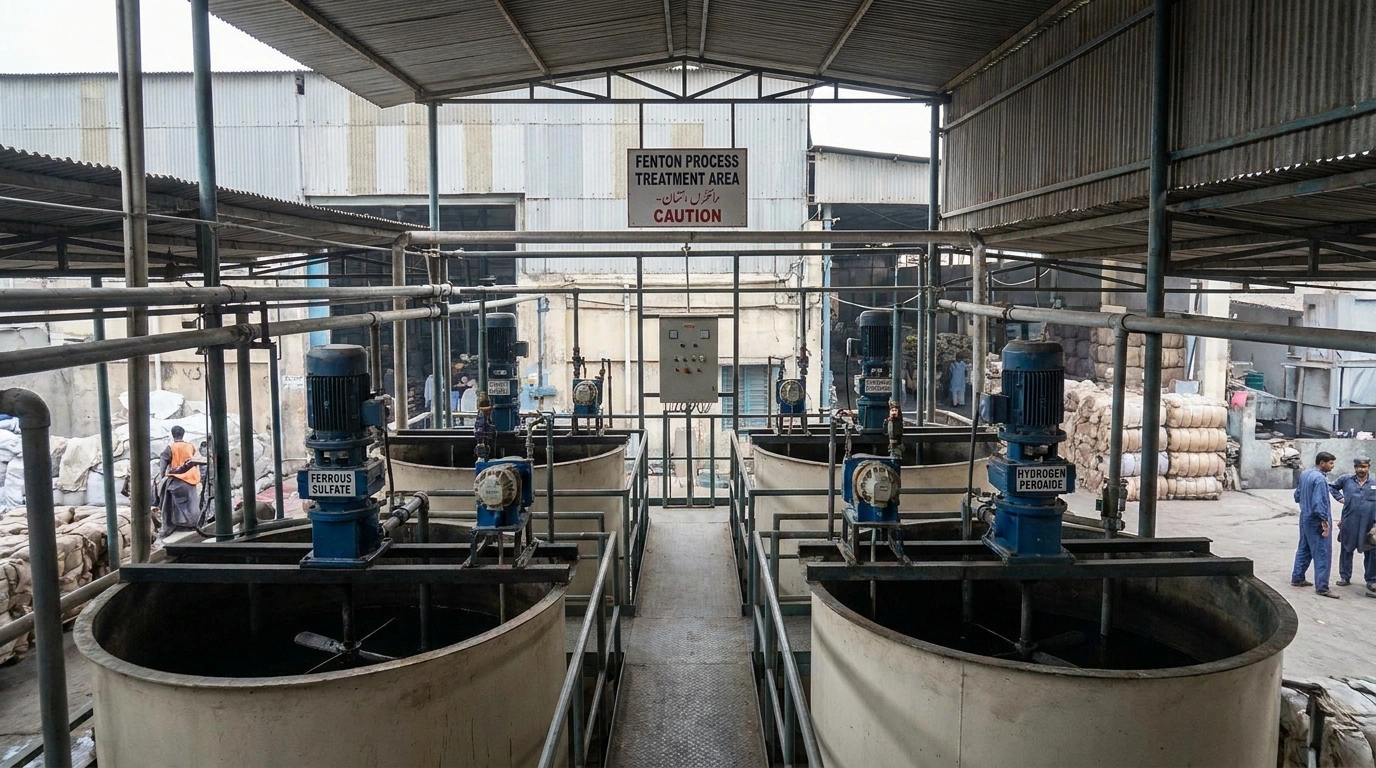
Fenton process wastewater treatment uses hydrogen peroxide and iron catalysts to break down hard-to-treat industrial pollutants. It is widely used in textile, pharmaceutical, chemical, and food industries to reduce COD, color, odor, and toxic compounds before discharge or reuse. The process helps Pakistani industries meet NEQS standards while improving treatment efficiency and lowering environmental risk.
Why Are Pakistani Industries Turning to Fenton Process Wastewater Treatment?
Fenton process wastewater treatment is gaining popularity in Pakistan because many industries struggle to remove persistent organic pollutants through conventional biological treatment alone. The process rapidly oxidizes difficult contaminants, improves compliance with NEQS discharge limits, and enhances downstream treatment performance for textile, pharma, and chemical industries.
Factories in Faisalabad, Karachi, and Lahore face increasing pressure from the Pakistan EPA to control industrial discharge quality. Textile dyeing units, pharmaceutical manufacturers, and tanneries often produce wastewater with high COD, intense color, toxic organics, and low biodegradability. Conventional activated sludge systems frequently fail under these conditions.
The Fenton process solves this problem through chemical oxidation. It generates hydroxyl radicals capable of attacking complex organic molecules that biological systems cannot easily degrade. This makes it one of the most effective wastewater oxidation methods for industrial applications.
According to the United Nations Industrial Development Organization UNIDO, Pakistan’s textile sector contributes heavily to industrial wastewater pollution because of dye chemicals and processing auxiliaries. Industries using advanced oxidation systems have shown major improvements in effluent quality and compliance rates.
Common Industries Using the Fenton Process
- Textile dyeing and finishing plants
- Pharmaceutical manufacturing units
- Pesticide and chemical factories
- Food and beverage processing facilities
- Landfill leachate treatment plants
- Municipal industrial blending stations
Many companies now combine the Fenton process with biological systems such as MBBR and MBR for better overall treatment efficiency. WCSP’s wastewater treatment system service often integrates these hybrid solutions for industrial clients facing recurring compliance failures.
How Does the Fenton Reaction Effluent Treatment Process Actually Work?
Fenton reaction effluent treatment works by combining ferrous iron and hydrogen peroxide under acidic conditions. This reaction produces hydroxyl radicals that rapidly oxidize organic pollutants, color compounds, and toxic chemicals in wastewater. The treated water then undergoes neutralization, settling, and further polishing before discharge or reuse.
The chemistry behind the process is simple but powerful. When hydrogen peroxide reacts with ferrous iron Fe2+, it creates hydroxyl radicals OH•. These radicals are among the strongest oxidizing agents used in industrial wastewater treatment.
Step-by-Step Fenton Process Flow
| Step | Process Stage | Purpose |
|---|---|---|
| 1 | pH Adjustment | Reduce pH to around 2.5–4 |
| 2 | Iron Dosing | Add ferrous sulfate catalyst |
| 3 | Hydrogen Peroxide Injection | Generate hydroxyl radicals |
| 4 | Oxidation Reaction | Break down pollutants and color |
| 5 | Neutralization | Increase pH for settling |
| 6 | Coagulation and Flocculation | Remove suspended particles |
| 7 | Sludge Separation | Separate iron sludge |
| 8 | Final Polishing | RO, sand filter, carbon filter, or MBR |
Why pH Control Matters
The process works best in acidic conditions. If the pH becomes too high, radical formation drops sharply. Poor pH management is one of the most common reasons industrial plants experience unstable treatment performance.
Industries in Sialkot’s leather sector often struggle with fluctuating wastewater composition. Automated chemical dosing and online monitoring systems significantly improve oxidation efficiency under such variable conditions.
WCSP’s water quality monitoring service helps industries maintain stable operating conditions through real-time process control and parameter tracking.
Is the Fenton Process Better Than Other Wastewater Oxidation Methods?
The Fenton process is often more effective than conventional oxidation methods for wastewater containing color, toxic organics, and non-biodegradable compounds. Compared to chlorination or standard coagulation, it delivers stronger pollutant destruction and faster reaction times while supporting compliance with strict industrial discharge standards.
Industrial facilities frequently compare Fenton oxidation with ozone systems, electrocoagulation, activated carbon, and biological treatment.
Fenton vs Conventional Treatment Technologies
| Technology | Best For | Main Limitation |
|---|---|---|
| Fenton Process | High COD and color removal | Chemical consumption |
| Electrocoagulation | Heavy metals and turbidity | Electrode maintenance |
| Biological Treatment | Biodegradable organics | Weak against toxic compounds |
| Ozone Treatment | Odor and disinfection | High energy demand |
| Activated Carbon | Polishing stage | Media replacement cost |
The advanced oxidation process AOP category includes ozone, UV peroxide, photocatalysis, and Fenton chemistry. Among these, Fenton systems often provide the best balance between cost and oxidation strength for industrial wastewater in Pakistan.
According to the International Water Association IWA, advanced oxidation technologies can reduce recalcitrant COD compounds by more than 70% when correctly designed.
Where Hybrid Systems Deliver Better Results
Many industrial plants combine multiple technologies instead of relying on one system alone. For example:
- Electrocoagulation removes suspended solids
- Fenton oxidation destroys toxic organics
- MBR systems polish remaining contaminants
- RO systems recover reusable process water
WCSP’s electrocoagulation service is commonly integrated before Fenton oxidation to reduce chemical load and improve oxidation efficiency.
What Does Fenton Process Wastewater Treatment Cost in Pakistan?
Fenton process wastewater treatment costs depend on wastewater strength, chemical consumption, automation level, and plant capacity. In Pakistan, operational costs generally range between moderate and high compared to biological treatment, but industries often recover expenses through compliance savings, reduced penalties, and improved water reuse opportunities.
Plant managers usually focus only on chemical cost. That is a mistake. You should evaluate the total lifecycle impact, including compliance, downtime, rejected exports, and wastewater reuse potential.
Major Cost Components
Chemical Consumption
Hydrogen peroxide and ferrous sulfate represent the largest operating expense. Textile dyeing units with high COD and color loads consume higher peroxide quantities.
Sludge Handling
The process generates iron-rich sludge that requires proper disposal. Sludge management cost depends on wastewater characteristics and treatment scale.
Automation and Monitoring
Plants using automated dosing systems reduce chemical wastage and stabilize treatment performance.
Energy Usage
Compared to thermal oxidation or ozone generation, Fenton systems generally consume less electrical energy.
Typical Cost Ranges in Pakistan
| Plant Size | Estimated Operational Cost |
|---|---|
| Small Industry | PKR 120–250 per m³ |
| Medium Industry | PKR 90–180 per m³ |
| Large Industrial Cluster | PKR 70–140 per m³ |
Costs vary based on wastewater composition and required discharge quality.
According to the Asian Development Bank ADB, industrial water reuse investments can reduce freshwater dependence by up to 40% in water-stressed regions. That matters significantly in Lahore, Karachi, and Faisalabad, where groundwater stress continues to rise.
EXPERT INSIGHT
Many factories overdose hydrogen peroxide to chase faster COD reduction. That increases operating cost without proportional treatment gains. WCSP’s 17+ years of field experience shows that proper equalization and automated dosing often cut peroxide consumption by 15–25% while maintaining stable compliance.
Which Industries Benefit Most From Fenton Reaction Effluent Systems?
Fenton reaction effluent systems are especially effective for industries producing high-strength wastewater with color, toxicity, or low biodegradability. Textile, pharmaceutical, chemical, and food processing sectors in Pakistan use these systems to improve treatment performance and meet environmental discharge requirements.
Textile Industry Applications
Textile processing units in Faisalabad and Karachi generate wastewater containing dyes, surfactants, salts, and finishing chemicals. Biological systems alone struggle to remove color and refractory compounds.
The Fenton process significantly reduces:
- COD
- BOD
- Color intensity
- Toxic aromatic compounds
Pakistan’s textile sector contributes nearly 60% of national exports according to the Pakistan Bureau of Statistics. That makes wastewater compliance increasingly important for international buyers and sustainability audits.
Pharmaceutical and Chemical Plants
Pharma wastewater often contains antibiotics, solvents, and complex organics. Conventional treatment methods may not fully degrade these contaminants.
Advanced oxidation process AOP systems improve:
- Toxicity reduction
- Biological treatability
- Odor control
- Final discharge quality
Food and Beverage Sector
Beverage plants in Lahore and Gujranwala use Fenton systems during shock loading events where biological plants experience overload conditions.
Industries combining oxidation with WCSP’s membrane bioreactor service (link: /membrane-bioreactor/) often achieve better effluent consistency and reduced operational instability.
Can the Fenton Process Help Industries Meet NEQS and EPA Standards?
Yes. The Fenton process helps industries achieve NEQS and Pakistan EPA discharge standards by reducing COD, color, toxicity, and persistent organic pollutants that conventional systems fail to remove effectively. It is particularly useful for industries facing repeated compliance notices or environmental penalties.
Environmental compliance has become stricter across Pakistan’s industrial regions. Punjab EPA inspections increasingly focus on:
- COD and BOD levels
- Toxic discharge
- Color contamination
- Heavy metal control
- Untreated industrial release
Common Compliance Problems
Many factories installed treatment plants years ago when discharge standards were less aggressively enforced. Those systems now fail under increased production loads.
Typical warning signs include:
- Dark effluent color
- High COD after biological treatment
- Frequent odor complaints
- Sludge bulking
- Excess chemical consumption
Why Fenton Systems Improve Compliance
The oxidation stage breaks down difficult pollutants before final polishing. That reduces treatment burden on secondary systems.
When paired with:
- RO systems
- MBR systems
- ZLD infrastructure
- Real-time monitoring
you achieve much higher compliance stability.
WCSP’s zero liquid discharge ZLD service (link: /zero-liquid-discharge-zld/) is frequently combined with oxidation systems for industries targeting water recovery and near-zero discharge operations.
How Do You Design an Efficient Advanced Oxidation Process AOP System?
An efficient advanced oxidation process AOP system requires accurate wastewater characterization, proper chemical dosing, pH control, reaction time management, and integration with upstream and downstream treatment technologies. Poor design leads to chemical wastage, unstable performance, and unnecessary operating costs.
Start With Wastewater Characterization
Before designing a system, you should analyze:
- COD
- BOD
- TDS
- pH
- Color
- Toxic compounds
- Flow variability
Factories often skip detailed characterization and oversize equipment unnecessarily.
Critical Design Parameters
Equalization Tank Design
Equalization stabilizes wastewater flow and contaminant load. This protects oxidation efficiency during production fluctuations.
Reaction Tank Retention Time
Most industrial systems require 30–120 minutes depending on pollutant concentration.
Chemical Dosing Automation
Automated dosing reduces peroxide wastage and stabilizes oxidation performance.
Integration With Other Technologies
The best-performing plants rarely rely on a standalone oxidation unit.
Common combinations include:
- Electrocoagulation + Fenton
- Fenton + MBR
- Fenton + RO
- Fenton + ZLD
Industries implementing WCSP’s reverse osmosis plant service (link: /reverse-osmosis-plant/) after oxidation stages often improve membrane lifespan because organics are reduced before filtration.
What Operational Mistakes Increase Fenton Treatment Costs and Failures?
Most Fenton treatment failures happen because of poor dosing control, weak equalization, incorrect pH management, or lack of process monitoring. These mistakes increase chemical consumption, sludge generation, and compliance risk while reducing oxidation efficiency.
Overdosing Hydrogen Peroxide
More peroxide does not always mean better treatment. Excess peroxide can actually consume hydroxyl radicals and reduce oxidation efficiency.
Ignoring Equalization
Industries with fluctuating production schedules often send shock loads directly into treatment systems. That destabilizes oxidation reactions and increases chemical demand.
Poor Sludge Management
Fenton systems generate iron sludge that must be properly separated and disposed of. Weak sludge handling systems create operational bottlenecks.
Lack of Skilled Monitoring
Many plants rely entirely on manual operator judgment without real-time instrumentation.
Key monitoring parameters include:
- ORP
- pH
- COD trends
- Flow rate
- Reaction time
According to the World Bank, industrial water inefficiency remains a major operational cost driver across South Asia because many facilities lack proper monitoring infrastructure.
Facilities investing in automation and monitoring systems consistently achieve better long-term operational stability than manually operated plants.
Stronger Effluent Control Starts With Smarter Oxidation
Industrial wastewater is becoming harder to treat, not easier. Higher production loads, stricter NEQS enforcement, rising freshwater costs, and export compliance demands are pushing Pakistani industries to modernize their treatment infrastructure quickly. The Fenton process wastewater treatment approach gives you a practical way to handle difficult organics, improve COD reduction, stabilize downstream systems, and reduce environmental risk.
The biggest advantages come when you:
- Properly characterize wastewater before design
- Automate chemical dosing and monitoring
- Combine oxidation with biological or membrane systems
- Optimize peroxide consumption instead of overdosing
Whether you operate a textile mill in Faisalabad, a pharmaceutical unit in Lahore, or a food processing facility in Karachi, advanced oxidation can significantly improve treatment reliability and compliance performance.
Ready to upgrade your water treatment system? Contact WCSP’s expert team today. (link: /contact-us/)
Related topics you can explore next:
- Zero Liquid Discharge Systems for Textile Industries in Pakistan
- How Membrane Bioreactor Systems Improve Industrial Effluent Quality
FAQ — Schema Ready
1. What is Fenton process wastewater treatment used for?
Fenton process wastewater treatment is used to remove difficult organic pollutants, color, odor, and toxic compounds from industrial wastewater. It is widely applied in textile, pharmaceutical, chemical, and food industries where conventional biological treatment cannot achieve required discharge standards.
2. How much does a Fenton wastewater treatment plant cost in Pakistan?
The cost depends on plant capacity, COD load, automation level, and chemical demand. Small industrial systems may cost significantly less than large integrated plants with automation and sludge handling. Operational costs generally range between PKR 70–250 per cubic meter depending on wastewater complexity.
3. Is the Fenton process better than biological treatment?
The Fenton process is not a replacement for biological treatment in every case. It works best for non-biodegradable or toxic pollutants that bacteria cannot easily break down. Many industries combine Fenton oxidation with MBBR or MBR systems for stronger overall performance.
Can Fenton process wastewater treatment help meet NEQS standards?
Yes. Fenton process wastewater treatment helps industries reduce COD, color, toxicity, and persistent organics that commonly cause NEQS violations. Industries facing repeated EPA notices often use oxidation systems to improve compliance reliability before discharge or water reuse.
How long does the Fenton reaction treatment process take?
Most industrial Fenton reaction systems require 30 to 120 minutes of reaction time depending on wastewater characteristics. Total treatment duration also depends on equalization, neutralization, settling, and polishing stages integrated into the treatment plant design.
Which industries in Pakistan commonly use advanced oxidation process AOP systems?
Advanced oxidation process AOP systems are commonly used in Pakistan’s textile, pharmaceutical, chemical, leather, food processing, and municipal sectors. Industries with high COD, color contamination, or toxic organics benefit the most from oxidation-based treatment technologies.