Are you running an industrial operation in Pakistan and still discharging untreated or partially treated wastewater into drains, canals, or open fields? If so, you’re not just risking the environment — you’re sitting on a ticking compliance time bomb.
Pakistan’s water crisis is no longer a future problem. With per capita water availability already approaching critically low levels and the Environmental Protection Agency tightening its enforcement of National Environmental Quality Standards (NEQS), industries across Faisalabad, Karachi, Lahore, and beyond are being forced to rethink how they handle liquid waste. Zero liquid discharge Pakistan solutions are moving from a luxury consideration to a genuine business necessity.
In this guide, you’ll get a complete picture of what ZLD systems are, how they work, what it costs to set one up in Pakistan, which industries need them most, and how to navigate the legal landscape. Whether you’re a factory owner, an environmental compliance officer, or an entrepreneur planning a new industrial venture, this is the roadmap you need.
What is Zero Liquid Discharge and Why Does it Matter for Pakistan?
Zero liquid discharge is exactly what the name says — an advanced wastewater treatment approach where no liquid waste leaves your facility. Every drop of processed water gets recovered, recycled, and put back into your production cycle. What remains at the end isn’t water at all — it’s a dry solid or crystallized salt that can be safely disposed of or, in some cases, sold as a byproduct.
Here’s why this matters in the Pakistani context specifically. According to research published in the Sustainable Development Goals literature, Pakistan’s water availability per person is projected to fall below the internationally recognized stress threshold of 1,000 cubic meters per capita. Industrial sectors — textile, food processing, leather, chemicals, pharmaceuticals — are among the biggest contributors to both water consumption and water pollution.
At the same time, Pakistan’s National Water Policy mandates that industries must treat their effluent in-house to meet NEQS standards before any discharge into municipal sewers. That’s not a suggestion. Non-compliance can mean fines running into millions of rupees, legal action under the Pakistan Environmental Protection Act 1997, or outright closure of a facility.
Zero liquid discharge Pakistan systems offer a way out of this bind. Instead of treating water just enough to dump it somewhere, you treat it completely and reuse it internally.
How Does a ZLD Plant Actually Work?
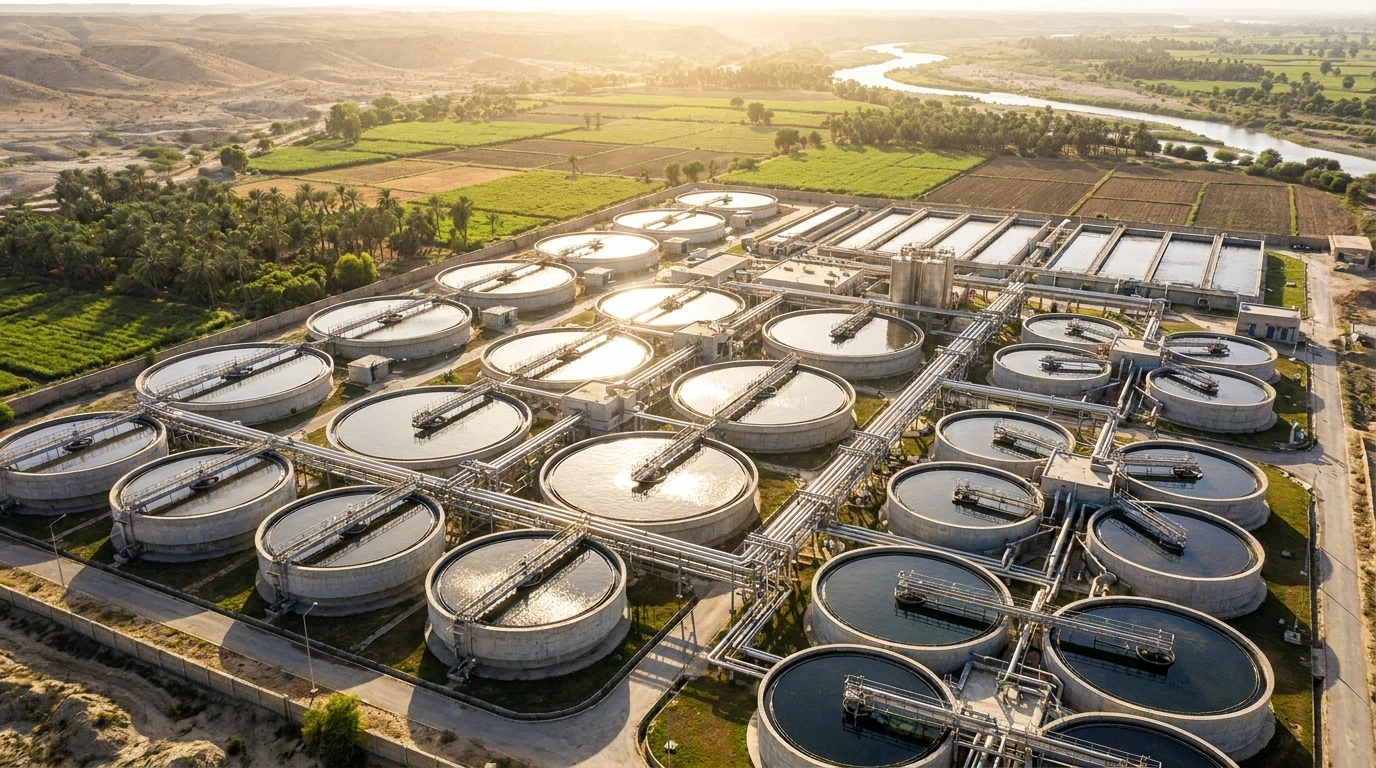
Understanding the mechanics of a ZLD system helps you make smarter decisions about what setup is right for your facility. A ZLD plant is not a single piece of equipment — it’s a staged treatment train, with each stage handling progressively more concentrated or complex wastewater.
Stage One: Pre-Treatment
This is where your incoming wastewater gets cleaned up enough to enter the main treatment system. Depending on what your facility produces, pre-treatment might involve screening to remove solids, coagulation and flocculation to clump together suspended particles, pH adjustment, sand filtration, and activated carbon filtration. Think of this stage as removing the easy stuff before the harder work begins.
Stage Two: Membrane Filtration and Reverse Osmosis
Reverse osmosis (RO) is the workhorse of most ZLD systems. Water is forced under high pressure through semi-permeable membranes that reject dissolved salts, heavy metals, and organic compounds. The result is two streams — clean permeate water that can be reused in your process, and a concentrated brine or reject stream that needs further treatment.
The RO stage typically recovers 60 to 75 percent of your incoming water, depending on the total dissolved solids (TDS) of your effluent. For a textile dyeing unit in Faisalabad, that alone can represent significant savings on freshwater procurement costs.
Stage Three: Evaporation
The concentrated brine from RO goes into an evaporator — either a Multiple Effect Evaporator (MEE) or a Mechanical Vapor Recompression (MVR) unit. Here, heat is applied to boil off the remaining water as vapor, which is then condensed and recovered. This stage concentrates the dissolved solids even further, leaving a thick slurry.
MEE systems use steam progressively across multiple chambers, reducing energy consumption. MVR systems use a compressor to recycle vapor as a heat source, making them more energy-efficient but higher in capital cost. The choice between them depends on your energy costs and the composition of your wastewater.
Stage Four: Crystallization and Drying
The final stage converts that thick slurry into dry solids. An Agitated Thin Film Dryer (ATFD) or a crystallizer does this job. The output is a dry salt or solid cake that can be landfilled, or in some cases — depending on the salt composition — sold to chemical manufacturers. This is where “zero liquid discharge” is fully achieved.
A well-designed ZLD system can recover 95 to 99 percent of your incoming wastewater, according to industry data from ZLD plant manufacturers.
Which Pakistani Industries Need Zero Liquid Discharge the Most?
Not every factory needs a full ZLD plant, but several major sectors in Pakistan are prime candidates. Here’s how the picture looks by industry.
Textile Industry
Pakistan’s textile sector is the backbone of the national export economy, and it’s also one of the biggest sources of industrial water pollution. In Faisalabad’s Khurrianwala industrial zone alone, research published in 2025 found that over 200 textile units discharge chemically complex effluents containing dyes, salts, heavy metals, and surfactants — often directly into open channels — despite national discharge limits under NEQS. Typical COD levels from these effluents can exceed 900 mg/L, against the 150 mg/L NEQS threshold.
For dyeing and finishing units in particular, zero liquid discharge Pakistan systems aren’t just a regulatory requirement — they’re a competitive advantage. Global retailers increasingly require their Pakistani suppliers to demonstrate environmental compliance. Companies using ZLD systems have used this as a selling point to retain contracts with European and North American buyers.
Pharmaceutical Industry
Pakistan’s pharmaceutical sector is worth approximately Rs. 748 billion, with over 800 large-volume formulation units operating across the country. Pharmaceutical manufacturing generates wastewater with high organic loads, active pharmaceutical ingredients, solvents, and complex chemical mixtures. A ZLD plant for a pharmaceutical facility typically combines biological pre-treatment with thermal evaporation to handle this complexity.
Chemical and Petrochemical Plants
High TDS, extreme pH values, and hazardous dissolved compounds characterize effluent from chemical manufacturing. Standard effluent treatment plants often can’t handle this without sophisticated polishing steps. ZLD systems integrated with advanced oxidation processes (AOP) offer a solution that not only achieves compliance but also recovers valuable process chemicals in some cases.
Food and Beverage Processing
Sugar mills, dairy processors, and beverage manufacturers generate high-BOD effluent that, when untreated, causes significant pollution of water bodies used downstream for irrigation. ZLD in the food sector often combines biological treatment stages with membrane systems because the organic content must be reduced before the water can pass through RO membranes effectively.
Power Generation
Thermal power plants use enormous volumes of water for cooling and boiler feed. Their wastewater contains dissolved minerals, treatment chemicals, and in coal-fired plants, heavy metals from flue gas desulfurization. ZLD systems here focus heavily on the crystallization stage to manage high-TDS streams.
What Does ZLD Plant Setup Cost in Pakistan?
This is the question every plant manager asks first, and it’s the right question to ask. ZLD system cost is not a fixed number — it varies enormously based on your wastewater volume, TDS levels, temperature, the types of contaminants present, and the recovery rate you need.
Capital Cost Ranges
For smaller industrial units producing around 50 to 100 cubic meters of effluent per day, basic ZLD systems incorporating RO and a small evaporator can start at the equivalent of PKR 40 to 80 lakh depending on configuration. Mid-sized operations producing 500 to 1,000 cubic meters per day are looking at PKR 3 to 8 crore for a complete system. Large-scale industrial facilities — major textile mills, chemical plants, power stations — can require ZLD investments of PKR 20 crore and above.
These figures are rough estimates based on comparable setups in India and regional supplier pricing. Pakistani industrial buyers should request detailed site-specific quotes because the actual number depends heavily on the complexity of your effluent.
Operating Costs
Energy is the biggest ongoing expense in any ZLD system, particularly in the evaporation stages. This is why the choice between MEE and MVR matters so much. Solar-integrated systems and heat recovery designs are gaining traction in 2026 precisely because they reduce the operating cost burden.
Membrane replacement, chemical dosing for pre-treatment, labor for skilled operators, and periodic maintenance of crystallizers and dryers are the other main cost buckets to budget for.
The Return on Investment Argument
Here’s the framing that changes how Pakistani industrialists look at ZLD system cost: you’re not spending money on waste disposal — you’re investing in water security and regulatory certainty. Every cubic meter of water recovered from your ZLD system is a cubic meter you don’t have to buy from the municipal supply or groundwater. In water-stressed industrial cities where groundwater is declining and municipal supply is unreliable, that has real financial value.
Beyond freshwater savings, ZLD eliminates the cost of effluent disposal, reduces the risk of fines under NEQS enforcement, and — for export-oriented businesses — protects the supply chain relationships that depend on your environmental credentials.
What Are Pakistan’s Legal Requirements Around Industrial Discharge?
Navigating the regulatory landscape is essential before investing in any treatment system. Here’s what you need to know about the framework governing industrial wastewater discharge in Pakistan.
The Pakistan Environmental Protection Act 1997
This is the foundational legislation. Under Section 11, no person may discharge industrial effluent into any body of water, sewer, or on land in excess of NEQS or provincial environmental quality standards. The “polluter pays” principle is embedded in this Act, meaning the cost of environmental damage falls on the discharging party.
National Environmental Quality Standards (NEQS)
NEQS sets limits for over 30 parameters in industrial effluents, covering pH, BOD, COD, suspended solids, heavy metals including cadmium, lead, and mercury, and other toxic compounds. Dilution is explicitly prohibited — you cannot simply add freshwater to your effluent to bring the numbers down.
Post-18th Amendment devolution, Punjab now applies Punjab Environmental Quality Standards (PEQS), which align closely with NEQS. Wet processing units in Punjab are required to obtain an environmental NOC before operation and must set up wastewater treatment within four months of commencing production.
Consequences of Non-Compliance
Fines can range from thousands to millions of rupees depending on violation severity. Persistent non-compliance can lead to criminal charges against company officials. The EPA can order shutdowns. For export-oriented businesses, loss of compliance certification can mean losing access to international buyers who require environmental due diligence from their supply chains.
The enforcement environment in 2026 is significantly stricter than it was even five years ago, partly driven by provincial court orders and partly by international pressure on Pakistan’s export sectors.
Common Mistakes Pakistani Industries Make When Setting Up ZLD Systems
Experience from ZLD plant implementations across the region reveals a set of recurring errors that drive up costs and reduce effectiveness. Knowing these in advance saves you time, money, and compliance headaches.
One of the most common mistakes is underestimating the variability of your effluent. Many industries generate wastewater with significant seasonal or batch-to-batch variation in TDS, pH, and chemical composition. A ZLD system designed only for average conditions will fail under peak load. Always conduct a thorough wastewater characterization study — covering multiple shifts and production cycles — before finalizing system design.
Another frequent error is skipping pre-treatment or under-designing it. The RO membranes that form the heart of most ZLD systems are expensive and sensitive. Hardness, silica, iron, manganese, and organics in your feed water will foul membranes rapidly if not removed upstream. Pre-treatment is not the place to cut costs.
Facilities also frequently underestimate operating costs because they focus only on capital expenditure during the decision phase. A ZLD system with high energy requirements may look cheaper upfront than a more efficient alternative, but the lifetime operating cost comparison tells a different story. Always evaluate total cost of ownership over a 10 to 15 year horizon.
Finally, don’t ignore the solids disposal plan. Your ZLD plant will produce dry salt or solid cake at the end of the process. You need a clear, legally compliant plan for where that goes. In some cases, salt quality allows resale. In others, you’ll need a certified hazardous waste disposal arrangement.
How to Choose the Right ZLD System for Your Facility
Selecting the right zero liquid discharge Pakistan solution comes down to a structured evaluation process. Here’s a practical framework.
Start by understanding your wastewater characterization in detail — volume, TDS, COD, BOD, specific contaminants, and variation over time. This data drives every subsequent design decision.
Next, define your water recovery target. Higher recovery means less freshwater purchase but also higher system complexity and cost. For most Pakistani industrial applications, targeting 90 to 95 percent recovery offers a good balance.
Evaluate energy options. If your facility has access to waste heat from steam systems, you can use that to drive evaporation at much lower operating cost. If not, consider MVR systems that self-recycle thermal energy.
Request proposals from multiple vendors with regional experience — ideally companies with references from similar industries in Pakistan or comparable South Asian markets. Evaluate not just the capital cost but the vendor’s after-sales service capability, spare parts availability, and local technical support.
Finally, plan your timeline around the regulatory calendar. If your facility is awaiting NOC renewal or facing an EPA inspection, the lead time for ZLD plant setup — typically three to six months from order to commissioning for mid-sized systems — needs to factor into your compliance schedule.
The Future of Zero Liquid Discharge in Pakistan
The global ZLD market is on a significant growth trajectory. The industry was valued at approximately $8.6 billion in 2025 and is projected to grow at roughly 8.7 percent annually, reaching close to $20 billion by 2035. Asia-Pacific, which accounted for nearly 33 percent of global market share in 2025, is growing faster than any other region at close to 10 percent annually.
Pakistan sits squarely in the zone of maximum pressure — water scarcity, regulatory tightening, and export market requirements converging simultaneously. The comparison to India is instructive: India has already mandated ZLD for all textile plants generating more than 25 cubic meters of wastewater per day. Pakistan’s regulatory trajectory points in the same direction.
Hybrid membrane-thermal systems are emerging as the dominant architecture for 2026 and beyond, particularly where electricity costs are high. Solar-powered evaporation and AI-driven process optimization are entering commercial deployments. Modular ZLD units that can be shipped and commissioned quickly are opening the door for smaller industrial operations that previously couldn’t justify the cost.
For Pakistani industries, the question is no longer whether to adopt zero liquid discharge — it’s when, and how to do it cost-effectively.
Conclusion
Zero liquid discharge Pakistan is not a distant aspiration for large multinationals — it’s becoming a practical necessity for any serious industrial operation in 2026. With NEQS enforcement tightening, international buyers demanding environmental credentials, and water scarcity making freshwater an increasingly expensive input, the business case for ZLD systems is stronger than it’s ever been.
The path forward is clear: characterize your wastewater, evaluate your options, engage experienced vendors, and plan your compliance timeline proactively. The cost of doing nothing — in fines, reputational damage, and lost contracts — consistently exceeds the cost of getting a ZLD system in place.
If you’re ready to explore ZLD plant setup for your facility, the next step is a proper effluent audit. Start there, and every other decision becomes far easier to make.
Related topics to explore: Industrial Effluent Treatment Plants (ETPs) in Pakistan, NEQS Compliance Strategies, Reverse Osmosis Systems for Industry, Water Reuse and Recycling in Pakistani Manufacturing, and Environmental NOC Requirements for Punjab Industries.
Frequently Asked Questions About Zero Liquid Discharge Pakistan
1. What is zero liquid discharge and how does it work?
Zero liquid discharge is a wastewater management approach that recovers and recycles nearly all water used in industrial processes, leaving only dry solids as waste. It combines pre-treatment, reverse osmosis, evaporation, and crystallization stages. The result is that no liquid effluent leaves your facility, achieving full compliance with discharge regulations.
2. Is zero liquid discharge mandatory in Pakistan?
There’s no blanket ZLD mandate in Pakistan yet, but the underlying legal requirement — that all industrial effluent meet NEQS standards before discharge — effectively forces many high-volume or high-TDS industries toward ZLD as the only viable compliance path. Given the trajectory of neighboring countries like India, industry observers expect ZLD mandates for specific sectors to be introduced in Pakistan within the next few years.
3. What is the ZLD system cost in Pakistan?
ZLD system cost varies by plant size and effluent complexity. Small systems for 50 to 100 cubic meters per day may start around PKR 40 to 80 lakh. Mid-sized systems for 500 cubic meters per day can range from PKR 3 to 8 crore. Large industrial-scale systems cost significantly more. Always commission a site-specific feasibility study before budgeting.
4. How long does a ZLD plant setup take?
For most mid-sized industrial ZLD plants, the timeline from vendor engagement to commissioning is roughly three to six months. Larger or more complex installations can take longer. This timeline should be factored into compliance planning, especially if you’re facing regulatory deadlines.
5. Which industries in Pakistan need ZLD systems most urgently?
Textile dyeing and finishing units, pharmaceutical manufacturers, chemical plants, leather tanneries, sugar mills, and thermal power stations are the sectors most urgently requiring zero liquid discharge Pakistan solutions. These industries generate high volumes of complex, high-TDS effluent that standard ETPs cannot adequately treat to NEQS standards.
6. Can a ZLD system actually save money for a Pakistani factory?
Yes, over the medium to long term. Water recovery reduces freshwater procurement costs. Eliminating effluent disposal costs provides additional savings. Avoiding NEQS fines and potential shutdowns removes a significant liability. For export-oriented businesses, ZLD compliance protects access to international markets that increasingly require environmental due diligence from suppliers.
7. What happens to the solid waste produced by a ZLD plant?
ZLD systems produce a dry salt or solid cake as the final residue. Depending on the composition, this may be sent to a certified landfill, a hazardous waste facility, or in some cases sold to chemical industries if the salt meets quality requirements. Developing a compliant solids disposal plan is an essential part of ZLD plant setup in Pakistan.