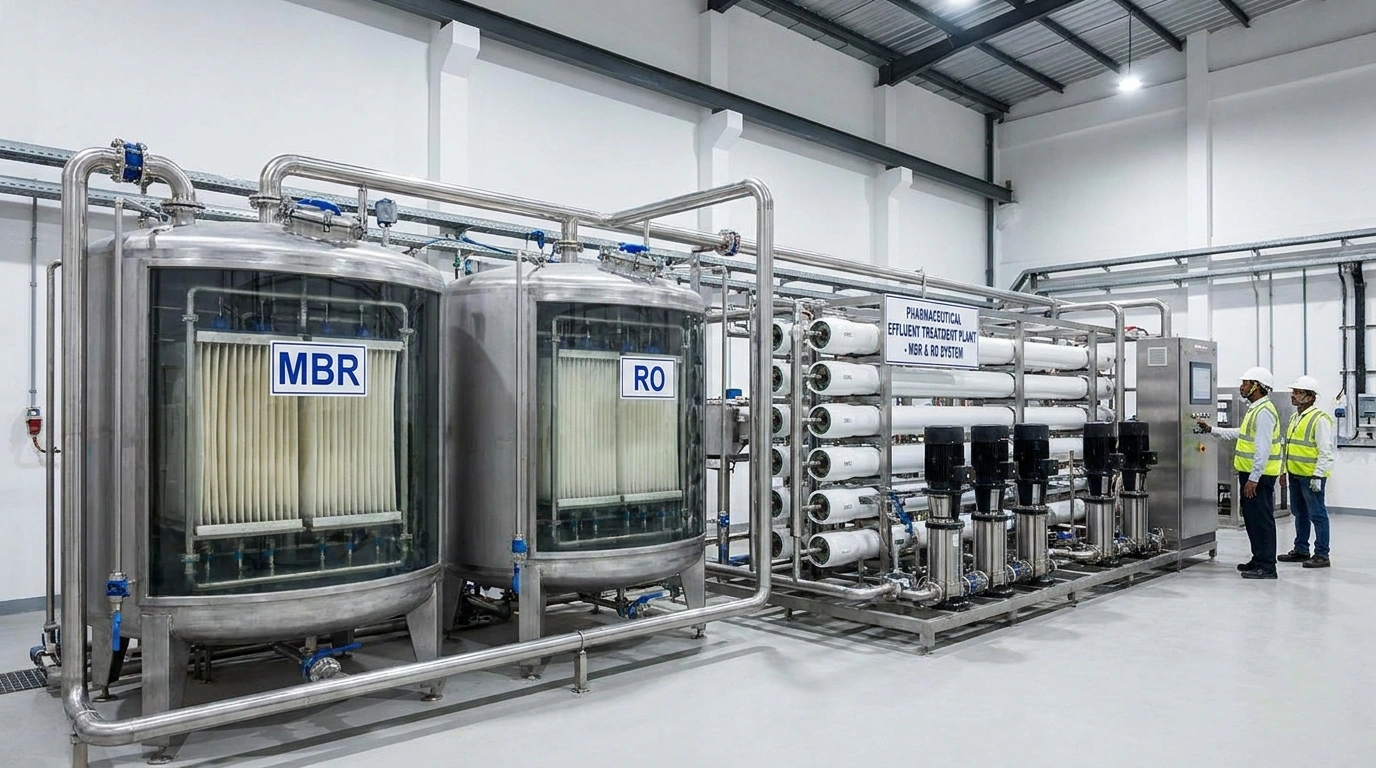
Pharmaceutical effluent treatment in Pakistan requires industries to meet NEQS and EPA discharge standards while reducing chemical loads, antibiotic residues, and toxic contaminants before discharge or reuse. Modern systems such as MBR, MBBR, RO, and advanced oxidation processes help pharmaceutical plants maintain compliance, avoid penalties, and improve water recovery efficiency.
Why Is Pharmaceutical Effluent Treatment Becoming a Critical Issue in Pakistan?
Pakistan’s pharmaceutical sector is expanding rapidly, but many manufacturers still struggle with wastewater compliance. According to the Pakistan Bureau of Statistics, the pharmaceutical industry contributes billions of rupees annually to the national economy while increasing production capacity across Lahore, Karachi, and Faisalabad. More production means more contaminated wastewater streams requiring specialized treatment.
Pharmaceutical effluent treatment has become a boardroom issue because untreated discharge contains antibiotics, solvents, active pharmaceutical ingredients, heavy metals, and high COD/BOD loads. These pollutants can damage municipal sewer systems, contaminate groundwater, and trigger EPA enforcement actions.
In industrial zones like Sundar Industrial Estate Lahore and SITE Karachi, environmental inspections have become stricter. Provincial EPAs now expect manufacturers to demonstrate continuous monitoring, sludge handling, and compliant discharge practices. Non-compliance can result in fines, operational delays, and reputational damage.
You also face another challenge: water scarcity. According to the World Bank, Pakistan ranks among water-stressed countries, pushing industries toward water reuse and recovery initiatives. That means your treatment plant is no longer just a compliance tool. It is part of your operational sustainability strategy.
This guide explains how pharmaceutical wastewater regulations Pakistan industries must follow are evolving, what technologies actually work, and how you can reduce long-term operational costs without risking compliance.
What Makes Drug Manufacturing Wastewater Difficult to Treat?
Drug manufacturing wastewater differs significantly from municipal sewage or textile effluent. The composition changes constantly depending on production batches, cleaning cycles, and raw materials used.
Pharmaceutical plants in Lahore and Karachi often discharge wastewater containing solvents, hormones, antibiotics, disinfectants, and complex organic compounds. These pollutants resist conventional biological treatment and can inhibit microbial activity inside standard activated sludge systems.
High Variability Creates Operational Instability
One production shift may generate acidic wastewater while another releases alkaline cleaning chemicals. Sudden fluctuations in pH, TDS, COD, and toxicity create instability inside treatment plants.
According to the United Nations Environment Programme UNEP, pharmaceutical residues in untreated wastewater contribute to antimicrobial resistance risks globally. That makes advanced treatment essential rather than optional.
Common Pollutants in Pharma Wastewater
You typically encounter:
- High Chemical Oxygen Demand COD
- Active pharmaceutical ingredients APIs
- Antibiotic residues
- Solvents and alcohols
- Heavy metals from manufacturing processes
- Suspended solids and sludge
- Cleaning and sterilization chemicals
WCSP’s industrial wastewater treatment systems often integrate equalization tanks, pH correction, dissolved air flotation, and biological treatment to stabilize fluctuating influent loads before advanced polishing stages.
Why Conventional ETPs Often Fail
Many older effluent treatment plants installed in Pakistan during the early 2000s were designed for simpler industrial wastewater streams. They cannot consistently handle modern drug manufacturing wastewater without upgrades.
Facilities using outdated aeration systems frequently face sludge bulking, membrane fouling, excessive energy consumption, and odor complaints. That increases operating costs while still risking NEQS violations.
Which Pharmaceutical Wastewater Regulations Pakistan Industries Must Follow?
Pharmaceutical wastewater regulations Pakistan industries operate under mainly revolve around National Environmental Quality Standards NEQS and provincial EPA enforcement frameworks.
Pakistan EPA and provincial EPAs in Punjab, Sindh, and Khyber Pakhtunkhwa regulate industrial discharge into municipal sewers, inland waters, and irrigation channels. Pharmaceutical facilities must monitor wastewater quality regularly and maintain records during inspections.
Key NEQS Parameters for Pharmaceutical Industries
The most critical compliance parameters include:
| Parameter | Typical NEQS Limit | Compliance Concern |
|---|---|---|
| pH | 6–10 | Corrosion and toxicity |
| BOD | 80 mg/L | Organic pollution |
| COD | 150 mg/L | Chemical contamination |
| TSS | 200 mg/L | Sludge and solids |
| Oil & Grease | 10 mg/L | Surface pollution |
| Heavy Metals | Variable | Toxic discharge risk |
Industries in Lahore, Gujranwala, and Faisalabad industrial zones increasingly require online monitoring and reporting mechanisms for discharge consistency.
EPA Monitoring Expectations Are Increasing
EPA effluent standards pharma manufacturers must follow now include operational documentation, sampling records, sludge disposal management, and emergency response planning.
According to the Punjab Environmental Protection Agency, industries operating without functional ETPs can face closure notices or legal proceedings. Environmental audits are also becoming common during industrial licensing and expansion approvals.
Export-Oriented Manufacturers Face Extra Pressure
If you export pharmaceutical products to Europe or Gulf markets, environmental compliance affects buyer confidence. International audits increasingly review sustainability performance, wastewater reuse capability, and environmental management systems alongside manufacturing quality standards.
WCSP’s environmental monitoring solutions help industries automate compliance reporting while reducing manual testing errors and downtime risks.
Which Technologies Work Best for Pharmaceutical Effluent Treatment?
Pharmaceutical effluent treatment requires multi-stage systems because no single technology can remove every contaminant effectively. The best approach depends on wastewater characteristics, discharge goals, and reuse requirements.
Equalization and Primary Treatment
Every successful pharma ETP starts with stabilization. Equalization tanks balance flow and pollutant fluctuations before downstream processing.
Primary treatment may include:
- Screening systems
- Neutralization tanks
- Chemical coagulation
- Electrocoagulation
- Dissolved Air Flotation DAF
WCSP’s electrocoagulation systems perform especially well for removing suspended solids and color from chemically complex wastewater streams.
Biological Treatment Systems
Biological processes remain essential for reducing BOD and COD loads.
MBBR Systems
Moving Bed Biofilm Reactor MBBR systems handle shock loads more effectively than conventional activated sludge plants. They require less space and maintain better microbial stability.
MBR Systems
Membrane Bioreactor MBR systems combine biological treatment with membrane filtration, producing high-quality effluent suitable for reuse applications.
According to the International Water Association, MBR systems can remove up to 99 percent of suspended solids and significantly reduce pathogens in industrial wastewater streams.
Advanced Oxidation and Polishing
Some pharmaceutical compounds resist biological degradation. Advanced oxidation processes become necessary.
Common polishing technologies include:
- Fenton Process
- Ozone generators
- UV disinfection
- Activated carbon filtration
- Reverse Osmosis RO
These systems target residual antibiotics, dissolved contaminants, and trace pharmaceutical compounds before discharge or reuse.
When Should You Consider Zero Liquid Discharge?
Large pharmaceutical facilities facing water scarcity or strict environmental controls increasingly invest in WCSP’s Zero Liquid Discharge systems.
ZLD systems recover reusable water while minimizing liquid discharge volumes. Although capital-intensive, they significantly reduce freshwater consumption in water-stressed regions like Punjab.
How Can Pharmaceutical Plants Reduce Compliance Costs Without Compromising Standards?
Many plant owners assume environmental compliance automatically means higher operating costs. In reality, poor treatment efficiency costs far more over time through penalties, downtime, chemical waste, and excessive energy usage.
Optimize Chemical Dosing First
Overdosing chemicals remains one of the most common operational mistakes in Pakistan’s industrial treatment plants. It increases sludge production and chemical procurement costs without improving treatment performance.
Automated dosing systems and real-time monitoring significantly improve process control accuracy.
Reduce Energy Consumption Through Smart Aeration
Aeration often accounts for more than 50 percent of ETP energy usage. According to the US Environmental Protection Agency EPA, optimized blower control and dissolved oxygen monitoring can reduce aeration energy consumption substantially.
Variable Frequency Drives VFDs and automated oxygen control systems improve energy efficiency while maintaining stable biological activity.
Recover and Reuse Water
Water reuse is no longer optional for many industrial sectors in Pakistan. Recovered water can support:
- Cooling towers
- Boiler feed pretreatment
- Floor washing
- Gardening
- Process cleaning
WCSP’s Reverse Osmosis and Ultrafiltration systems help pharmaceutical plants reduce freshwater dependency while maintaining process reliability.
Expert Insight
Many pharmaceutical facilities focus only on passing EPA inspections instead of optimizing treatment efficiency. WCSP’s 17+ years of field experience shows that plants investing in automation, preventive maintenance, and operator training often reduce long-term operating costs by 20–30 percent while improving compliance consistency.
Why Do Many Pharma ETPs in Pakistan Underperform?
A treatment plant may look modern on paper yet still fail during real operations. Underperformance usually stems from operational gaps rather than technology alone.
Poor Influent Characterization
Many facilities design ETPs using incomplete wastewater analysis. Once production scales or formulations change, the system becomes overloaded.
That problem is common in expanding pharmaceutical clusters around Lahore and Karachi where older infrastructure struggles with newer production demands.
Inadequate Operator Training
Advanced systems like MBR, RO, and Fenton oxidation require trained operators. Incorrect membrane cleaning, poor sludge handling, or unstable pH control can rapidly reduce system performance.
According to WaterAid Pakistan, industrial water management challenges often worsen due to insufficient operational expertise rather than lack of equipment.
Lack of Preventive Maintenance
Membrane fouling, sensor drift, sludge accumulation, and aeration inefficiencies gradually reduce treatment quality. Many facilities only react after compliance failures occur.
WCSP’s automation and real-time monitoring solutions allow operators to identify issues before they escalate into shutdowns or EPA notices.
Sludge Management Problems
Untreated sludge disposal remains a major compliance risk. Hazardous sludge from pharmaceutical operations may contain toxic compounds requiring controlled handling and disposal practices.
Ignoring sludge management can expose facilities to environmental penalties even if liquid discharge parameters meet standards.
How Should You Design a Future-Ready Pharmaceutical Effluent Treatment Plant?
Future-ready systems must balance compliance, scalability, automation, and water recovery. Designing only for today’s production volume creates expensive upgrade challenges later.
Start With Detailed Wastewater Characterization
Before selecting technology, you need:
- Flow analysis
- COD/BOD profiling
- Toxicity testing
- Heavy metal assessment
- Production fluctuation mapping
Accurate influent analysis prevents undersized or overdesigned systems.
Build Modular Treatment Systems
Modular ETP designs allow future expansion without replacing the entire infrastructure. This approach works especially well for growing pharmaceutical manufacturers in Faisalabad and Sialkot industrial zones.
Integrate Automation Early
Smart monitoring systems improve:
- Chemical dosing accuracy
- Energy efficiency
- Alarm management
- Compliance reporting
- Remote diagnostics
Industries adopting automation typically experience fewer compliance failures and lower manpower dependency.
Plan for Water Reuse From Day One
Pakistan’s industrial future depends heavily on water conservation. Treatment systems should support future reuse capability even if immediate reuse is not planned.
WCSP’s advanced reuse systems integrate RO, UV disinfection, ozone treatment, and polishing technologies to maximize water recovery while maintaining operational safety.
What Should You Look for When Selecting a Pharmaceutical Wastewater Treatment Partner?
Choosing the wrong treatment partner creates years of operational headaches. You need more than equipment suppliers. You need engineering expertise, compliance understanding, and long-term support capability.
Evaluate Industry Experience
A vendor experienced in textile wastewater may still struggle with pharmaceutical effluent complexity. Always ask for pharma-specific case studies and operational references.
Verify Compliance Knowledge
Your treatment partner should understand:
- NEQS requirements
- Provincial EPA procedures
- Sludge disposal regulations
- Industrial permitting processes
- Water reuse guidelines
Assess After-Sales Support
Many industrial plants in Pakistan face downtime because spare parts, technical support, or troubleshooting services are unavailable after installation.
WCSP provides ongoing support for industrial clients through monitoring, maintenance, automation upgrades, and operator guidance across Pakistan’s major industrial cities.
Focus on Lifecycle Cost, Not Just Capital Cost
The cheapest system often becomes the most expensive over five years due to energy waste, chemical overuse, and poor reliability.
A properly engineered pharmaceutical effluent treatment system reduces:
- Operational downtime
- Water procurement costs
- Compliance risks
- Maintenance emergencies
- Energy consumption
That creates measurable business value beyond regulatory compliance alone.
Strong environmental compliance is now a competitive advantage for Pakistan’s pharmaceutical sector
Pharmaceutical manufacturers across Pakistan can no longer treat wastewater management as a secondary utility issue. Regulatory pressure is increasing, freshwater availability is shrinking, and international buyers increasingly evaluate environmental performance during supplier audits.
The most effective pharmaceutical effluent treatment strategies combine accurate wastewater characterization, multi-stage treatment technologies, automation, and long-term operational planning. Facilities that invest early in efficient MBR, MBBR, RO, advanced oxidation, and monitoring systems reduce compliance risks while improving water recovery and operational stability.
Three actions matter most right now:
- Upgrade outdated ETP infrastructure before compliance failures occur
- Implement automation and real-time monitoring for process control
- Design systems with future water reuse and scalability in mind
FAQ — Schema Ready
1. What is pharmaceutical effluent treatment?
Pharmaceutical effluent treatment is the process of removing chemicals, antibiotics, solvents, organic pollutants, and toxic compounds from wastewater generated during drug manufacturing. Industries in Pakistan typically use MBBR, MBR, RO, ozone, and advanced oxidation technologies to meet NEQS and EPA discharge standards.
2. Which regulations apply to pharmaceutical wastewater in Pakistan?
Pharmaceutical industries must comply with Pakistan EPA and provincial EPA regulations, especially NEQS discharge standards for BOD, COD, pH, TSS, and hazardous contaminants. Facilities may also require environmental monitoring records, sludge disposal documentation, and operational audits during inspections.
3. How much does a pharmaceutical wastewater treatment plant cost in Pakistan?
Costs vary depending on flow rate, contamination level, automation requirements, and water reuse goals. Small pharmaceutical effluent treatment systems may cost significantly less than advanced ZLD-based facilities. Long-term operating costs depend heavily on energy efficiency, chemical dosing, and maintenance practices.
4. Which technology is best for drug manufacturing wastewater treatment?
No single technology handles every pollutant effectively. Most drug manufacturing wastewater systems combine equalization, biological treatment, advanced oxidation, membrane filtration, and disinfection. MBR and RO systems are commonly preferred for high-quality effluent recovery and water reuse applications.
5. How long does it take to install a pharmaceutical ETP in Pakistan?
A standard pharmaceutical wastewater treatment project may take several months depending on civil works, equipment import timelines, automation scope, and regulatory approvals. Modular systems can reduce installation time while allowing future expansion flexibility.
6. Why do many pharmaceutical ETPs fail compliance inspections?
Most failures result from poor influent analysis, inconsistent operation, inadequate maintenance, overloaded systems, or untrained operators. Pharmaceutical effluent treatment plants require regular monitoring, sludge management, process optimization, and preventive maintenance to maintain stable NEQS compliance.