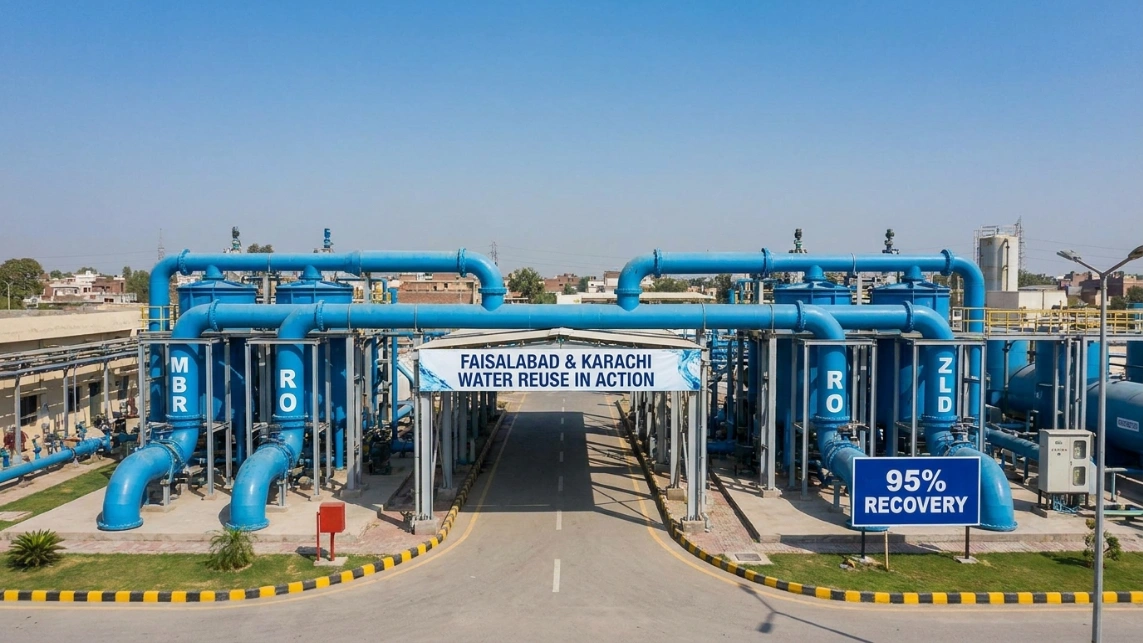
Pakistan is running out of time — and water. The country ranks among the world’s 36 most water-stressed nations, according to the World Resources Institute, and industrial wastewater discharge continues to poison the freshwater sources that millions still depend on. Meanwhile, the UN’s Sustainable Development Goal 6 deadline of 2030 is less than six years away, and progress has been frustratingly slow.
The fix is not a mystery. Water reuse and recycling in industry — done right, with the correct technology stack — can dramatically reduce freshwater consumption, cut effluent volumes, and bring factories into full NEQS compliance. This article breaks down how it works, which technologies deliver the best results in Pakistan’s industrial context, and what it actually costs to get started.
Whether you run a textile mill in Faisalabad, a pharmaceutical plant in Karachi, or a food processing unit in Gujranwala, the roadmap here is practical and immediate.
Why Pakistan’s Industrial Sector Cannot Ignore SDG-6 Any Longer
SDG-6 calls for clean water and sanitation for all, with a specific target of substantially reducing the proportion of untreated wastewater and significantly increasing recycling and safe reuse globally by 2030. For Pakistan, this is not an abstract international commitment — it is a domestic crisis playing out in real time.
The Pakistan Council of Research in Water Resources reports that per capita water availability in Pakistan has dropped from 5,000 cubic metres per year in 1947 to below 1,000 cubic metres today — the threshold defined as water scarcity. Industry is one of the primary culprits. Textile mills, which account for over 60% of Pakistan’s export earnings, are among the heaviest users and polluters of freshwater.
The consequence of inaction is already visible: Punjab EPA and Sindh EPA are intensifying enforcement of NEQS limits. Factories that discharge above permitted Total Dissolved Solids, BOD, or heavy metal concentrations face closure notices, fines, and export restrictions from international buyers who now require environmental compliance certificates. Adopting water reuse is no longer a sustainability choice — it is a business survival strategy.
Industrial Water Treatment Chemicals
What Industrial Water Reuse Actually Means — and What It Does Not
Industrial water reuse is the practice of treating wastewater generated during manufacturing and redirecting it back into the production process — or discharging it safely into the environment. It is not the same as simply reducing water use, and it is not about cutting corners on quality.
True water reuse requires meeting a defined water quality standard for the intended reuse application. Cooling tower makeup water has different purity requirements than boiler feed water, which has different requirements than process water used in food or pharmaceutical manufacturing. Matching treatment technology to reuse application is where most poorly designed systems fail.
The Three Tiers of Industrial Water Reuse
Tier 1 — Partial reuse: Treated effluent is used for non-contact applications such as equipment cooling, floor washing, or irrigation of non-food crops. Achievable with basic biological treatment and filtration.
Tier 2 — Process reuse: Treated water re-enters upstream manufacturing steps. Requires advanced treatment — typically MBR or RO — to meet process-grade quality. Common in textile dyeing and food processing.
Tier 3 — Zero Liquid Discharge: 95 to 100% of effluent is recovered and recycled. Nothing leaves the plant boundary as liquid waste. Required for highly regulated industries or sites with no permissible discharge outlet. WCSP’s zero liquid discharge solutions are specifically engineered for this outcome.
Which Technologies Drive Water Reuse and Recycling in Pakistan’s Industry
Technology selection is the single most consequential decision in any water reuse project. Get it right and you recover 80 to 95% of your water, slash effluent charges, and run a leaner, more defensible operation. Get it wrong and you invest in a system that breaks down, produces substandard output, and ends up as expensive scrap metal.
The technologies that consistently deliver results in Pakistan’s industrial context are as follows.
Membrane Bioreactor (MBR)
MBR combines biological treatment with ultrafiltration membranes in a single compact unit. It produces effluent of consistently high clarity — typically BOD below 5 mg/L and TSS near zero — which is directly suitable for reuse in most industrial processes. MBR systems are the preferred first-stage treatment for textile and pharmaceutical effluent before RO polishing. WCSP’s MBR systems have been deployed across Lahore and Faisalabad industrial zones with proven uptime above 95%.
Moving Bed Biofilm Reactor (MBBR)
MBBR uses plastic biofilm carriers inside aeration tanks to grow and retain a dense microbial population. It handles high organic loads efficiently and is easier to retrofit into existing ETP tanks than MBR. Beverage factories and municipal treatment facilities in Karachi and Gujranwala use MBBR as a cost-effective middle-tier solution before advanced membrane polishing.
Reverse Osmosis (RO)
RO removes dissolved salts, heavy metals, and micro-contaminants to produce near-deionised water. When positioned as the final polishing stage after MBR or MBBR pre-treatment, RO enables boiler feed water recovery and process water reuse at pharmaceutical and food-grade quality. WCSP designs multi-stage RO systems with antiscalant dosing and CIP protocols to maintain consistent membrane performance in Pakistan’s hard-water conditions.
Electrocoagulation and Fenton Process
For textile effluent with high colour load and COD, electrocoagulation and the Fenton Process are primary treatment steps that break down recalcitrant dye molecules before biological or membrane treatment. Without this pre-treatment, downstream membranes foul rapidly. WCSP integrates these chemical processes into the front end of complex textile ETP upgrades.
Technology Comparison: Choosing the Right System for Your Site
The table below compares the five principal treatment pathways against the criteria that matter most to plant managers making a technology decision.
| Technology | Water Recovery | Energy Use | Sludge Output | ZLD Compatible | Best For |
| Conventional ETP | 0–20% | Low | High | No | Basic compliance |
| MBR (Membrane Bioreactor) | 60–80% | Medium | Low | Partial | Textile, pharma effluent |
| MBBR | 40–65% | Low–Medium | Medium | Partial | Municipal, food/bev |
| RO + MBR Hybrid | 75–90% | Medium–High | Very Low | Yes (with ZLD add-on) | Industrial reuse |
| Zero Liquid Discharge (ZLD) | 95–100% | High | Near-zero | Yes | Regulated or water-scarce sites |
Note: Water recovery percentages assume properly maintained systems with appropriate pre-treatment. Actual performance depends on feedwater quality and operational discipline.
| Expert Insight — From WCSP’s 17+ Years in the Field
The most common mistake we see in industrial ETP upgrades is selecting technology based on capital cost alone, ignoring the total cost of water over a five-year period. A Membrane Bioreactor system costs more upfront than a conventional activated sludge plant — but when you factor in freshwater procurement, effluent disposal charges, regulatory fines, and export compliance requirements, MBR typically pays back within 18 to 30 months in Pakistan’s current regulatory environment. The second most common mistake: not pre-treating for the specific contaminants in your effluent before the membrane stage. Textile dye loads that are not addressed by Fenton or electrocoagulation will destroy RO membranes within months. Always characterise your effluent before you specify equipment. |
How Pakistan’s Circular Water Economy Can Work in Practice
The circular water economy applies the principles of circular economic thinking — eliminate waste, circulate resources, regenerate natural systems — specifically to water. In a circular water model, treated effluent from one industrial process becomes feedwater for another. Water is never discarded; it is cycled.
Pakistan’s industrial clusters offer a structural advantage for circular water implementation. In Sialkot’s surgical instruments cluster, Faisalabad’s textile belt, and Karachi’s pharmaceutical and chemical corridor, multiple factories operate within a few kilometres of each other. A shared treatment facility — with one advanced ETP serving five to ten industries — can achieve economies of scale that no single factory could access alone.
The Global Water Partnership estimates that every US dollar invested in water reuse infrastructure generates up to eight dollars in economic benefits when reduced health costs, improved productivity, and environmental protection are included. For Pakistan, this ratio is likely higher given the current cost of water scarcity.
WCSP has designed shared treatment infrastructure for industrial clusters in Punjab and is actively working with municipal bodies to create structured water reuse frameworks that integrate industrial, commercial, and municipal wastewater streams. Contact WCSP’s water treatment division to explore what a circular water strategy would look like for your operation.
What Does Water Reuse and Recycling Cost in Pakistan — and What Does It Save
The honest answer is: it depends on your current baseline, your effluent volume, and your target water quality. But broad cost benchmarks exist and are useful for initial feasibility assessment.
A basic MBR system for an industrial facility generating 500 cubic metres per day of effluent typically requires a capital investment in the range of PKR 15 to 35 million, depending on pre-treatment requirements and automation level. A full ZLD system for the same volume runs PKR 45 to 90 million or above, depending on salinity and complexity.
Against these figures, consider the savings side. Industries drawing from municipal supply in Lahore or Karachi now pay PKR 80 to 150 per cubic metre for water, with rates rising annually. A factory recycling 300 cubic metres per day saves PKR 9,000 to 45,000 per day in procurement costs alone, before accounting for effluent disposal charges and penalty avoidance. Payback periods of two to four years are consistently achievable for well-designed systems.
WCSP offers detailed feasibility assessments and ROI modelling before any project commitment. This includes effluent characterisation, technology benchmarking, energy cost projection, and regulatory compliance mapping aligned to Pakistan EPA and NEQS requirements.
NEQS Compliance and Environmental Monitoring: What Industries Must Know
Pakistan’s National Environmental Quality Standards set binding limits on industrial discharge parameters including BOD, COD, TSS, oil and grease, heavy metals, and pH. Pakistan EPA provincial bodies — including Punjab EPA, Sindh EPA, and KP EPA — conduct inspections and can issue closure orders for non-compliant facilities.
Compliance is not a one-time event. It requires continuous effluent monitoring, documented records, calibrated instruments, and the ability to demonstrate consistent performance over time. Real-time monitoring with automated alerts is the only reliable way to avoid accidental non-compliance events that can trigger regulatory action.
WCSP provides environmental monitoring services for air, water, soil, and biological parameters — including real-time online monitoring systems integrated with SCADA platforms. Our automation and monitoring division has installed monitoring infrastructure at over 40 industrial sites across Lahore, Karachi, Faisalabad, and Sialkot. This data also feeds into sustainability reporting, which an increasing number of international buyers now require as a condition of procurement.
For industries with high water stress exposure or complex discharge profiles, we also recommend pairing monitoring infrastructure with WCSP’s energy management services, since water treatment is typically one of the top three energy consumers in industrial operations.
A Step-by-Step Checklist for Launching Your Industrial Water Reuse Programme
Use this checklist to move from concept to operating system in a structured, risk-managed sequence.
- Step 1: Conduct a water audit. Quantify total freshwater intake, process water consumption, and effluent volume per production unit. Identify the largest loss points.
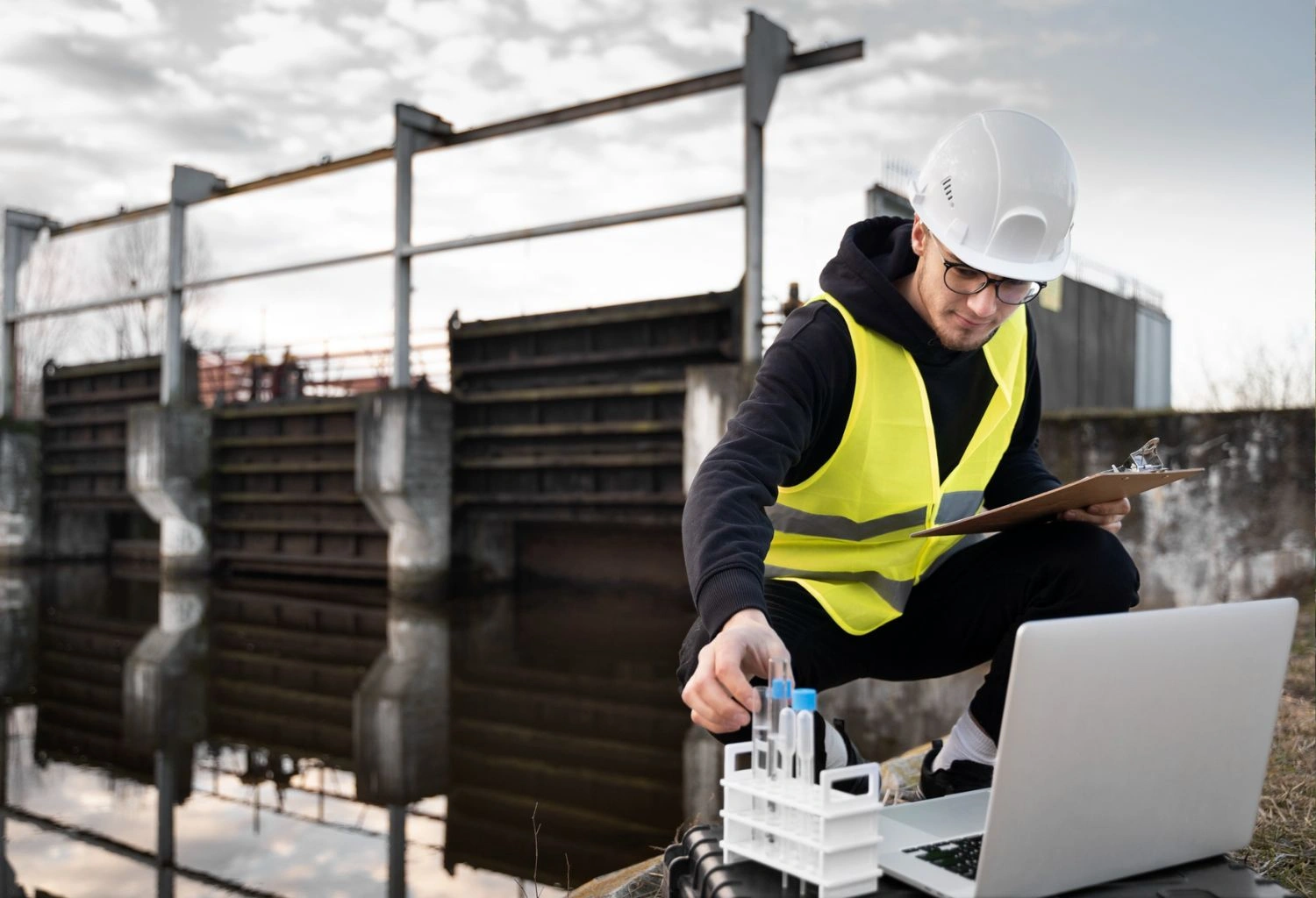
- Step 2: Characterise your effluent. Laboratory analysis of BOD, COD, TSS, colour, heavy metals, TDS, and pH is non-negotiable. Technology selection without this data leads to system failure.
- Step 3: Define reuse targets. Determine where recovered water can re-enter your process — cooling, washing, boiler feed, process use — and set the quality specification for each stream.
- Step 4: Select a treatment technology combination. Match pre-treatment, primary, secondary, and tertiary stages to your specific effluent profile and reuse quality target. Consult WCSP’s engineering team at this stage.
- Step 5: Design for operational realities. Pakistan’s power supply is intermittent. Design systems with buffer storage, backup power compatibility, and manual override capability.
- Step 6: Install real-time monitoring from day one. Automated flow, pH, conductivity, and turbidity monitoring protects your investment and your compliance record.
- Step 7: Train your team. A technically sound system operated by an untrained team will underperform. Build maintenance capability in-house from the outset.
- Step 8: Audit performance quarterly. Track water recovery rate, energy consumption, membrane integrity, and discharge quality. Adjust operation based on data, not assumptions.
The Time to Act Is Now — Not When the Regulator Forces Your Hand
Pakistan’s water crisis will not resolve itself, and the factories that move earliest on water reuse will have a structural cost advantage over those that wait for enforcement to force the issue. The technology is proven, the economics work, and the regulatory direction is unambiguous.
Four things to take away from this article. First, water reuse and recycling in Pakistan’s industry is technically achievable at scale today — MBR, RO, MBBR, ZLD, and electrocoagulation are mature, deployable technologies. Second, the business case is real: water procurement savings, penalty avoidance, and export compliance value combine to deliver payback periods of two to four years on well-designed systems. Third, technology selection must be grounded in effluent characterisation — do not specify equipment before you have laboratory data. Fourth, compliance is ongoing, not one-time — real-time monitoring is not optional if you want to stay clean and stay operational.
Ready to upgrade your water treatment system? Contact WCSP’s expert team today at watercareservices.org/contact-us/ and let us show you exactly what a water reuse solution looks like for your site.
Explore next: How Zero Liquid Discharge Works in Pakistan’s Textile Industry | The True Cost of Industrial Wastewater Non-Compliance in Pakistan
Output Block 4 — FAQ Section (Schema Ready)
Frequently Asked Questions
1. What is industrial water reuse and how does it work in Pakistan?
Industrial water reuse means treating factory wastewater and returning it to the production process rather than discharging it. In Pakistan, technologies like MBR and reverse osmosis are used to treat effluent from textile, pharma, and food industries to a quality suitable for cooling, washing, or process reuse — reducing freshwater demand by 60 to 95%.
2. How can Pakistan meet SDG-6 water targets by 2030?
Pakistan can meet its SDG-6 water sanitation targets by scaling up industrial water reuse and recycling programmes, enforcing NEQS discharge limits, investing in shared treatment infrastructure for industrial clusters, and deploying real-time monitoring systems. Water reuse at scale reduces freshwater extraction and untreated discharge — the two primary SDG-6 indicators for industry.
3. What does an industrial water recycling system cost in Pakistan?
Capital costs for industrial water recycling systems in Pakistan range from PKR 15 to 35 million for a mid-scale MBR installation to PKR 45 to 90 million or above for a full Zero Liquid Discharge system. Payback periods of two to four years are achievable when water savings, effluent cost avoidance, and penalty reduction are included in the financial model.
4. Is Zero Liquid Discharge required for NEQS compliance in Pakistan?
ZLD is not universally required by NEQS, but it is the most reliable path to compliance for industries in water-scarce areas or with high-TDS effluent streams. Pakistan EPA is tightening discharge standards for textile and tannery sectors. ZLD eliminates discharge entirely, removing compliance risk. WCSP’s ZLD systems are designed specifically for Pakistan’s industrial effluent profiles.
5. How long does it take to install a water reuse system for a factory?
Timeline depends on system complexity. A basic MBR installation for a mid-scale factory typically takes 12 to 20 weeks from site survey to commissioning. A full ZLD system requires 24 to 36 weeks. WCSP conducts effluent characterisation, detailed engineering, procurement, civil construction, and commissioning — providing a single-point-of-responsibility delivery model.
6. Which industries in Pakistan benefit most from water recycling?
Textile mills, pharmaceutical manufacturers, food and beverage factories, and tanneries benefit most from water reuse and recycling in Pakistan. These industries generate high-volume, complex wastewater and face the strictest NEQS limits. Textile mills in Faisalabad and Lahore, for example, can recover 75 to 90% of process water using MBR plus RO treatment trains.