Is Your Plant Working for You — or Against You?
Your water treatment system was built to solve a problem. But if it is quietly becoming the problem, you need to know now — not after a Pakistan EPA shutdown notice arrives.
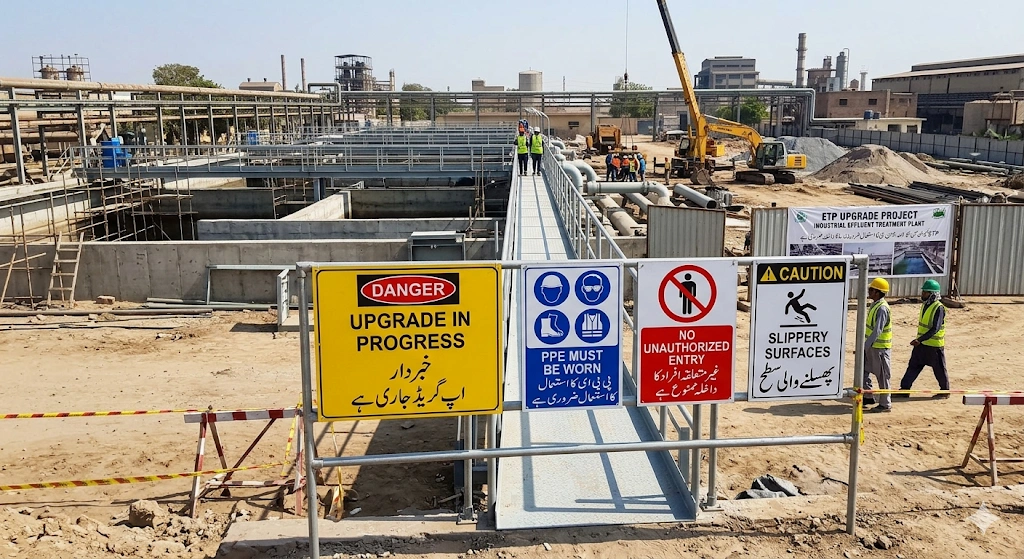
According to the World Bank, industrial water pollution costs Pakistan’s economy an estimated $3.4 billion annually in health and environmental damage. A significant share of that burden falls directly on manufacturers operating outdated treatment infrastructure. If your plant was commissioned more than a decade ago, there is a strong chance your water treatment plant upgrade in Pakistan is already overdue.
This article walks you through the 10 clearest, most measurable warning signs that your system has crossed from “aging” into “liability.” By the end, you will know exactly what to look for, what it costs you to ignore it, and what your options are.
Sign 1: Your Energy Bills Keep Climbing Without a Matching Output Increase
Energy is your most honest performance meter.
A water treatment plant operating at peak efficiency maintains a predictable kilowatt-hour-per-cubic-metre ratio. When that ratio starts creeping upward — and your treated water output stays flat or falls — your equipment is working harder than it should to deliver the same result.
In Pakistan’s industrial sector, energy costs already eat 15–25% of total operating expenditure for water-intensive industries like textiles and beverage manufacturing. An aging Reverse Osmosis system running with fouled membranes, for instance, can consume 30–40% more power than a system with fresh, properly maintained membranes. Similarly, ageing aeration blowers in activated sludge systems or MBBR setups lose efficiency progressively, pushing your electricity consumption up quarter by quarter.
What to measure
Pull your last 24 months of energy invoices and divide total kilowatt-hours by cubic metres of water treated. Plot the trend. If the ratio is rising by more than 5–8% year-on-year without a corresponding increase in throughput or compliance complexity, your plant is signalling that something needs attention.
WCSP’s energy audits for industrial water systems routinely uncover 20–35% savings through targeted equipment replacements and automation upgrades — savings that pay back investment within 18 to 36 months.
Sign 2: Effluent Quality Is Inconsistent or Fails NEQS Standards
Pakistan’s National Environmental Quality Standards are not suggestions. They are enforceable thresholds, and violations carry fines, forced shutdowns, and reputational consequences that follow your business long after the inspector has left.
If your treated effluent is showing inconsistent results — some tests passing, others failing BOD, COD, TSS, or heavy metal limits — that inconsistency is itself the problem. A properly functioning system does not pass on Monday and fail on Thursday. Variability in effluent quality almost always points to one of three root causes: overloaded biological stages, failing membranes, or inadequate process controls.
Textile mills in Faisalabad and Gujranwala face particular pressure here. Dyeing and finishing wastewater contains high colour loading, chromium from reactive dyes, and elevated COD values that older conventional systems were simply not designed to handle at today’s production volumes.
Modern solutions like Membrane Bioreactor technology and Electrocoagulation can achieve consistent sub-NEQS effluent quality even under high-load conditions. WCSP’s wastewater treatment services specifically address compliance gaps for industries operating under Punjab EPA enforcement zones.
Sign 3: You Are Spending More on Reactive Maintenance Than Planned Upkeep
Track your maintenance ledger honestly. Are you calling technicians to fix breakdowns, or scheduling them to prevent them?
The maintenance philosophy that runs most aging Pakistani industrial plants is reactive: something breaks, you fix it, you move on. This approach feels cheaper on any given week, but over a financial year it routinely costs 2–3 times more than a structured preventive maintenance programme. The American Society of Maintenance Professionals estimates that reactive maintenance costs organisations three to five times more per repair event than equivalent preventive maintenance.
Beyond cost, unplanned downtime in your treatment plant can trigger a compliance crisis. If your biological treatment stage goes offline unexpectedly during peak production, you either halt your manufacturing line or bypass treatment — both carry serious operational and legal consequences.
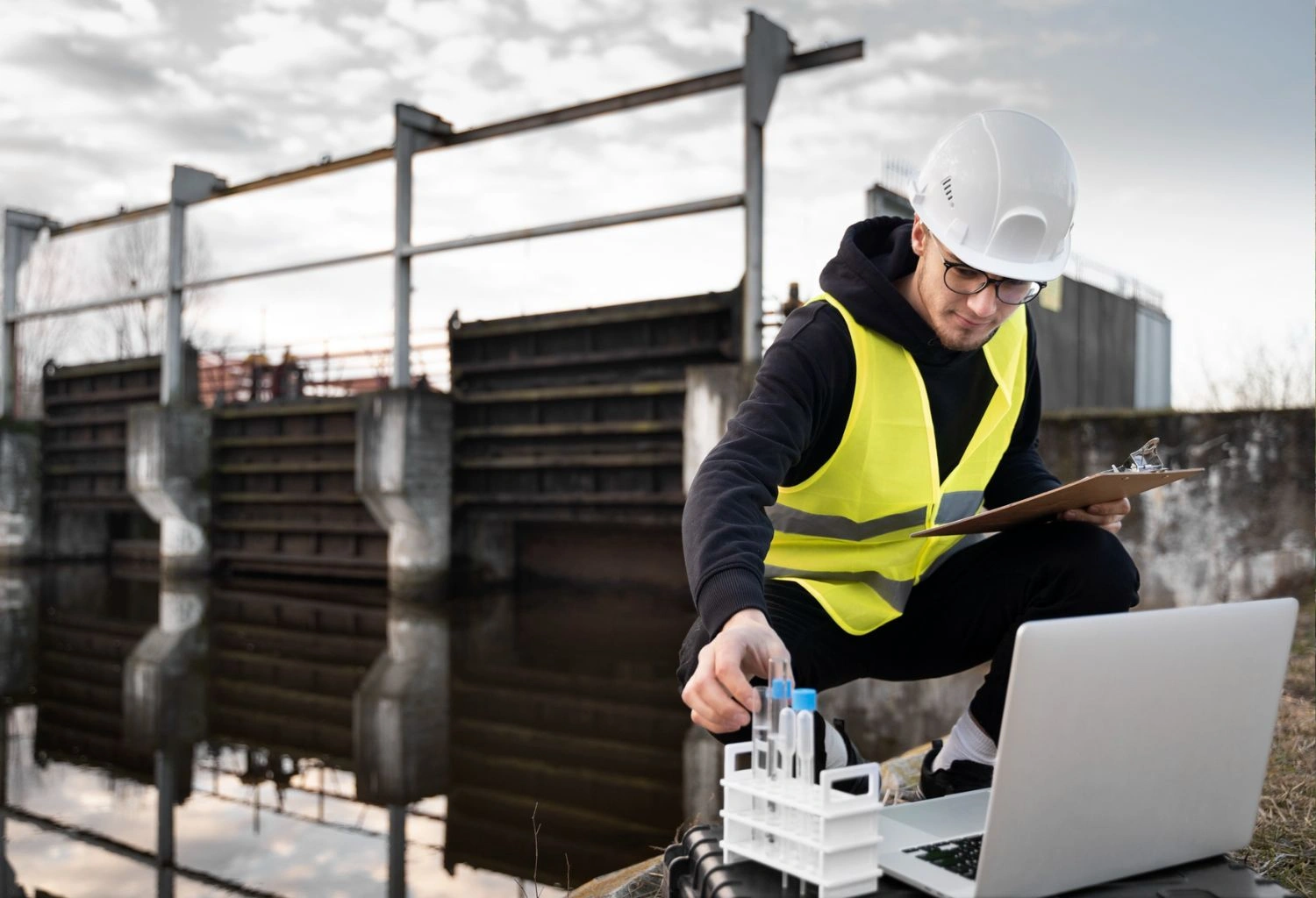
Industrial Water Treatment Chemicals
Warning signs in your maintenance log
- The same component failing more than twice in 12 months
- Pump seals, bearings, or membranes requiring replacement at increasing frequency
- Chemical dosing systems giving inconsistent outputs despite correct calibration
- Control panels showing faults that require manual resets more than once a week
A Service Level Agreement with a qualified water treatment company like WCSP converts unpredictable breakdown costs into a fixed, planned expense — and keeps your plant compliant between major overhauls.
Sign 4: Your Plant Cannot Handle Current Production Volumes
Your treatment plant was designed for a specific hydraulic and organic loading. If your production has grown since commissioning — and for most Pakistani manufacturers it has — your plant is almost certainly undersized for what you are now asking it to do.
This is particularly acute in sectors like pharmaceutical manufacturing in Karachi and food and beverage processing in Lahore, where production capacities have scaled significantly over the past decade while treatment infrastructure has remained largely static.
An undersized plant does not fail dramatically. It fails gradually: slightly elevated effluent values, slightly reduced treatment efficiency, slightly more chemical consumption. By the time the failure is visible in compliance testing, the system has been operating in a compromised state for months.
Capacity audits — comparing your current hydraulic loading, BOD loading, and peak flow rates against your plant’s design parameters — take a day to conduct and can prevent years of compliance problems. WCSP’s plant performance assessment service provides exactly this analysis for industrial clients across Pakistan.
Sign 5: Chemical Consumption Has Increased Without a Clear Reason
Rising chemical usage is one of the most reliable indicators of aging water treatment infrastructure, yet it is one of the most frequently overlooked.
When coagulants, flocculants, antiscalants, or biocides are being consumed in larger quantities than your design specifications suggest, it means your system is compensating. Fouled membranes require higher antiscalant doses. Deteriorating media in filtration systems require more coagulant to achieve the same TSS removal. Biological systems with reduced healthy biomass require more chemical intervention to maintain effluent quality.
The International Water Association has documented that chemical overconsumption in aging treatment systems commonly runs 25–50% above design values — a cost that accumulates silently in your procurement budget.
Replacing worn media, cleaning or replacing RO membranes, and optimising biological seeding can bring chemical usage back to design parameters rapidly. WCSP’s Clean-In-Place protocols and membrane management programmes are designed specifically to address this pattern.
Sign 6: Your System Has No Real-Time Monitoring or Automation
If your plant relies on manual sampling twice a day and a logbook, you are flying blind.
Industrial water treatment in 2026 is a data-driven discipline. Real-time monitoring of pH, dissolved oxygen, turbidity, flow rates, and conductivity gives operators the ability to identify deviations before they become violations. Automated dosing systems adjust chemical addition in response to incoming load variations — something no manual system can match at the speed required.
Pharma plants in Karachi operating under international GMP standards increasingly require continuous data logging as part of their regulatory documentation. Cement manufacturers and large food processors in Lahore and Gujranwala are discovering that automation reduces both chemical costs and compliance risk simultaneously.
Expert Insight — WCSP’s Observation After 17+ Years in the Field
One of the most common mistakes WCSP’s team sees during plant assessments is a complete absence of flow measurement on biological treatment stage inlets. Without this data, operators have no way of knowing whether their system is hydraulically overloaded until effluent quality already begins to decline. A simple inline flow meter installation — a modest investment — eliminates this blind spot entirely and often pays for itself within one compliance cycle.
WCSP’s real-time monitoring and automation integration services can be retrofitted into existing plants without requiring a full shutdown.
Sign 7: You Are Generating More Sludge Than Your Disposal System Can Handle
Sludge management is the hidden cost that catches industrial operators by surprise.
An aging treatment system — particularly one that has not been optimised for biological efficiency — generates disproportionately large volumes of sludge. As sludge handling infrastructure ages alongside the treatment plant itself, disposal becomes increasingly difficult and expensive. Many Pakistani industries, particularly textile mills and tanneries, are now facing disposal costs that have tripled in the past five years as landfill access tightens and enforcement of hazardous waste regulations increases.
Modern treatment technologies directly address this. WCSP’s No-Sludge Treatment solutions and advanced biological processes like MBBR reduce sludge generation at source rather than managing the consequences downstream. Zero Liquid Discharge systems eliminate liquid waste streams entirely for industries where water recovery is critical.
If your sludge disposal costs have increased more than 30% over the past three years without a matching production increase, it is time to look at the treatment process itself, not just the disposal method.
Sign 8: Your Plant Is More Than 12 Years Old and Has Never Had a Full Technology Review
Age alone is not a reason to upgrade. Age combined with no technology review absolutely is.
Water treatment technology has undergone significant advancement since the early 2010s. Membrane technology costs have dropped by over 80% in the past 15 years according to the International Desalination Association, making RO and Ultrafiltration economically viable for plant sizes and industries that could not justify the capital cost a decade ago. MBBR and MBR biological treatment systems now achieve effluent quality that conventional activated sludge systems simply cannot match at comparable footprint.
A water treatment plant upgrade in Pakistan does not necessarily mean replacing everything. A structured technology review identifies which components of your existing system remain functional and which need replacement or supplementation. The result is a targeted capital investment that delivers compliance and performance improvement without the cost of a complete rebuild.
WCSP conducts plant performance assessments that produce a prioritised upgrade roadmap — sequenced by urgency, return on investment, and compliance impact.
Sign 9: Your Operators Cannot Explain What Your Plant Is Doing or Why
This sign is more common than the industry admits, and it is more dangerous than any equipment failure.
When a plant is originally commissioned, operational knowledge lives with the commissioning engineers. Over time, as staff turns over and original documentation is lost or never properly transferred, operators begin running systems on habit and intuition rather than understanding. Settings are not changed because nobody remembers why they were set that way. Chemical doses are held constant despite input load variations because the process logic was never properly documented.
An operational knowledge gap accelerates equipment deterioration, increases chemical waste, and makes consistent compliance essentially impossible to sustain.
WCSP’s service level agreements include operator training, documented standard operating procedures, and periodic performance audits that keep your team technically competent and your plant running as designed. For industries operating under third-party certification — ISO 14001, for instance — documented operational control is not optional.
Sign 10: You Have Received a Compliance Notice or Failed an Environmental Audit
This one does not require a performance metric. It is the system telling you directly.
A compliance notice from Pakistan EPA or a failed environmental audit is not the beginning of the problem — it is evidence that a problem has existed long enough to become measurable at the regulatory threshold. At this point, the question is not whether you need a water treatment plant upgrade in Pakistan but how quickly you can execute one.
Acting swiftly matters. Pakistan EPA enforcement has intensified in major industrial corridors — Lahore, Sheikhupura, Karachi, Sialkot — and repeated violations carry escalating consequences including production shutdowns and criminal liability for responsible officers.
WCSP has worked with dozens of industrial clients across Pakistan to achieve NEQS compliance under time pressure, deploying modular treatment solutions that can be installed and commissioned rapidly alongside existing infrastructure.
Upgrade vs. Continue: A Decision Framework
| Assessment Criteria | Continue Operating | Plan Partial Upgrade | Full System Upgrade |
|---|---|---|---|
| Plant Age | Under 8 years | 8–15 years | Over 15 years |
| NEQS Compliance Rate | Consistently passing | Occasional failures | Regular failures |
| Energy Cost Trend | Stable or declining | Rising 5–10% annually | Rising over 10% annually |
| Sludge Volume Trend | Stable | Moderate increase | Significant increase |
| Maintenance Pattern | Mostly preventive | Mix of reactive and preventive | Mostly reactive |
| Real-Time Monitoring | Fully installed | Partial | None |
| Recommended Action | Maintain and monitor | Technology review with WCSP | Prioritised upgrade plan |
Conclusion
A water treatment plant that worked well in 2012 is not guaranteed to work well in 2026. Pakistan’s regulatory environment has tightened, production volumes have grown, and the cost of non-compliance has risen sharply. The good news is that every sign in this list is measurable — and every problem it points to has a proven technical solution.
The four things to take away from this article are straightforward. First, measure your energy consumption per cubic metre of treated water and track the trend. Second, audit your maintenance log and separate reactive from preventive spend. Third, pull your last 12 months of compliance test results and look for patterns. Fourth, if your plant is over 12 years old and has never had a structured technology review, schedule one now.
A water treatment plant upgrade in Pakistan is an investment that pays back in reduced operating costs, avoided compliance penalties, and the operational confidence that comes from a system you can rely on.
FAQ SECTION
1. How do I know if my water treatment plant needs an upgrade or just routine maintenance?
Answer: If your plant consistently passes NEQS standards, runs within its original energy and chemical consumption parameters, and requires only scheduled preventive maintenance, routine upkeep is sufficient. If you are experiencing recurring compliance failures, rising energy consumption, or increasing reactive maintenance costs, a formal plant performance assessment is the right next step before costs escalate further.
2. What does a water treatment plant upgrade in Pakistan typically cost?
Answer: Costs vary significantly based on plant size, technology gap, and whether you are doing a partial or full system upgrade. Targeted upgrades — replacing membranes, adding automation, or supplementing a biological stage with MBBR — typically range from PKR 2 to 15 million. Full system upgrades for medium-sized industrial plants range from PKR 15 to 80 million or more. WCSP provides detailed cost assessments as part of its plant performance review process.
3. How long does it take to upgrade an industrial water treatment plant without shutting down production?
Answer: Most partial upgrades — membrane replacements, automation additions, dosing system improvements — can be executed during planned maintenance windows of 48 to 72 hours. Full system upgrades can be phased over 4 to 12 weeks using modular installation approaches that keep your existing system operational during transition. WCSP designs upgrade sequencing specifically around your production schedule.
4. What are the NEQS standards my industrial effluent must meet in Pakistan?
Answer: Pakistan’s National Environmental Quality Standards set limits for parameters including BOD (80 mg/L for inland water discharge), COD (150 mg/L), TSS (200 mg/L), pH (6–10), and specific heavy metals depending on your industry. Textile, pharmaceutical, and food processing industries face industry-specific limits. Violations can result in fines, production shutdowns, or criminal liability for responsible management personnel.
5. Can I add real-time monitoring to my existing water treatment plant without a full upgrade?
Answer: Yes. Real-time monitoring systems — including flow meters, online pH and DO sensors, conductivity meters, and SCADA integration — can be retrofitted to most existing treatment infrastructure without requiring a full system replacement. This is often one of the highest-return, lowest-disruption upgrades available. A water treatment plant upgrade in Pakistan does not always mean starting from scratch.
6. What is the difference between a service level agreement and a standard maintenance contract for water treatment plants?
Answer: A standard maintenance contract typically covers scheduled visits and parts replacement on a fixed schedule. A service level agreement for water plants goes further: it defines performance guarantees, response time commitments for breakdowns, compliance support, operator training, and documented audit trails. For industries operating under regulatory scrutiny, an SLA provides the accountability and documentation that a basic maintenance contract does not.