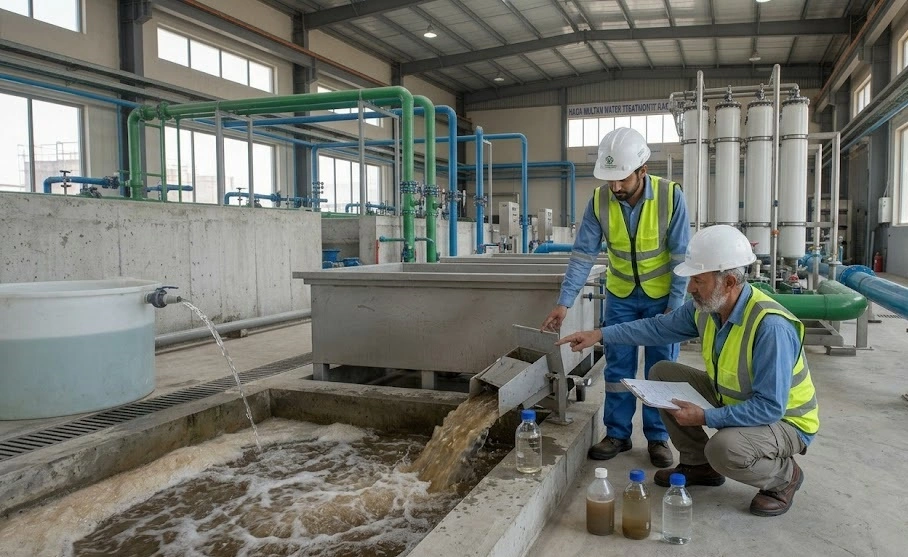
For Pakistani exporters, managing food beverage effluent properly has quietly become a business requirement, not just an environmental one. International buyers — particularly in the EU, UK, and North American markets — increasingly audit supplier facilities against environmental compliance standards before signing or renewing contracts. A weak food beverage effluent treatment setup doesn’t just risk an EPA fine anymore; it can cost you the export order itself.
This article covers what makes food and beverage effluent distinct, the treatment technologies best suited to this sector, and how to build an effluent treatment food processing facility can rely on for both NEQS compliance and international buyer audits. If you’re exporting or planning to, this should give you a clear, practical roadmap.
Why Food & Beverage Effluent Has Its Own Treatment Challenges
Food and beverage processing generates effluent that’s typically high in organic load — from sugars, fats, oils, proteins, and starches — but generally free of the toxic industrial chemicals seen in sectors like textile or pharma. This sounds easier to treat, and in some ways it is, but it comes with its own specific challenges:
- High BOD/COD loads from organic residues, often significantly higher than typical municipal wastewater
- Fats, oils, and grease (FOG) from processing lines, which can clog systems and interfere with biological treatment if not removed upstream
- Seasonal and batch variability, especially in facilities processing seasonal produce or running variable production schedules
- High water usage overall, since food processing typically requires significant water for washing, blanching, and cleaning, generating large effluent volumes relative to product output
These characteristics mean a Food & Beverage facility usually needs a treatment train built around biological treatment for organic load reduction, with proper upstream FOG removal — rather than the chemical-heavy pretreatment more common in textile or pharmaceutical effluent.
Core Treatment Approach for Food & Beverage Effluent
A typical, effective sequence for food and beverage effluent treatment looks like this:
- Screening and grease trapping to remove solids and FOG before they reach downstream treatment stages
- Equalization to buffer batch-to-batch and shift-to-shift variability common in food processing
- Biological treatment to reduce the high organic (BOD/COD) load — this is the core of most food & beverage systems
- Clarification and polishing to remove residual solids and further reduce COD for discharge or reuse
- Disinfection, particularly relevant if treated water is reused for non-product-contact purposes
The biological treatment stage carries the most weight in this sequence, since organic load reduction is the primary challenge for most food and beverage effluent.
MBBR vs Activated Sludge for Food & Beverage Effluent
Because biological treatment is central to food and beverage effluent treatment, choosing the right biological process matters significantly. A Moving Bed Biofilm Reactor has become a popular choice for this sector, particularly where space or load variability is a concern:
Factor | Conventional Activated Sludge | Moving Bed Biofilm Reactor (MBBR) |
Footprint | Larger | Significantly smaller for equivalent capacity |
Tolerance to load variability | Moderate, can be disrupted by shock loads | Better, biofilm carriers provide more stable performance |
Startup/recovery after shutdown | Slower | Faster, since biofilm retains more resilience |
Sludge production | Moderate to high | Generally lower |
Best suited for | Sites with stable flow and adequate space | Sites with variable/batch production or space constraints |
For food and beverage facilities with seasonal production swings — common in fruit processing, dairy, and beverage bottling — MBBR’s tolerance for load variability is often a meaningful practical advantage over conventional activated sludge systems.
Meeting Export Buyer Requirements, Not Just NEQS
NEQS compliance is the regulatory baseline, but many international buyers apply their own environmental and social compliance audits that go further. Facilities pursuing or maintaining export relationships should be prepared to demonstrate:
- Consistent discharge monitoring records, not just point-in-time compliance during an audit visit
- Documented treatment system design and capacity, showing the system is genuinely sized for actual production volumes
- Water reuse or conservation practices, increasingly expected by buyers with their own sustainability commitments
- Traceable corrective action history, showing how the facility has responded to any past compliance issues
Buyer audits often go beyond a simple pass/fail on discharge parameters — they’re assessing whether environmental management is a genuine operational practice or a one-time fix ahead of the audit. Facilities with consistent real-time monitoring data and clear documentation typically pass these reviews with far less friction than those scrambling to produce records reactively.
Water Reuse Opportunities in Food & Beverage Facilities
Given the high water volumes typical in food and beverage processing, treated effluent reuse presents a genuine cost and sustainability opportunity, not just a compliance nice-to-have. Common reuse applications include:
- Non-product-contact washdown water, such as floor cleaning and general facility washdown
- Cooling tower makeup water, where treated effluent can offset fresh water intake for cooling systems
- Landscape irrigation on-site, for facilities with significant grounds
- Boiler feed water (with additional polishing), in facilities with steam generation needs
Reuse isn’t always achievable to the same degree across every facility — it depends on treated water quality and the specific reuse application — but even partial reuse can meaningfully reduce fresh water costs alongside strengthening the sustainability profile buyers increasingly look for.
A Practical Example: Beverage Bottling Effluent
A beverage bottling facility typically generates effluent with high sugar content, moderate suspended solids, and significant volume from cleaning-in-place (CIP) cycles between production runs. Treating this effectively usually requires equalization to absorb the intermittent, concentrated CIP discharge, followed by biological treatment sized for the sugar-driven organic load rather than assumed generic food industry averages. Facilities that undersize equalization for CIP cycles specifically are a common source of compliance problems in this subsector — the shock load from a concentrated CIP discharge can temporarily overwhelm biological treatment sized only for average daily flow.
Building a Compliant, Export-Ready Treatment System
- Characterize your effluent by production line, not just an overall average, since different processes (washing, blanching, CIP, packaging) contribute very different organic and solids loads.
- Size equalization for your actual peak and batch conditions, not average flow alone.
- Choose a biological treatment technology matched to your load variability, considering MBBR where seasonal or batch production is significant.
- Build documentation and self-monitoring into daily operations, not just pre-audit preparation.
- Evaluate water reuse opportunities early, since retrofitting reuse infrastructure later is typically more expensive than designing for it upfront.
FAQ
Q1. What makes Food & Beverage effluent different from other industrial wastewater?
It’s generally free of the toxic industrial chemicals seen in sectors like textile or pharma, but carries a high organic (BOD/COD) load from sugars, fats, and proteins, along with significant fats, oils, and grease. This means biological treatment, supported by proper FOG removal, is usually the core of an effective system.
Q2. Do export buyers require more than NEQS compliance for effluent treatment food processing facilities?
Often, yes. Many international buyers conduct their own environmental audits that assess documentation, consistency of monitoring, and water reuse practices beyond the regulatory minimum. Facilities with genuine ongoing compliance practices typically navigate these audits more smoothly than those meeting only the legal baseline.
Q3. Can treated food and beverage effluent be reused on-site?
In many cases, yes, for applications like washdown water, cooling tower makeup, or irrigation, depending on the level of treatment achieved. Reuse reduces fresh water costs and supports sustainability commitments increasingly expected by export buyers.
Q4. Is MBBR better than conventional activated sludge for food processing effluent?
MBBR often performs better for facilities with variable or seasonal production, since biofilm carriers provide more stable treatment under load fluctuations and require less space. Conventional activated sludge remains a solid option for facilities with stable flow and available space.
Conclusion
Food & Beverage effluent treatment has become as much a business requirement as an environmental one, with export buyers increasingly auditing compliance alongside provincial EPA requirements. A well-designed system — built around biological treatment matched to your actual production variability, backed by consistent documentation — protects both regulatory standing and export relationships. WCSP has designed effluent treatment food processing systems for beverage, dairy, and food manufacturing clients across Pakistan since 2007, with direct experience meeting both NEQS and international buyer compliance expectations.