
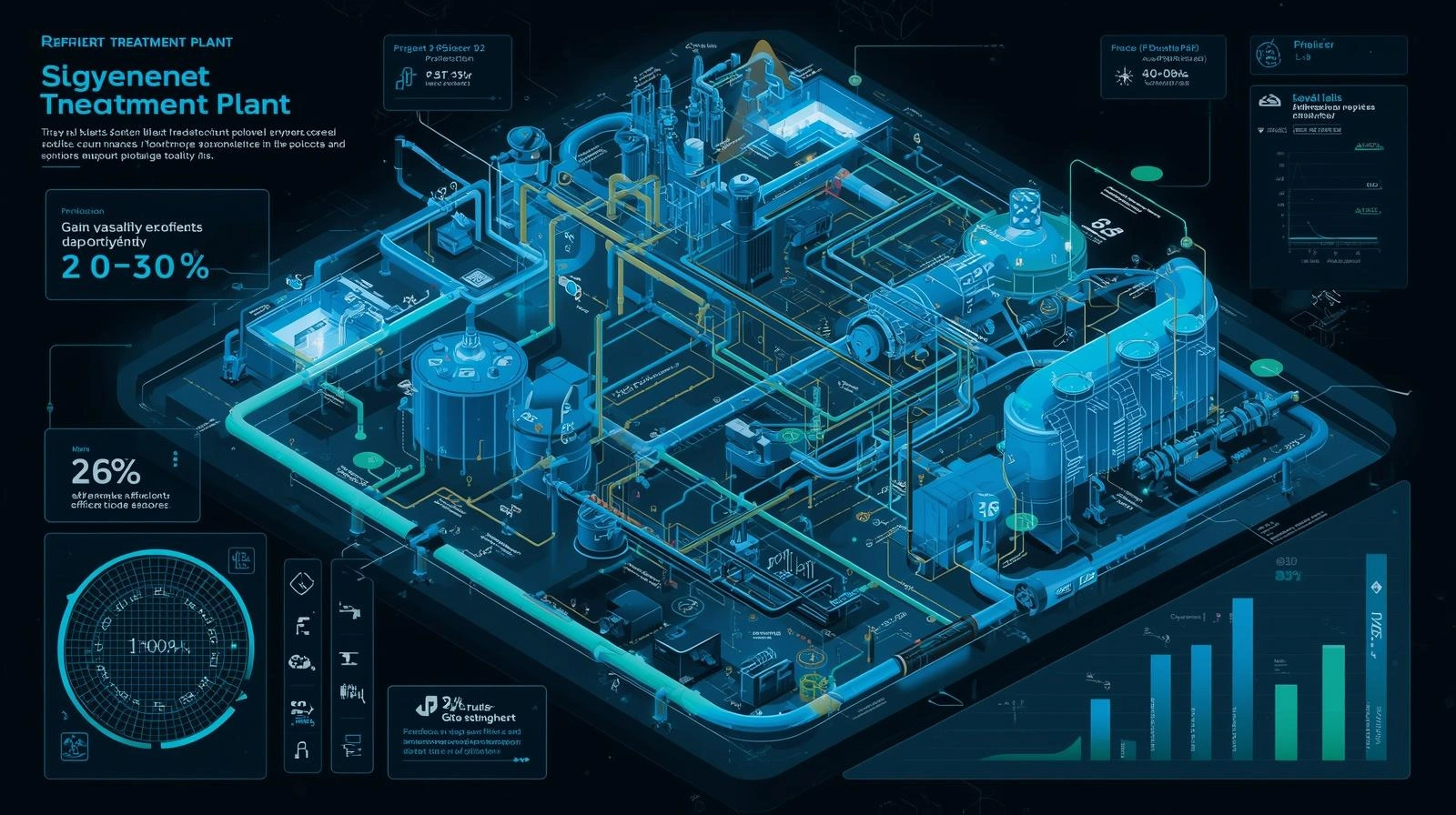
In today’s industrial landscape, optimizing the efficiency of wastewater treatment plants (ETPs) is more crucial than ever. With increasing environmental regulations and the push for sustainability, businesses need to explore innovative solutions to stay ahead. But how can you achieve significant efficiency gains in an ETP? Enter the Digital Twin ETP—an advanced technology that’s transforming how wastewater treatment processes are modeled, monitored, and optimized. By simulating the entire treatment process, the digital twin offers not just a view of the system, but actionable insights that lead to real-world performance improvements.
In this post, we’ll explore how implementing a digital twin for your effluent treatment plant can lead to 20-30% efficiency gains. We’ll cover everything from understanding digital twins to practical steps for integrating them into your wastewater treatment processes.
The Key Benefits of a Digital Twin ETP
- Increased Efficiency: Real-time simulations can optimize treatment processes, reducing operational costs.
- Predictive Maintenance: Anticipate and address equipment failures before they occur, saving time and money.
- Enhanced Compliance: Stay ahead of regulatory demands by simulating scenarios and ensuring compliance.
- Data-Driven Decisions: Make smarter operational decisions using data insights generated by the digital twin model.
Let’s delve into the technical aspects of how digital twin technology can revolutionize your wastewater treatment plant.
What is a Digital Twin ETP?
Understanding the Basics of a Digital Twin
A digital twin is a virtual replica of a physical system, used to simulate, analyze, and predict the behavior of its real-world counterpart. In the context of an Effluent Treatment Plant (ETP), a digital twin models the entire wastewater treatment process—from the intake of raw water to the final discharge.
This virtual model connects to sensors and monitoring devices in the actual plant, pulling data in real time and using it to adjust operational settings or predict potential issues. This continuous feedback loop ensures that the plant operates at optimal efficiency, saving both time and resources.
How Does ETP Simulation Work?
Real-Time Monitoring and Control
ETP simulation involves using a digital model that mirrors the actual treatment plant’s processes. The model continuously receives data from real-world sensors, which it uses to simulate the plant’s operations.
- Data Collection: Sensors embedded in the ETP measure various parameters such as flow rates, chemical levels, and water quality.
- Data Integration: This data is fed into the digital twin, where it’s analyzed and used to simulate the plant’s behavior under various conditions.
- Optimization: Using predictive algorithms, the digital twin suggests real-time adjustments to improve performance, such as optimizing chemical dosing or adjusting filtration rates.
- Scenario Testing: Before implementing changes in the actual plant, scenarios can be tested virtually to understand the impact of different variables, reducing the risk of costly mistakes.
What Are the Key Advantages of Using Digital Twin Technology for Wastewater Optimization?
Efficiency Gains of 20-30%
Implementing a digital twin in your ETP can lead to substantial efficiency gains, often in the range of 20-30%. Here’s how:
- Reduced Energy Consumption: By optimizing treatment processes, energy usage can be minimized. Digital twin simulations allow for the fine-tuning of energy-intensive operations, ensuring that each step of the process uses only as much energy as required.
- Improved Chemical Usage: Chemicals play a significant role in wastewater treatment. With a digital twin, the plant can determine the exact chemical quantities required at any given time, reducing waste and lowering costs.
- Increased Throughput: By adjusting various treatment parameters based on real-time data, the digital twin helps maximize the plant’s throughput without sacrificing quality, resulting in higher processing capacity.
- Better Maintenance Scheduling: With predictive maintenance capabilities, the digital twin can forecast potential equipment failures before they happen. This allows for more efficient maintenance schedules, reducing downtime and extending the life of expensive assets.
How to Implement a Digital Twin ETP in Your Plant?
1. Start with Comprehensive Data Collection
The first step in implementing a digital twin for your ETP is gathering the right data. This includes:
- Flow rate measurements
- Water quality indicators (e.g., pH, turbidity, BOD, COD)
- Energy consumption metrics
- Chemical usage levels
2. Develop the Digital Model
Once you have the necessary data, a model of your ETP is created. This model simulates the physical processes, including pumps, filters, chemical dosing systems, and biological treatment units.
3. Integrate Real-Time Sensors
Next, integrate real-time sensors into the physical plant. These sensors will continuously feed data into the digital twin, ensuring the model is always aligned with real-world operations.
4. Use Simulation Software
Invest in simulation software that can process this data and run predictive models. Many platforms offer specialized solutions for ETP simulation, such as Simulink and Aspen Plus, which allow operators to simulate various treatment scenarios.
5. Continuous Feedback and Optimization
Once the digital twin is up and running, you can use it to adjust real-world operations. The model provides insights into process bottlenecks, inefficiencies, and opportunities for improvement. With continuous feedback, you can optimize operations for ongoing improvements.
Real-World Case Studies: Success with Digital Twin ETPs
1. Case Study: Coca-Cola’s ETP in India
Coca-Cola implemented a digital twin in its ETP in India to enhance wastewater treatment. By simulating different treatment processes, Coca-Cola improved its energy efficiency by 25% and reduced water usage by 15%. The digital twin enabled them to identify inefficiencies in the plant and adjust processes accordingly.
2. Case Study: Veolia’s Smart ETPs
Veolia, a global leader in environmental services, has used ETP simulation for several years. Their use of digital twins has led to significant savings in both operational costs and energy consumption, achieving up to 30% more efficiency in their plants.
How Does Process Modeling Drive Efficiency in Digital Twin ETPs?
Understanding the Importance of Process Modeling
In digital twin technology, process modeling is key. It allows for the simulation of different treatment scenarios, so operators can:
- Test what-if scenarios without affecting the actual plant.
- Model variable conditions such as flow rate changes, chemical concentration variations, or equipment failures.
- Optimize treatment processes by identifying inefficiencies in real time.
By analyzing these models, you can fine-tune plant operations to ensure they run at optimal efficiency, ensuring maximum performance with minimum resources.
Conclusion
Digital twin technology is revolutionizing the way effluent treatment plants are managed. By simulating the entire wastewater treatment process, plants can achieve 20-30% efficiency gains. This technology allows for better resource management, predictive maintenance, and improved compliance, all of which result in cost savings and operational improvements.
To stay ahead in today’s competitive market, adopting a digital twin ETP is no longer just a luxury—it’s a necessity. Don’t let inefficiency hold back your plant’s performance. Start implementing digital twin technology today, and unlock the full potential of your wastewater treatment operations.
FAQ Section
What is a Digital Twin ETP?
A digital twin ETP is a virtual model of an effluent treatment plant that simulates its operations, providing real-time data and predictive insights for optimizing performance.
How does ETP simulation help in wastewater optimization?
ETP simulation allows for real-time monitoring and process optimization by using a virtual model to adjust operations, improving efficiency and reducing energy and chemical usage.
What are the main benefits of using digital twin technology for wastewater treatment?
The main benefits include increased energy efficiency, reduced chemical waste, improved throughput, and predictive maintenance, all of which lead to cost savings.
How do I integrate a digital twin into my existing ETP?
Start by collecting the necessary data, developing a digital model, integrating real-time sensors, and using simulation software to run predictive models for ongoing optimization.
Can digital twin technology improve regulatory compliance?
Yes, digital twin technology helps ensure that ETPs remain compliant with environmental regulations by simulating various scenarios and maintaining optimal treatment standards.
What software is used for ETP simulation?
Popular software platforms for ETP simulation include Simulink, Aspen Plus, and specialized wastewater treatment modeling tools like BioWin and Aquarius.
How much efficiency can I expect from implementing a digital twin ETP?
Most ETPs can expect efficiency gains of 20-30% after implementing digital twin technology, particularly in energy and chemical usage optimization.