
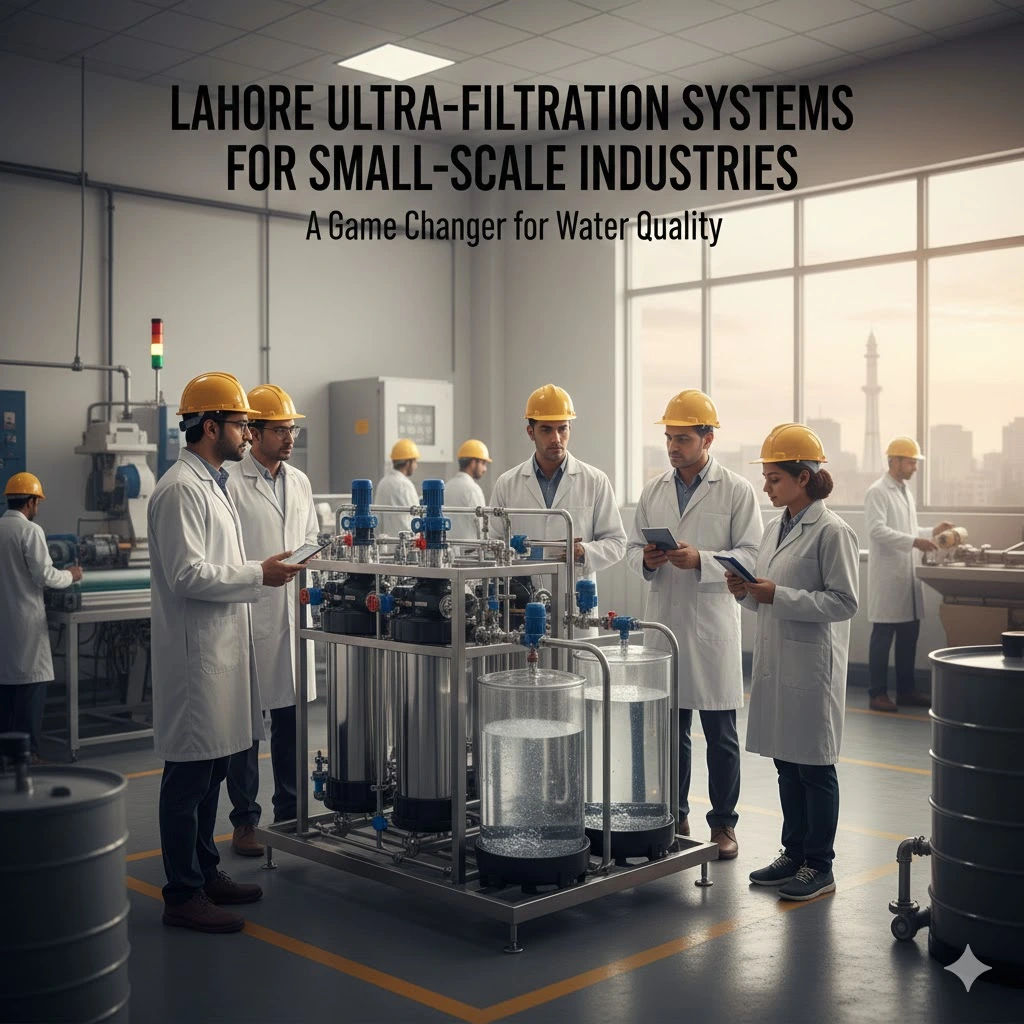
Lahore Industrial UF systems are becoming the top choice for business owners who are no stranger to the challenges of maintaining consistent water quality. If you’re running a small-scale industry in Lahore, whether in food processing, textiles, or manufacturing, installing a reliable Lahore Industrial UF unit is now critical for product quality, operational efficiency, and regulatory compliance. Unfortunately, many small businesses face issues like water contamination and high costs, but switching to a Lahore Industrial UF solution offers a powerful, cost-effective way to ensure clean water and meet local environmental regulations effortlessly.
The good news? Ultra-filtration (UF) systems are emerging as a powerful, cost-effective solution for small-scale industries in Lahore. These advanced water filtration systems offer not just cleaner water but also enhanced efficiency and compliance with local water treatment regulations.
In this blog post, we’ll explore the value of ultra-filtration systems in Lahore’s small industries, their advantages, and how you can leverage them to enhance your business. We’ll also dive into real-world examples, and case studies, and provide actionable insights to help you make an informed decision for your operations.
What Are Ultra-Filtration Systems and Why Should Small-Scale Industries in Lahore Care?
When it comes to water filtration, ultra-filtration systems (UF) are one of the most efficient and affordable solutions on the market today. Unlike traditional water purification methods such as reverse osmosis (RO) or chemical treatment, ultra-filtration relies on a membrane filtration technology that physically removes contaminants, bacteria, and larger particles from water.
In simple terms, ultra-filtration uses pressure to push water through semi-permeable membranes, trapping harmful particles and microorganisms while allowing clean water to pass through. The result is purified water that’s ideal for industrial use without the high energy consumption associated with other filtration systems.
But why should small-scale industries in Lahore take notice? Let’s break down some key benefits:
- Cost-Effectiveness: Ultra-filtration systems are less energy-intensive than reverse osmosis systems, which means lower operational costs.
- Improved Water Quality: Whether it’s for production, cooling, or cleaning, the quality of water in industries can directly impact product output and quality. UF ensures that your operations are not hindered by water-related issues.
- Regulatory Compliance: With strict environmental regulations in place in Lahore, having a reliable filtration system can help you meet compliance requirements, preventing costly fines or operational halts.
What Are the Benefits of Ultra-Filtration Systems for Small-Scale Industries?
Ultra-filtration systems bring a host of benefits for small-scale industries in Lahore, especially those working in sectors that rely heavily on water for production processes. Below are some of the top benefits:
1. Cost-Effective Solution
Water treatment costs can escalate quickly, especially for industries with high water usage. Traditional filtration methods often require expensive chemicals and frequent maintenance. Ultra-filtration, on the other hand, is a low-cost alternative that significantly reduces operational expenses.
In fact, according to recent studies, small industries that switched to UF systems saw a 20-30% reduction in water treatment costs annually . For businesses operating in Lahore, where resources are often limited, this can make a substantial difference to the bottom line.
Pro Tip: Look for UF systems that offer modular units. These can scale with your business needs, ensuring you’re not paying for more capacity than you actually need.
2. Enhanced Water Quality for Better Product Output
In industries such as food processing and pharmaceuticals, water quality directly affects the end product. Contaminated water can lead to product defects, contamination, or even health issues. UF ensures that all impurities, bacteria, and suspended solids are removed, providing clean water for production processes.
For example, a textile manufacturer in Lahore switched to ultra-filtration after noticing that inconsistent water quality was causing frequent dye defects. After installing the UF system, product quality improved significantly, and the company reduced its rejection rates by 15% .
3. Environmentally Friendly Technology
In today’s eco-conscious world, businesses are expected to adopt green technologies that reduce their environmental footprint. Ultra-filtration systems use less energy than traditional filtration methods, and their waste by-products are minimal compared to RO systems that discharge high amounts of brine.
This makes UF an excellent choice for small businesses aiming to align with Lahore’s environmental regulations, particularly as the city pushes for cleaner industrial practices.
How Do Ultra-Filtration Systems Work in Small-Scale Industries?
The Ultra-Filtration Process: A Step-by-Step Breakdown
Ultra-filtration systems rely on a membrane-based filtration process that uses pressure to separate contaminants from water. Here’s how it works in simple terms:
- Water Intake: Water from the source (be it municipal supply or underground) enters the filtration system.
- Pre-Treatment: In some cases, water may go through a pre-filtration step to remove larger particles like sand, debris, or sediment.
- Filtration through UF Membrane: The water is then passed through the ultra-filtration membrane, which removes particles such as bacteria, viruses, and organic matter. The membrane has a pore size between 0.1 to 0.5 microns, ensuring that only clean water passes through.
- Post-Treatment (Optional): Some industries may opt for further treatment to enhance water quality, such as UV disinfection for additional sterilization.
- Clean Water Output: The purified water is then ready for use in production, cooling, or other processes.
Key Features of Ultra-Filtration Systems
- Modular Design: Many UF systems are designed to scale, meaning small businesses can start with a smaller unit and expand as needed.
- Low Energy Consumption: Unlike reverse osmosis systems that require significant amounts of energy, UF systems are energy-efficient, making them ideal for businesses with limited energy budgets.
- Minimal Maintenance: UF membranes are durable and require little maintenance, reducing the need for frequent repairs and downtime.
What Are the Challenges of Implementing Ultra-Filtration Systems in Small-Scale Industries?
While ultra-filtration offers numerous benefits, there are challenges that need to be considered before implementation.
1. Initial Capital Investment
Though ultra-filtration systems are cost-effective in the long run, they do require an initial investment. For small businesses with limited budgets, this upfront cost can be a barrier. However, financing options and government subsidies in Lahore may help alleviate some of the financial strain.
2. Regular Monitoring and System Performance
While maintenance needs are minimal, regular monitoring of system performance is essential to ensure optimal filtration. Businesses need to be aware of factors like membrane fouling, which can reduce system efficiency if not addressed.
Pro Tip: Schedule routine maintenance checks and cleanings to extend the lifespan of your UF system and avoid costly repairs.
Real-World Examples: How Small-Scale Industries in Lahore Are Benefiting from UF Systems
Case Study 1: Textile Industry
A textile company in Lahore faced challenges related to water quality, with frequent dye defects impacting product quality. After installing an ultra-filtration system, the company reported a 20% increase in production efficiency and a notable reduction in product defects. The system allowed the company to meet water quality standards and minimize waste, resulting in higher customer satisfaction and reduced costs.
Case Study 2: Food Processing
A food processing plant struggled with contamination issues that affected the taste and safety of its products. After implementing a UF system, the business saw improvements in both water quality and production hygiene. This not only improved the quality of their products but also helped them meet local food safety regulations more effectively.
Conclusion: Is a Lahore Industrial UF System Right for Your Small-Scale Industry?
Lahore industrial UF systems offer small-scale industries a powerful solution to improve water quality, reduce operational costs, and stay compliant with regulatory standards. Whether you’re in food processing or textiles, installing a Lahore industrial UF unit can help you produce cleaner products while keeping energy consumption low.
Ultra-filtration systems offer small-scale industries in Lahore a powerful solution to improve water quality, reduce operational costs, and stay compliant with regulatory standards. Whether you’re in food processing, textiles, or manufacturing, these systems can help you produce cleaner, safer products while keeping your energy consumption and costs low.
FAQ: Ultra-Filtration Systems for Small-Scale Industries in Lahore
1. What is the difference between ultra-filtration and reverse osmosis?
Ultra-filtration uses a membrane with larger pores compared to reverse osmosis. UF filters out larger particles, bacteria, and viruses but doesn’t remove dissolved salts, making it more energy-efficient.
2. Are ultra-filtration systems expensive to maintain?
No, UF systems are relatively low-maintenance. They require minimal cleaning and fewer repairs compared to traditional filtration systems like RO.
3. Can ultra-filtration be used for all types of industrial applications?
Yes, UF systems are versatile and can be used across various industries, including food processing, textiles, and pharmaceuticals.
4. What is the typical lifespan of a Lahore industrial UF system?
Typically, a Lahore industrial UF system lasts between 5 to 10 years. However, regular maintenance and using high-quality membranes can further extend the life of these systems in local industrial conditions.
5. Is government support available for installing water filtration systems?
Yes, local government incentives or financing options may be available for businesses that invest in water treatment technologies that align with environmental goals.
6. How much energy does an ultra-filtration system consume?
Ultra-filtration systems are energy-efficient and use less power than reverse osmosis systems, making them a cost-effective choice for small-scale industries.