
The Need for Sustainable Wastewater Management in Lahore’s Factories
How much wastewater are Lahore’s factories releasing into the environment? The answer is alarming. Lahore, a rapidly industrializing hub, generates vast quantities of wastewater daily from its textile, food processing, and other manufacturing industries. Unfortunately, much of this wastewater is untreated, resulting in pollution that harms the environment and public health.
In 2023, a staggering 75% of industrial wastewater in Pakistan was discharged without treatment, with Lahore being one of the highest contributors. The urgency of adopting eco-friendly wastewater treatment in Lahore’s factories is clear, but the question remains: How can these industries protect both the environment and their operations with cost-effective, sustainable solutions?
This blog will guide you through the most effective eco-friendly wastewater treatment approaches that can be implemented in factories across Lahore. You’ll learn about practical strategies, cost-saving techniques, and real-world examples that can help businesses meet regulations, reduce their environmental footprint, and improve their sustainability credentials.
What Are Eco-Friendly Wastewater Treatment Solutions for Factories?
Eco-Friendly Wastewater Treatment: What Does It Mean?
Eco-friendly wastewater treatment refers to methods that prioritize environmental sustainability while effectively treating industrial wastewater. For Lahore’s factories, eco-friendly solutions go beyond meeting legal requirements; they aim to protect water resources, reduce pollution, and minimize energy consumption.
Eco-friendly methods typically focus on natural or low-energy technologies, such as constructed wetlands, biological treatment processes, and advanced filtration systems. These methods offer several advantages over traditional chemical-heavy treatments, such as lower operational costs and reduced chemical waste.
In the context of Lahore, where water scarcity is a growing issue, implementing sustainable wastewater treatment methods is not just a regulatory necessity but also a strategic move that could boost a factory’s reputation as an environmentally responsible business.
Key Considerations for Wastewater Treatment in Lahore’s Factories
Before selecting an eco-friendly treatment option, several factors need to be considered:
- Industry Type: Different industries produce different types of wastewater. For example, textile factories discharge water with dyes and chemicals, while food factories have organic waste.
- Cost Efficiency: Sustainable solutions must not only be effective but also affordable for businesses, especially in Lahore, where many factories operate on tight margins.
- Regulatory Compliance: Pakistan’s Environmental Protection Agency (EPA) enforces wastewater treatment standards, making compliance essential.
- Water Reusability: In a city facing water shortages, recycling treated wastewater for non-potable uses like irrigation or industrial processes can significantly reduce demand for fresh water.
Pro Tip: Start by conducting a wastewater audit to understand the specific pollutants in your factory’s discharge. This will help identify the most suitable eco-friendly treatment option.
What Are the Top Eco-Friendly Wastewater Treatment Technologies for Factories in Lahore?
1. Constructed Wetlands: Harnessing Nature for Wastewater Treatment
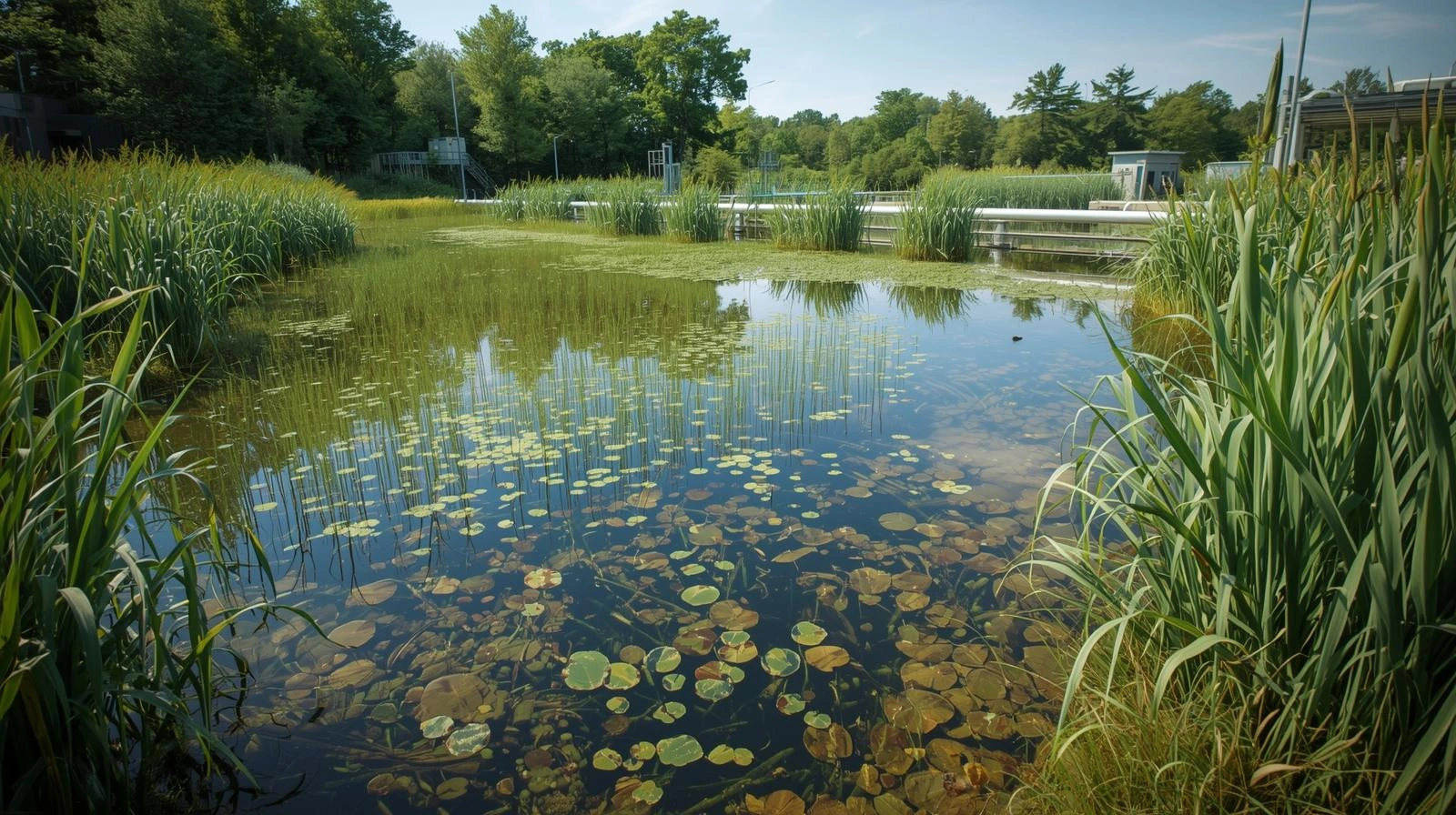
Constructed wetlands are among the most natural and eco-friendly solutions for treating industrial wastewater. These systems use plants, soil, and microorganisms to filter pollutants from the water, mimicking natural wetlands.
How It Works:
Water flows through a bed of gravel or sand, planted with vegetation such as reeds or cattails. These plants help absorb nutrients and heavy metals, while bacteria in the soil break down organic pollutants.
Why It’s Ideal for Lahore Factories:
- Low Energy Requirements: Constructed wetlands require minimal energy to operate, making them cost-effective for factories.
- Natural Filtration: The plants and microorganisms naturally remove contaminants without the need for harsh chemicals.
- Sustainability: Wetlands help restore local ecosystems and can be used to treat various types of wastewater, from textile to food processing.
Real-World Example:
A textile factory in Lahore recently implemented a constructed wetland system to treat its wastewater. The result was a significant reduction in water contamination levels, and the treated water was repurposed for irrigation, saving the factory on water costs.
2. Biological Treatment Systems: Eco-Friendly and Efficient
Biological wastewater treatment systems utilize microorganisms to degrade organic pollutants in wastewater. This method includes processes like activated sludge systems, trickling filters, and anaerobic digestion.
How It Works:
Microorganisms consume organic waste in the wastewater, breaking it down into simpler substances like carbon dioxide and water. For more complex wastewater, anaerobic treatment systems use bacteria that don’t require oxygen, making them highly efficient for larger factories.
Why It’s Ideal for Lahore Factories:
- Cost-Effective: Biological treatment is relatively inexpensive compared to chemical methods.
- Minimal Chemical Use: It significantly reduces the need for harmful chemicals.
- Versatile: Suitable for a wide range of industries, including textiles, food processing, and chemical manufacturing.
Real-World Example:
A Lahore-based food processing factory adopted an anaerobic biological treatment system, which helped reduce its water treatment costs by 40% while complying with EPA regulations.
3. Membrane Bioreactors (MBR): Advanced Yet Eco-Friendly
Membrane bioreactors combine biological treatment with membrane filtration, creating a highly effective system for treating wastewater to a high standard. The wastewater is first treated biologically to remove organic matter, then passed through a membrane filter to remove remaining solids.
How It Works:
Wastewater passes through a biological reactor where microorganisms break down contaminants. The treated water is then filtered through membranes, which remove smaller particles and microorganisms that might otherwise escape in traditional treatment processes.
Why It’s Ideal for Lahore Factories:
- High-Quality Effluent: MBR systems produce high-quality treated water that can be reused in industrial processes.
- Compact and Efficient: These systems are more compact than traditional treatment plants, making them suitable for factories with limited space.
- Energy Efficient: MBRs are more energy-efficient than other filtration methods like reverse osmosis.
Real-World Example:
A textile factory in Lahore implemented a membrane bioreactor system and achieved a 95% reduction in wastewater pollutants, enabling the reuse of treated water for dyeing processes.
How Can Lahore Factories Implement Eco-Friendly Wastewater Treatment Cost-Effectively?
1. Retrofit Existing Systems
Rather than installing entirely new systems, many factories in Lahore can upgrade their existing wastewater treatment infrastructure with eco-friendly technologies. Retrofitting older systems with advanced filtration or biological treatment processes can enhance efficiency without requiring a full overhaul.
2. Collaboration with Experts and NGOs
Many environmental NGOs and governmental organizations in Lahore provide technical assistance, training, and even subsidies for factories looking to implement sustainable solutions. Partnering with these organizations can significantly reduce upfront costs and ensure compliance with local regulations.
3. Water Recycling and Reuse
Recycling treated wastewater for non-potable uses, such as cooling, irrigation, or cleaning, can significantly reduce a factory’s water consumption, making eco-friendly treatment solutions more financially viable. Implementing a water reuse strategy not only conserves resources but also reduces costs over time.
What Are the Benefits of Eco-Friendly Wastewater Treatment for Lahore Factories?
Environmental Benefits: Reducing Pollution and Protecting Water Resources
One of the most significant advantages of eco-friendly wastewater treatment is its positive impact on the environment. By reducing harmful pollutants such as chemicals, heavy metals, and organic waste, these systems help preserve water quality in Lahore’s rivers and canals, contributing to healthier ecosystems and better public health.
Economic Benefits: Cost Savings and Long-Term Efficiency
While the initial investment in eco-friendly treatment systems may seem daunting, the long-term benefits are undeniable. Reduced water and energy consumption, coupled with lower chemical usage, lead to significant savings. Additionally, factories that implement sustainable practices often benefit from improved public perception and greater market access.
Compliance with Regulations: Avoiding Fines and Penalties
Pakistan’s Environmental Protection Agency (EPA) enforces strict regulations on wastewater discharge. Eco-friendly treatment systems help factories stay compliant with these regulations, avoiding potential fines and reputational damage.
Conclusion: Embrace Eco-Friendly Wastewater Treatment for a Sustainable Future
The need for eco-friendly wastewater treatment in Lahore’s factories has never been more urgent. With water scarcity, pollution, and increasing regulatory pressures, adopting sustainable treatment solutions is not only a responsible choice but also a smart business move. By integrating methods like constructed wetlands, biological treatment systems, and membrane bioreactors, factories can protect the environment, cut costs, and improve their overall sustainability.
Now is the time for Lahore’s industries to take the lead in eco-friendly wastewater treatment. By doing so, they not only help the environment but also position themselves as forward-thinking, sustainable businesses in a competitive global market.
FAQ: Eco-Friendly Wastewater Treatment in Lahore Factories
1. What are the most common wastewater pollutants in Lahore factories?
Common pollutants include dyes and chemicals from textile factories, organic matter from food processing plants, and heavy metals from various manufacturing industries.
2. How can eco-friendly wastewater treatment save money for factories in Lahore?
Eco-friendly systems reduce energy consumption, minimize chemical use, and lower water costs by enabling water reuse, leading to long-term savings.
3. Can treated wastewater be reused in industrial processes?
Yes, treated wastewater can be reused for non-potable applications like cooling, irrigation, or cleaning, reducing dependency on freshwater resources.
4. Are constructed wetlands effective for large-scale factories?
Yes, constructed wetlands can handle large volumes of wastewater and are a cost-effective solution for many factories, particularly in rural or semi-urban areas.
5. How do biological treatment systems work for wastewater?
Biological treatment systems use microorganisms to break down organic contaminants in wastewater, reducing pollution and making the water safer for discharge or reuse.
6. Are there any financial incentives for adopting eco-friendly wastewater treatment in Lahore?
Yes, there are government grants, subsidies, and partnerships with NGOs that can reduce the initial investment for eco-friendly wastewater treatment systems.
7. How do membrane bioreactors improve wastewater treatment?
Membrane bioreactors combine biological treatment with membrane filtration, producing high-quality treated water and allowing for efficient and compact wastewater treatment solutions.